Rottweiler Protection Training: What Responsible Owners Need to Know
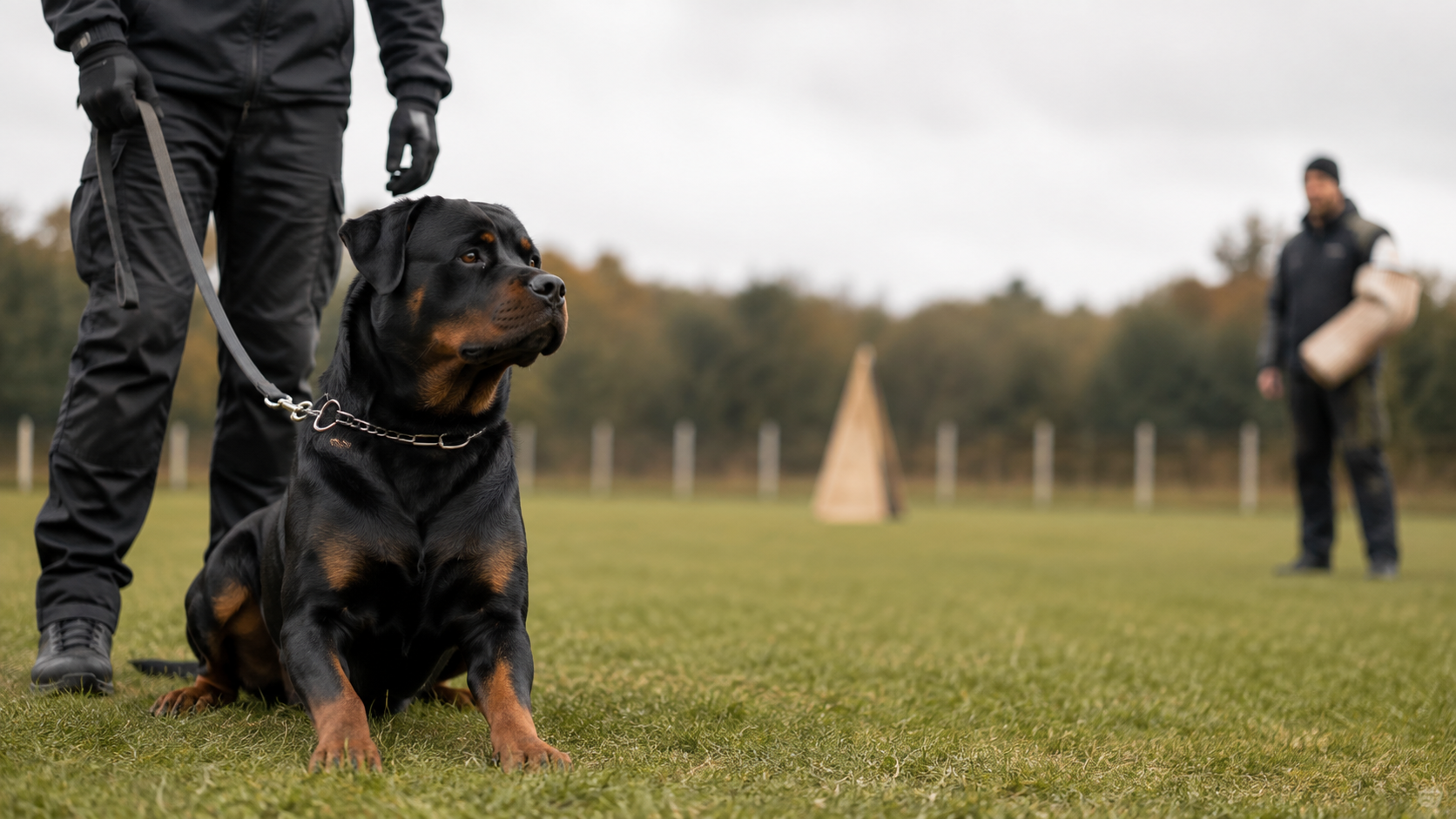
Protection training is not aggression training. Learn what responsible Rottweiler owners should know about guarding instincts, IGP sport, foundations and choosing a professional trainer.
Rottweilers have a reputation as natural protectors — and there is some truth behind it. The breed was developed as a powerful working dog and is known for confidence, intelligence, loyalty and a natural instinct to protect its home and family. A well-bred Rottweiler should, however, be calm and self-assured rather than nervous, unpredictable or needlessly aggressive.
That distinction is essential when talking about Rottweiler protection training. Good protection training is not about teaching a dog to become aggressive. It is about developing an already stable dog that remains obedient, confident and controllable under pressure. And for most pet Rottweilers, formal protection training is not necessary at all.
Are Rottweilers Naturally Protective?
Yes. Protection is part of the Rottweiler's heritage. The American Rottweiler Club describes the breed as calm, confident and courageous, with an inherent desire to protect home and family. Rottweilers are also intelligent working dogs with a strong willingness to work.
That does not mean every Rottweiler should be trained as a protection dog. A stable family Rottweiler may already provide considerable deterrence simply through:
- Size and physical presence
- Alert behavior
- Confidence around unfamiliar people
- Loyalty toward its family
- A naturally watchful temperament
For many households, strong obedience, socialization and household manners are more useful than formal protection work. Our Rottweiler obedience guide covers exactly those foundations.
Protection Training Is Not Aggression Training
This is the most important distinction. A properly trained protection dog should not walk around looking for conflict. The goal is a dog that can remain:
- Calm around strangers
- Neutral around other dogs
- Responsive to its handler
- Confident in unfamiliar environments
- Controllable during excitement
- Able to disengage immediately when required
Organized working-dog sports reflect this emphasis on control. IGP, for example, evaluates tracking, obedience and protection, rather than protection work in isolation. Current working-dog rules place considerable emphasis on obedience and control throughout the exercises. A dog that cannot reliably listen to its handler has no business progressing into advanced protection work.
Should You Protection Train Your Rottweiler?
Ask yourself what you actually want from your dog. If your goal is simply “I want my Rottweiler to protect my family,” you may not need formal protection training. A well-socialized, confident Rottweiler with excellent obedience already has many of the characteristics owners are looking for in a home guardian.
Protection training becomes more relevant when an owner specifically wants to participate in:
- IGP or another working-dog sport
- Structured protection sport
- Professional working-dog programs
- Professionally supervised personal-protection training
It should not be started simply because a young Rottweiler barks at strangers or because the owner wants the dog to appear tougher.
The Foundation Comes Before Protection Work
Before considering protection training, your Rottweiler should have a very strong foundation.
1. Socialization
A protection dog must first understand what normal life looks like. That includes calmly experiencing unfamiliar people, children, other dogs, traffic, visitors, different environments, veterinary handling, and unexpected sounds and movement. Socialization does not mean your Rottweiler has to love or greet everybody — the goal is neutrality and confidence. A dog that reacts fearfully to ordinary situations does not become safer simply because protection work is added. Start early with our puppy socialization guide.
2. Obedience
Your dog should have reliable everyday skills before advanced working-dog training is even considered. Important foundations include recall, loose-leash walking, sit, down, stay, impulse control, disengagement from distractions, calm handling and reliable attention to the handler. Because an adult Rottweiler is both large and extremely powerful, training and socialization should begin early and continue throughout life. See our guides to basic commands and loose-leash walking.
3. Confidence
Confidence and aggression are not the same thing. A good working Rottweiler should be able to enter a new environment, observe what is happening and remain composed. Nervousness, extreme reactivity or indiscriminate aggression are not desirable protection-dog qualities.
4. An Off Switch
Your Rottweiler should also know how to do absolutely nothing. A dog that can work intensely but then settle quietly beside its owner is generally much easier to manage than a dog that stays constantly alert and overstimulated. Calmness is part of control.
At What Age Should Rottweiler Protection Training Start?
Training starts early — but protection work itself should not be the priority for a puppy. The first months should focus on socialization, confidence, play, engagement with the owner, basic obedience, recall, handling and environmental exposure. A puppy's temperament and behavior are still developing.
Actual protection work should only be considered after an experienced working-dog professional has evaluated the individual dog. There is no useful rule saying that every Rottweiler should begin protection work at exactly the same age — temperament, maturity, health, confidence and training history matter more than simply reaching a particular birthday. Our puppy development guide explains what to focus on at each age instead.
IGP vs Personal Protection Training
People searching for Rottweiler protection training are often talking about two very different things.
IGP / Protection Sport
IGP is a structured working-dog sport. It combines tracking, obedience and protection. The protection phase is therefore only one part of a much larger test of the dog-handler team, and modern working-dog regulations evaluate obedience and control alongside the dog's working ability. For owners interested in the working heritage of the Rottweiler, IGP can provide structured training, mental stimulation and measurable goals. The American Rottweiler Club also lists Schutzhund/working sport among the activities in which Rottweilers participate.
Personal Protection Training
Personal protection has a different objective. Instead of preparing for a sport trial, the training is intended around real-world security. That makes the margin for error much smaller. A mistake in advanced protection training can create serious safety and liability problems, which is why this type of work should only be undertaken with an experienced professional who can evaluate both the dog and the handler.
Can Every Rottweiler Become a Protection Dog?
No. Being a Rottweiler does not automatically make a dog suitable for protection work. A professional trainer may consider factors such as:
- Temperament
- Confidence
- Recovery from surprises
- Environmental stability
- Trainability
- Impulse control
- Physical health
- Relationship with the handler
- Ability to remain neutral
A fearful dog should not be turned into a protection project. Neither should a dog that is already unpredictable or difficult to control. A good protection prospect generally begins with more stability, not more aggression.
Why DIY Protection Training Is a Bad Idea
There are many videos online showing dogs working with sleeves, barking at helpers or performing dramatic protection exercises. Trying to copy these exercises at home is a very different matter. Poorly planned protection work can accidentally reinforce:
- Inappropriate biting
- Uncontrolled chasing
- Reactivity toward strangers
- Frustration
- Resource guarding
- Inability to disengage
- Conflict between dog and handler
With a small dog, mistakes can already be serious. With a mature Rottweiler weighing 90–130 pounds or more, control matters enormously. If you want to explore protection sport or professional protection work, find a qualified trainer or established working-dog club instead of experimenting with bite work yourself.
How to Choose a Rottweiler Protection Trainer
A good trainer should be interested in your dog's temperament before being interested in making the dog bite anything. Look for someone who:
- Has substantial experience with working breeds
- Has specific experience with Rottweilers
- Evaluates the dog before accepting it for protection work
- Considers obedience and neutrality essential
- Is willing to tell you that your dog is not suitable
- Trains the handler as well as the dog
- Can explain the purpose of every stage of training
- Prioritizes control and safety
- Does not promise to turn every dog into a protection dog
Be cautious with trainers who immediately advertise aggression or intimidating behavior as the goal.
Protection Training for a Family Rottweiler
A Rottweiler can be both a working dog and a family companion, but the family environment must remain carefully managed. Children should never be involved in protection exercises, and household visitors should not become informal training subjects. Your dog should still be able to:
- Relax around invited guests
- Walk calmly through public places
- Pass unfamiliar dogs without confrontation
- Accept routine veterinary handling
- Settle inside the home
- Respond reliably to the handler
A protection-trained Rottweiler should ideally become more predictable, not less.
Protection Training vs Guarding Instinct
There is also an important difference between natural guarding and trained protection. A naturally watchful Rottweiler may notice somebody approaching the property, bark, position itself between its owner and something unfamiliar, or observe strangers carefully. That does not mean the dog has been trained to make complex decisions about real threats. Nor should owners encourage every suspicious reaction — a dog that decides everything is dangerous is not a better guard dog. It is simply harder to live with.
For a step-by-step approach to everyday guarding behavior — from alarm barking to controlled alerting — read how to train a Rottweiler to be a guard dog.
What Should You Train First?
For almost every Rottweiler owner, the priorities should be:
- Socialization — teach your puppy that normal people, places, sounds and animals are part of everyday life.
- Engagement — build a dog that enjoys working with you.
- Recall — a strong recall is one of the most valuable safety skills your Rottweiler can learn.
- Leash manners — an adult Rottweiler is extremely powerful, so loose-leash walking should begin long before the dog reaches adult size.
- Impulse control — waiting, settling, disengaging and responding around distractions create the control needed for more advanced work later.
- Neutrality — your Rottweiler does not need to interact with every person or dog; being able to calmly ignore them is often far more useful.
Does a Family Rottweiler Really Need Protection Training?
Usually, no. For many owners, the best “protection training” is actually excellent obedience, good socialization, calm confidence, reliable recall, household boundaries, controlled behavior around visitors, and secure fencing and sensible home security.
Your Rottweiler's appearance and natural watchfulness already provide significant deterrence. Formal protection training should be pursued because you genuinely want to participate in structured working-dog training — not because you believe every Rottweiler needs to learn to attack.
Frequently Asked Questions
Are Rottweilers good protection dogs?
Rottweilers have many qualities associated with capable working and guardian dogs, including confidence, physical strength, intelligence and a natural protective instinct. Individual temperament matters enormously, however, and not every Rottweiler is suitable for formal protection training.
Do Rottweilers naturally protect their owners?
Many Rottweilers are naturally watchful and protective toward their household. That does not mean their reactions should be encouraged indiscriminately. Strong socialization and obedience help ensure that natural protective instincts remain manageable.
At what age should protection training begin?
Basic training begins during puppyhood, but a young puppy should primarily learn socialization, confidence and obedience. Formal protection work should only begin after the individual dog has been evaluated by an experienced professional.
Will protection training make my Rottweiler aggressive?
Responsible protection training should emphasize confidence, obedience and control rather than indiscriminate aggression. Poorly executed training, however, can create serious behavior and safety problems, which is one reason DIY protection training is not recommended.
Is IGP the same as protection training?
IGP includes a protection phase, but it also tests tracking and obedience. It is a structured working-dog sport rather than simply training a dog to guard a home.
Can my Rottweiler be both a family dog and protection dog?
Some stable, professionally trained working Rottweilers live successfully as family dogs. The dog still needs excellent household manners, neutrality, obedience and professional supervision of advanced training.
Does my Rottweiler need protection training to guard my home?
No. Many Rottweilers naturally act as effective visual and vocal deterrents. For most family dogs, strong obedience, socialization and household management are more important than formal protection work.
Final Thoughts
Rottweilers were bred to work, and their confidence, intelligence and natural protective instinct make it easy to understand why owners become interested in protection training. But the best protection dog is not the dog that reacts most aggressively — it is the dog that remains stable, confident, obedient and under control.
Start with socialization. Build excellent obedience. Develop a strong relationship with your Rottweiler. If you later want to explore IGP or professional protection work, have your dog evaluated by an experienced working-dog trainer and train within a structured environment. For the majority of Rottweiler owners, a well-socialized dog with excellent obedience is already all the guardian they need. Continue with our Rottweiler training guide to build that foundation.
Share this article
Read also
Pause for a moment
Three moments showing why Rottweilers are so special.