
Back to Rottweiler Puppy Health

Rottweiler Puppy Weight Chart and Body Condition Guide

A weight chart can show whether your Rottweiler puppy is moving in the expected direction, but it cannot define the perfect number for an individual dog. Sex, genetics, frame, breeder line, age in days, health and body condition create wide variation. A puppy that sits outside an online range is not automatically unhealthy—and a puppy inside it can still carry too much body fat. Use three tools together: a weekly weight trend, Body Condition Score (BCS) and your veterinarian's assessment of growth and health.

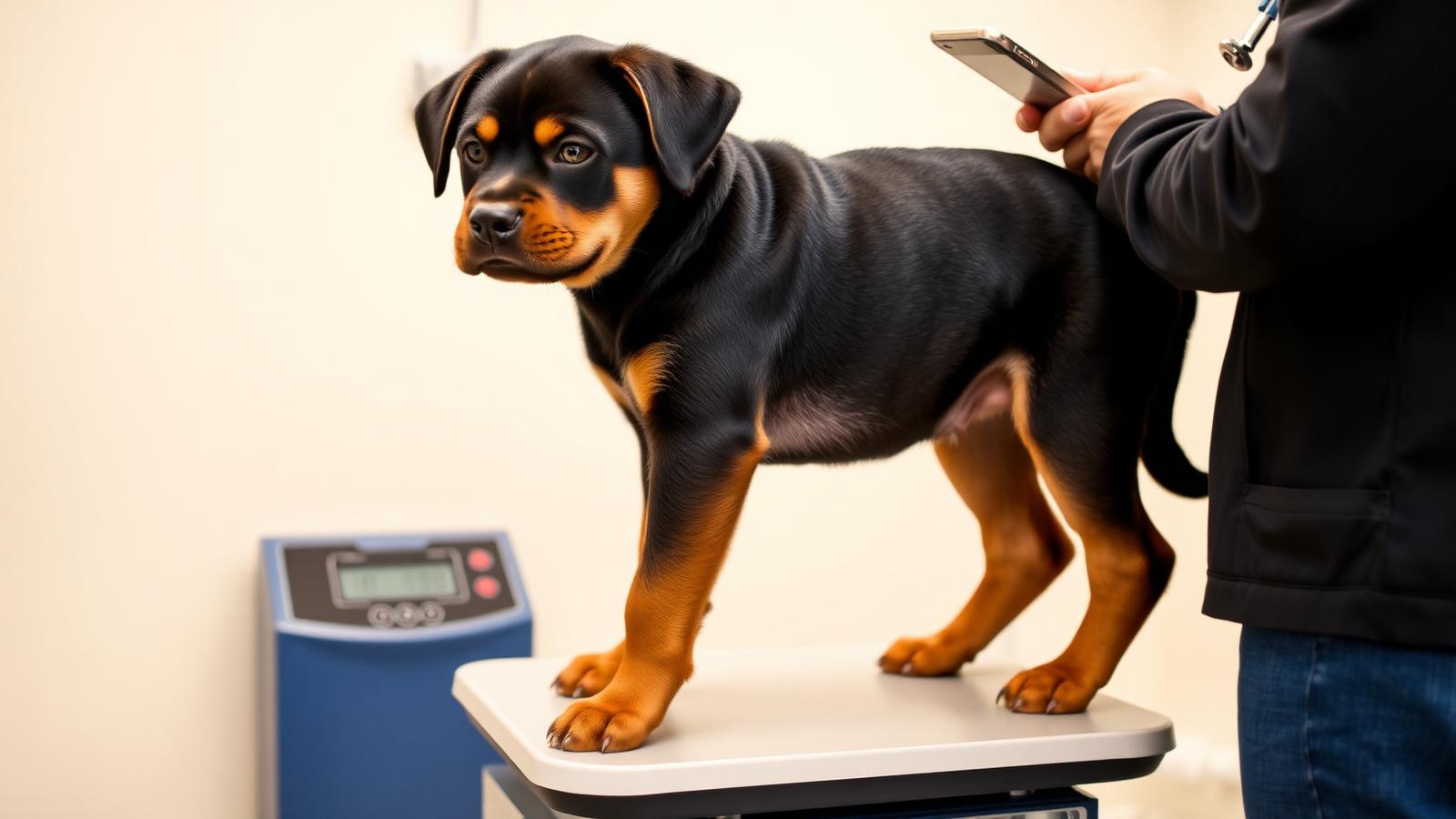
Rottweiler puppy standing calmly on a veterinary scale for a growth check

Approximate Rottweiler puppy weight chart

These broad editorial ranges are orientation points, not veterinary targets. They intentionally overlap male and female growth and should never be used to force-feed a smaller puppy.

AgeApproximate broad rangeWhat matters more than the number
8 weeks15–22 lb (7–10 kg)Settling in, appetite, hydration and steady weekly gain
12 weeks / 3 months26–40 lb (12–18 kg)Lean shape and an upward personal curve
4 months35–53 lb (16–24 kg)Ribs easy to feel; no sudden calorie-driven jump
6 months55–77 lb (25–35 kg)Controlled growth and comfortable movement
9 months66–99 lb (30–45 kg)Adolescent body condition rather than maximum size
12 months77–110 lb (35–50 kg)Growth may be slowing but skeletal maturity varies
Adult referenceMales 95–135 lb (43–61 kg); females 80–100 lb (36–45 kg)Individual ideal weight and build

The adult reference is the AKC range, not a goal every puppy must reach by its first birthday. Some healthy females remain lighter than males; individual adults can also fall outside a registry range.

For changes in height, skeletal maturity and exercise, read the separate Rottweiler puppy growth guide.

How to weigh a growing Rottweiler puppy

During rapid growth, weigh weekly under similar conditions:

  • Use the same scale when possible
  • Weigh at a similar time of day
  • Record whether the puppy had recently eaten
  • Note illness, diet change or medication
  • Log the result in pounds and kilograms if useful
  • Plot the trend rather than reacting to one reading

For a small puppy, weigh yourself holding the puppy and subtract your weight. As the puppy grows, a veterinary or pet-store platform scale is safer and more accurate. Never lift a heavy, struggling adolescent in a way that risks injury to either of you.

Rottie tip — Track the curve, not the competition

Add every weekly weight to one simple chart. A sudden change in your own puppy's line is more informative than comparing it with the largest puppy in a social-media group.

Body Condition Score: the rib, waist and tuck checks

WSAVA uses a nine-point Body Condition Score system. For many healthy dogs, an ideal score is around 4–5/9, but your veterinarian should interpret the growing puppy.

Ribs

Run flat fingers over the ribcage. The ribs should be easy to feel beneath a thin covering. If you must press firmly, the puppy may be carrying excess fat. Sharply visible ribs plus other prominent bones may indicate underweight condition, though coat, posture and frame affect appearance.

Waist

Viewed from above, the body should narrow behind the ribs. A broad straight or rounded shape can suggest excess condition.

Abdominal tuck

Viewed from the side, the abdomen should rise toward the hind legs. A hanging or level belly can reflect body fat, but a suddenly enlarged abdomen can also indicate illness and needs veterinary assessment.

Body condition and muscle condition are different. A dog can lose muscle while retaining body fat, so ask the veterinarian to assess both.

Is my Rottweiler puppy underweight?

Possible concerns include:

  • Sharply visible ribs, spine or pelvis
  • Weight loss or a flat growth trend
  • Poor appetite
  • Repeated vomiting or diarrhea
  • Pot belly with poor overall condition
  • Dull coat
  • Low energy or weakness
  • Poor muscle development

Do not simply double the food. Parasites, digestive disease, infection, dental pain, an unsuitable diet or another health problem may be involved. Book a veterinary examination and bring a fresh stool sample if requested.

Is my puppy overweight?

Possible signs include:

  • Ribs difficult to feel
  • Little or no waist from above
  • Minimal abdominal tuck
  • Fat deposits around the chest, tail base or lower back
  • Rapid gain after a food or treat change
  • Reduced willingness to exercise

Never put a growing puppy on an extreme calorie restriction or adult "diet" food without veterinary guidance. The solution may be a modest measured-portion adjustment, fewer extras or a different growth formula while preserving complete nutrition.

How to adjust food without chasing the chart

Start with the label for the specific complete large-breed growth food, measure in grams and count treats. If body condition is drifting, discuss a small adjustment with your veterinarian and reassess the trend.

Use these linked guides:

Do not add calcium, protein powder or "weight gain" supplements to a complete food unless prescribed.

Sudden weight changes that need attention

Call your vet

Contact a veterinarian for weight loss, failure to gain, sudden rapid gain, a swollen abdomen, persistent diarrhea or vomiting, poor appetite, pale gums, excessive thirst or urination, pain, lameness or lethargy. A young puppy can deteriorate quickly.

Seek urgent care for collapse, breathing difficulty, repeated unproductive retching, severe abdominal distension or profound weakness.

Common weight-chart mistakes

  • Treating a broad range as a required target
  • Comparing a female puppy with a large adult male line
  • Measuring weight but not body condition
  • Increasing food after one low reading
  • Ignoring treats, chews and toppers
  • Assuming a pot belly means healthy weight
  • Trying to reach adult weight by 12 months
  • Using a human BMI formula for a dog

Choose feeding tools that make consistency easier

RottieBuddy may earn a commission from qualifying purchases, at no extra cost to you. Product links never replace veterinary advice.

Compare suitable large-breed puppy foods and practical bowls or food-storage options. A scale and measured portions are more useful than guessing by eye.

Compare Rottweiler Puppy Foods

Explore Rottweiler Puppy Bowls

Compare Rottweiler Puppy Foods

Sources and further reading

Sources and further reading
  • American Kennel Club (AKC) — Rottweiler breed standard and adult weight ranges
  • World Small Animal Veterinary Association (WSAVA) — Body Condition Score guidelines
  • WSAVA Global Nutrition Committee — puppy growth and feeding guidance

Reviewed for accuracy

Last reviewed: August 2026

This guide provides general educational information and does not diagnose, prevent or treat disease. Vaccination and parasite protocols vary by location, lifestyle, medical history and product. Always follow your veterinarian's advice and the product label. Contact a veterinarian promptly when a young puppy is unwell.

Frequently Asked Questions

How much should an 8-week-old Rottweiler weigh?

Many fall within a broad range of roughly 15–22 lb (7–10 kg), but lineage, sex and age in days matter. Appetite, body condition, veterinary assessment and a steady trend are more important than one number.

How much should a 6-month-old Rottweiler weigh?

A broad orientation range is about 55–77 lb (25–35 kg). Do not feed a healthy lean puppy extra simply to reach the top of the range.

Why is my Rottweiler smaller than other puppies?

Normal genetic variation is common. Verify age, monitor the curve and ask your veterinarian to check body condition, diet, parasites and health rather than comparing photos.

How often should I weigh my puppy?

Weekly weighing is useful during rapid growth. Use similar conditions and discuss unexpected changes with your veterinarian.

What is the ideal adult Rottweiler weight?

AKC lists 95–135 lb for males and 80–100 lb for females. The ideal weight for an individual depends on frame, sex, muscle and body condition—not merely the breed range.

Continue your puppy health guide