
Back to Rottweiler Puppy Health

Rottweiler Puppy Vaccination Schedule

Vaccination protects a Rottweiler puppy during a stage when diseases such as parvovirus and distemper can become life-threatening very quickly. The schedule is a series, not one protective injection: antibodies received from the mother can interfere with early doses at unpredictable times, so puppies receive repeated vaccines until at least 16 weeks of age.

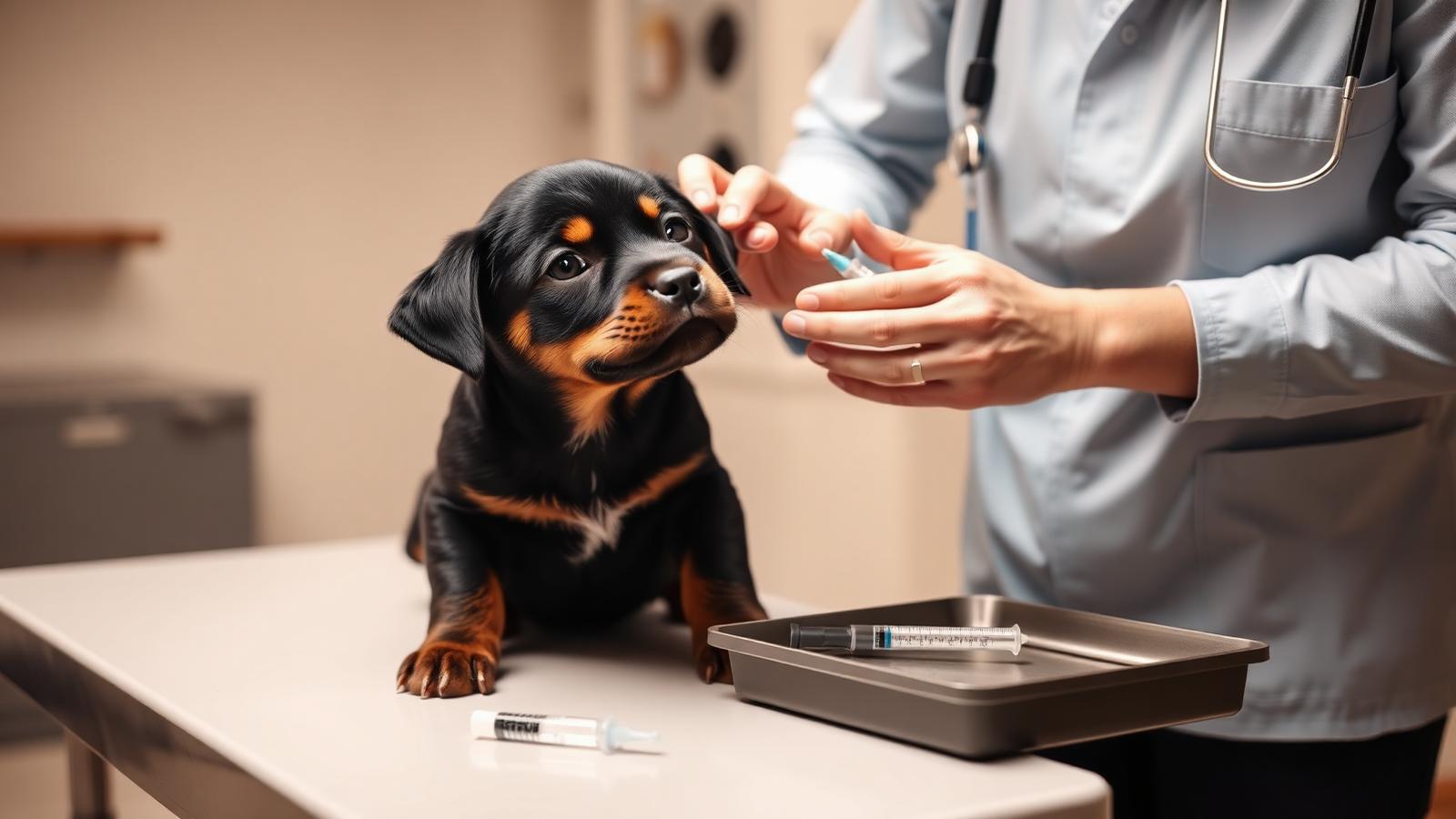
Rottweiler puppy receiving a calm veterinary examination before vaccination

Rottweiler Puppy Vaccination Schedule

Vaccination protects a Rottweiler puppy during a stage when diseases such as parvovirus and distemper can become life-threatening very quickly. The schedule is a series, not one protective injection: antibodies received from the mother can interfere with early doses at unpredictable times, so puppies receive repeated vaccines until at least 16 weeks of age.

Your veterinarian should design the final plan around your puppy's age, previous records, health, local disease risk, travel and lifestyle. Rabies timing is also controlled by local law. Use the schedule below as a conversation guide—not as a reason to vaccinate at home or delay an appointment.

Last reviewed: August 2026

Puppy vaccination schedule at a glance

The following is a common US framework. Product labels, AAHA/WSAVA guidance and your veterinarian's local protocol take priority.

AgeCommon discussion with your veterinarianWhy it matters
6–8 weeksFirst combination vaccine for distemper, adenovirus and parvovirus, often with parainfluenza (DAPP/DA2PP)Starts the primary series while maternal antibodies may still be present
10–12 weeksNext DAPP/DA2PP dose; review leptospirosis and lifestyle vaccinesBuilds the series and personalizes protection
12 weeks or olderLeptospirosis first dose where recommended; rabies according to product and lawLeptospirosis usually begins as a two-dose series; rabies protects animal and public health
14–16+ weeksFinal puppy DAPP/DA2PP dose at 16 weeks or older; second leptospirosis dose when started 2–4 weeks earlierThe final core-series dose must be late enough to reduce maternal-antibody interference
About 26+ weeksSome current WSAVA protocols recommend an additional selected core vaccine visitAsk whether this is part of your veterinarian's protocol
Within 1 year after the primary seriesDAPP/DA2PP booster; rabies and leptospirosis as dueEstablishes continued protection after the puppy series
AdulthoodDAPP/DA2PP commonly at three-year intervals after the first booster; other vaccine intervals varyFollow product, law, risk and veterinary advice

If your puppy started late or has an unknown history, do not guess which doses are needed. Bring every record you have and let the clinic create a catch-up plan.

Which puppy vaccines are core?

Distemper, adenovirus and parvovirus

These globally important diseases are covered by the standard combination series. Parvovirus is especially dangerous to puppies and can survive in contaminated environments. A normal-looking sidewalk, shared grass strip or dog area is not automatically low-risk.

Rabies

Rabies vaccination is required by law in many places. The minimum age, first booster and future interval depend on jurisdiction and the licensed product. A titer does not automatically replace a legally required rabies vaccination.

Leptospirosis

AAHA's US guidance now treats leptospirosis as core for dogs, while WSAVA frames it as core where the disease is endemic and suitable vaccines are available. Exposure can occur in urban, suburban and rural environments through infected urine and contaminated water or soil. Puppies commonly start a two-dose series at 12 weeks or older, followed by periodic boosters. Ask your veterinarian what applies locally.

Which vaccines depend on lifestyle?

Risk-based vaccines may include:

  • Bordetella and parainfluenza: daycare, boarding, group classes, grooming or frequent dog contact
  • Canine influenza: group environments, travel or regional outbreaks
  • Lyme disease: residence in or travel to tick-endemic areas, alongside year-round tick control
  • Other regional vaccines: recommended only when local exposure makes the benefits relevant

Tell your veterinarian about planned travel, boarding, classes, hiking, dog shows, wildlife exposure and multi-dog environments before protection is needed. Some vaccines require two initial doses several weeks apart.

When can a Rottweiler puppy go outside?

"After the second shot" is not a universal safe date. Protection depends on the puppy's age at the most recent dose, the series used, local parvovirus pressure and the environment.

At the same time, total isolation until the final vaccination can miss an important socialization period. Ask your veterinarian how to balance both needs. Lower-risk options may include:

  • Carrying the puppy in busy areas
  • Car rides and watching the world from a clean blanket
  • Meeting healthy, appropriately vaccinated dogs you know
  • Visiting private clean yards not used by unknown dogs
  • Well-managed puppy classes with vaccination, hygiene and illness policies
  • Positive exposure to people, sounds, surfaces and handling at home

Avoid dog parks, heavily used pet-relief areas, unknown feces and contact with sick or unvaccinated dogs until your veterinarian says the risk is acceptable. Continue with our Rottweiler puppy socialization guide rather than postponing every new experience.

What to expect after vaccination

Mild effects can include sleepiness, tenderness at the injection site, a temporary decrease in appetite or a low fever. Keep the day calm and follow the clinic's instructions.

Call your vet urgently

Seek immediate veterinary care for facial swelling, hives, repeated vomiting or diarrhea, breathing difficulty, collapse, profound weakness or rapidly worsening symptoms. Tell the clinic which vaccine was given and when. Do not give human antihistamines or pain medication unless a veterinarian instructs you to do so.

Report any previous reaction before future vaccination. Your veterinarian may adjust timing, observation or product choice; do not simply skip future protection without professional guidance.

Keep accurate vaccine records

Your record should show:

  • Puppy's name and identification
  • Vaccine name and disease coverage
  • Date administered
  • Product and batch/lot information where recorded
  • Veterinarian or clinic
  • Due date for the next dose
  • Rabies certificate where applicable

Boarding facilities, groomers, classes and travel authorities may request specific proof. Check requirements early—especially before international travel, where microchip, rabies timing, health certificates and waiting periods may apply.

Common vaccination mistakes

  • Treating the first injection as full protection
  • Assuming every clinic uses identical dates and products
  • Using the "second shot" as automatic permission for dog parks
  • Delaying all safe socialization until 16 weeks
  • Forgetting leptospirosis, boarding or travel risks
  • Missing the next dose in a two-dose initial series
  • Buying vaccines online and administering them without veterinary oversight
  • Ignoring an overdue or incomplete record

Prepare for routine care before your puppy needs it

RottieBuddy may earn a commission from qualifying purchases, at no extra cost to you. Product links never replace veterinary advice.

Browse practical Rottweiler health essentials, then learn how pet insurance may help with eligible unexpected veterinary costs. Preventive vaccination itself is often covered only by an optional wellness add-on, so always read policy terms.

Explore the Rottweiler Health Buyer's Guide

Learn About Rottweiler Pet Insurance

Explore the Rottweiler Health Buyer's Guide

Sources and further reading

Sources and further reading
  • American Animal Hospital Association (AAHA) canine vaccination guidelines
  • World Small Animal Veterinary Association (WSAVA) vaccination guidelines
  • American Veterinary Medical Association (AVMA) pet vaccination resources
  • Local and state rabies vaccination laws

Disclaimer

This guide provides general educational information and does not diagnose, prevent or treat disease. Vaccination and parasite protocols vary by location, lifestyle, medical history and product. Always follow your veterinarian's advice and the product label. Contact a veterinarian promptly when a young puppy is unwell.

Frequently Asked Questions

How many vaccinations does a Rottweiler puppy need?

For the distemper/adenovirus/parvovirus combination, puppies commonly receive at least three doses between 6 and 16 weeks, spaced 2–4 weeks apart, with the last dose at 16 weeks or older. Other vaccines have different initial series, so follow your veterinarian's plan.

Is a puppy protected after the second vaccination?

Not reliably in every situation. Maternal antibodies and the puppy's age can affect the response. Ask your veterinarian when local outdoor environments are appropriate.

Can my puppy socialize before being fully vaccinated?

Yes, through carefully managed, lower-risk experiences. Veterinary behavior guidance supports safe early socialization rather than complete isolation. Your veterinarian should help you choose suitable locations and classes for local disease risk.

Does a Rottweiler need a different vaccine schedule from other breeds?

The core schedule is not normally breed-specific. The individual plan depends on health, age, location, lifestyle and previous reactions—not on being a Rottweiler alone.

What if my puppy's vaccine history is unknown?

Book a veterinary visit and bring any breeder, rescue or shelter paperwork. The veterinarian will create an age-appropriate catch-up plan rather than assuming protection.

Continue your puppy health guide