
How to Train a Rottweiler Puppy: The Complete 2026 Guide

Training a Rottweiler puppy is one of the most rewarding investments you'll ever make. With patience, consistency and positive reinforcement, almost every puppy grows into a calm, obedient and trustworthy companion.

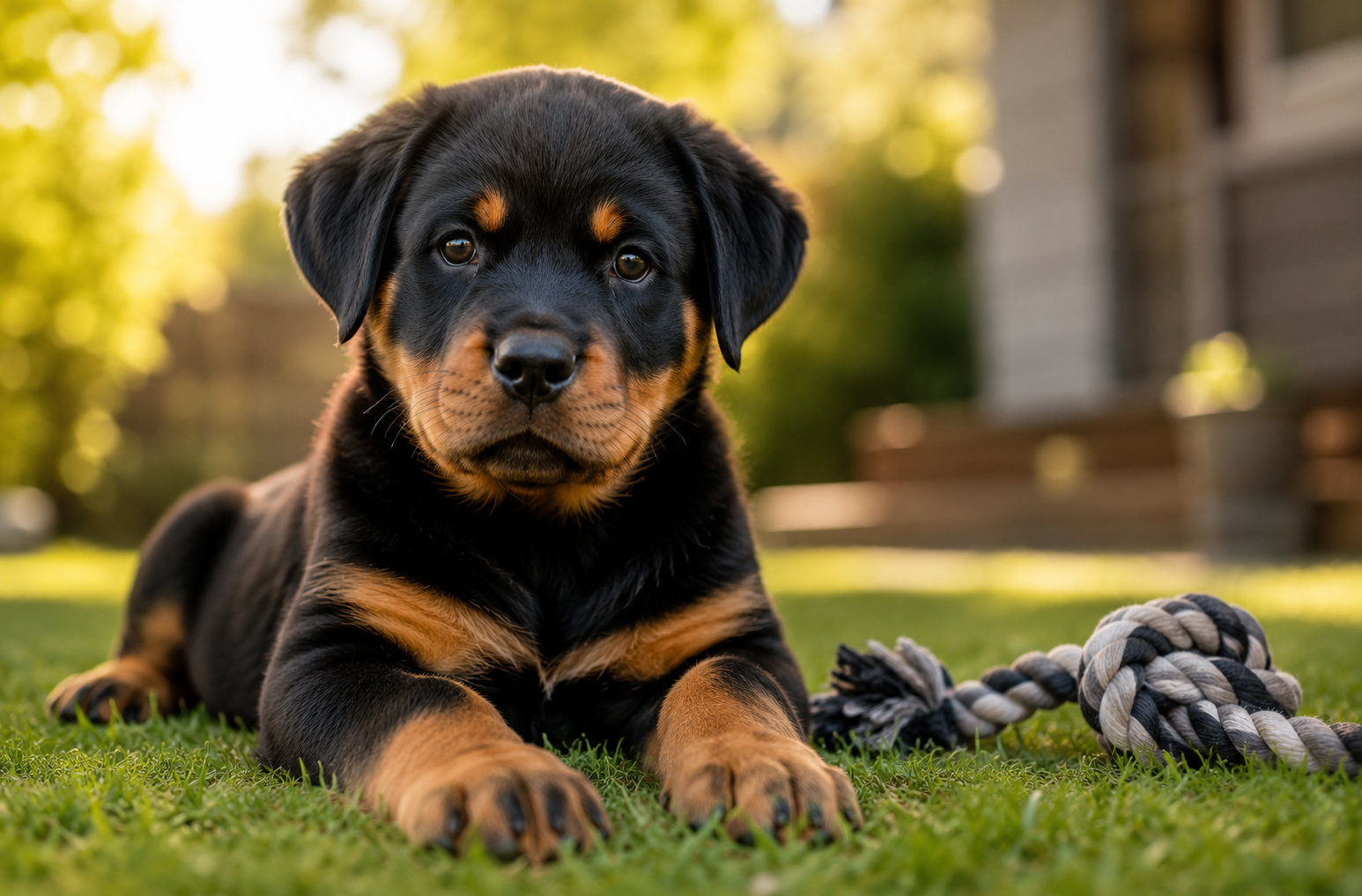
Rottweiler puppy lying on green grass next to a rope tug toy during a garden training session

In this section

Learn how to house train a Rottweiler puppy with a practical potty schedule, accident prevention tips, rewards and common house-training mistakes.

Read more

Learn how to crate train a Rottweiler puppy positively, including crate size, first nights, whining, duration, feeding and common mistakes.

Read more

Teach your Rottweiler puppy name recognition with simple positive training games, distractions and step-by-step exercises for fast, reliable attention.

Read more

Learn how to teach a Rottweiler puppy to sit using positive reinforcement, hand signals, rewards and real-world practice.

Read more

Teach your Rottweiler puppy the down command step by step and learn how to build duration, distractions and a reliable settle behavior.

Read more

Teach your Rottweiler puppy to come when called with recall games, long-line training, high-value rewards and common mistakes to avoid.

Read more

Learn loose-leash walking for Rottweiler puppies with step-by-step training, equipment tips, pulling solutions and practical exercises.

Read more

Teach your Rottweiler puppy to stay home alone gradually with practical alone-time training, departure routines and signs you're progressing too fast.

Read more

Learn how to stop Rottweiler puppy biting and teach bite inhibition using redirection, calm play, chew toys and positive training.

Read more

Training starts the moment your puppy comes home

The first weeks at home shape everything you teach later. See what to expect — and what to work on — in our 8–12 week Rottweiler puppy development guide.

Read the 8–12 week guide

How to Train a Rottweiler Puppy

Training a Rottweiler puppy is one of the most rewarding investments you'll ever make. Rottweilers are among the world's most intelligent and loyal dog breeds. They learn quickly, love working with their owners, and thrive when given clear structure.

Without proper training, however, a Rottweiler's strength and confidence can become difficult to manage. The good news is that with patience, consistency, and positive reinforcement, almost every puppy can grow into a calm, obedient, and trustworthy companion. Early socialization and reward-based training are especially important for developing confident adult dogs.

This guide explains exactly what to teach, when to teach it, and how to avoid the most common mistakes. Pair it with our puppy preparation checklist and the 8–12 week development guide.

Why Training Starts on Day One

Many owners think formal training starts after puppy classes. It doesn't — training begins the moment your puppy enters your home. Every interaction teaches your puppy something:

  • What behavior earns rewards
  • What behavior gets ignored
  • How to communicate
  • How to trust you
  • What your household rules are

A Rottweiler puppy learns incredibly fast during the first months of life.

Your Rottweiler Training Timeline

Puppy AgeMain GoalPriority
8–10 weeksBonding & house training⭐⭐⭐⭐⭐
10–12 weeksName recognition & basic commands⭐⭐⭐⭐⭐
3–4 monthsSocialization & leash walking⭐⭐⭐⭐⭐
4–6 monthsObedience & impulse control⭐⭐⭐⭐
6–12 monthsReliability around distractions⭐⭐⭐⭐
12+ monthsAdvanced training & mental stimulation⭐⭐⭐⭐

Essential Commands Every Rottweiler Should Know

Teach these commands in short sessions of 5–10 minutes:

  • Sit
  • Down
  • Stay
  • Come
  • Leave It
  • Drop It
  • Heel
  • Wait
  • Place
  • No

Reward correct behavior immediately using treats, praise, or play. Keep sessions short and positive, as puppies have limited attention spans. Start with name recognition and sit.

House Training

House training is usually the first challenge for new owners. Our full house-training guide has the complete routine.

Tips for faster potty training

  • Go outside immediately after waking
  • Go outside after eating
  • Go outside after playing
  • Always use the same potty spot
  • Praise immediately after success
  • Never punish accidents

Signs your puppy needs to go

  • Sniffing
  • Walking in circles
  • Suddenly stopping play
  • Walking toward the door
  • Whining

Most puppies become reliable between 4 and 6 months with a consistent routine.

Crate Training

A crate should feel like your puppy's bedroom — not a punishment. Benefits include faster potty training, better sleep, less destructive chewing, easier travel, and a safe place during stressful situations. See the step-by-step crate-training guide.

Crate training checklist

  • ✅ Comfortable bed
  • ✅ Safe chew toys
  • ✅ Water when appropriate
  • ✅ Short positive sessions
  • ✅ Never force your puppy inside

Looking for a crate that holds up to an adult Rottweiler? Check our buyer's guide.

Socialization

Socialization is arguably the most important part of raising a balanced Rottweiler. Exposing your puppy to different people, sounds, environments and friendly dogs during the early months builds confidence and reduces fear-based behavior later in life. Introduce your puppy to:

  • Children
  • Elderly people
  • Men with hats
  • Bicycles
  • Cars
  • Vacuum cleaners
  • Different floor surfaces
  • Friendly vaccinated dogs
  • Veterinary clinics

The goal isn't simply exposure — it's creating positive experiences. More detail in our socialization guide.

Leash Training

One day your adorable puppy will weigh over 100 pounds (45 kg), so loose-leash walking should start early. Practice this routine:

  1. Start indoors.
  2. Reward every few steps.
  3. Stop when pulling begins.
  4. Continue once the leash loosens.
  5. Keep sessions fun.

A well-fitted Y-shaped harness protects growing shoulders — see our walking and travel gear picks.

Bite Inhibition

Puppies naturally explore the world with their mouths. Instead of punishment:

  • Redirect to toys
  • Stop play briefly
  • Reward calm behavior
  • Stay consistent

Most puppies outgrow excessive biting after teething if guided correctly.

Daily Training Schedule

TimeActivity
MorningPotty break + breakfast
After breakfast5-minute obedience session
Mid-morningWalk & socialization
AfternoonPlay & mental games
EveningRecall practice
Before bedPotty break & calm routine

Need a printable plan? Use our Rottweiler training schedule.

Best Training Rewards

Every puppy has different motivations. Popular rewards include:

  • Small treats
  • Cooked chicken
  • Cheese cubes
  • Favorite toys
  • Tug games
  • Praise
  • Belly rubs

Keep rewards small so your puppy stays focused, and count them into the daily ration — see our Rottweiler nutrition guide.

Common Training Mistakes

Avoid these mistakes:

  • Punishing instead of teaching
  • Inconsistent rules
  • Training sessions that are too long
  • Skipping socialization
  • Expecting perfection too quickly
  • Using force or intimidation

Positive reinforcement builds trust and long-term reliability far better than harsh corrections. Struggling with a specific issue? See our behavior solutions.

Mental Stimulation

A tired brain is often better than a tired body. Great enrichment activities include:

  • Snuffle mats
  • Food puzzles
  • Hide-and-seek
  • Scent games
  • Basic trick training
  • Interactive toys

Mental exercise helps reduce boredom and unwanted behaviors.

Conclusion

Training a Rottweiler puppy is a journey that starts on day one and continues throughout your dog's life. With patience, consistency, early socialization and positive reinforcement, you'll raise a confident, well-mannered companion that is a joy to live with.

Remember that every puppy learns at its own pace. Celebrate small successes, keep training sessions fun, and enjoy the process of building a lifelong partnership with your Rottweiler.

Frequently Asked Questions

At what age should I start training my Rottweiler puppy?

Training should begin as soon as your puppy comes home, usually around 8 weeks old.

Are Rottweilers easy to train?

Yes. Rottweilers are highly intelligent and eager to work with their owners. Consistency and positive reinforcement produce the best results.

How long should puppy training sessions be?

Keep sessions between 5 and 10 minutes, several times a day.

Should I use treats?

Yes. Food rewards help puppies learn faster. As behaviors become reliable, gradually replace treats with praise and play.

Can Rottweilers be trained without punishment?

Absolutely. Modern reward-based training is effective, strengthens the bond between dog and owner, and is widely recommended by trainers and breed experts.

Other sections