How to Pick a Rottweiler Puppy: Choosing the Best Puppy From a Litter
Learn how to choose a healthy, well-matched Rottweiler puppy by assessing temperament, health, the parents, paperwork and your own lifestyle.
Choosing a Rottweiler puppy is one of those moments you probably remember for years.
You may arrive thinking you are going to carefully compare every puppy in the litter, study their behavior, check their build and calmly make a rational decision.
And then one puppy looks at you.
Suddenly, all those carefully prepared plans become a lot less important.
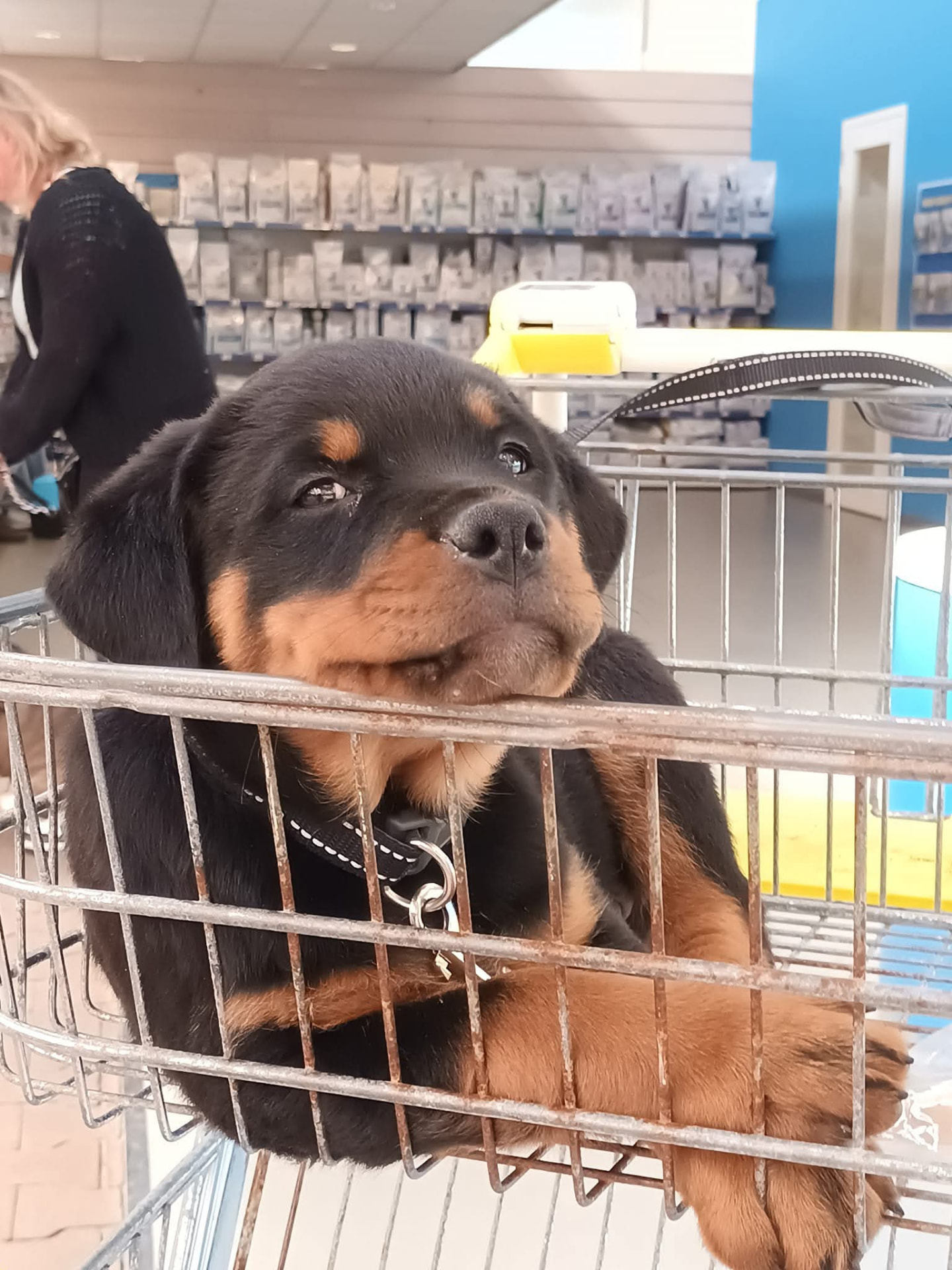
That was pretty much our experience when we went to pick up our Rottweiler puppy Beer.
We visited a farmer near Zwolle in the Netherlands who had a litter of seven Rottweiler puppies. All seven looked healthy, strong and remarkably similar. They had received the appropriate vaccinations, and the paperwork was in order.
At first glance, choosing between them wasn't easy.
But Beer had one little detail that made him stand out: a small white spot on his chest.
It wasn't something we had specifically been looking for. It simply made him recognizable among his brothers and sisters. Combined with his personality, that little white patch helped make the decision feel right.
But while emotion is definitely part of choosing a puppy, there are also some important things you should check before taking a Rottweiler home.
In this guide, we'll look at how to pick the best Rottweiler puppy from a litter, what to look for when buying a Rottweiler puppy, whether you should choose a male or female, and what life with a Rottweiler puppy is really like.
How to Pick the Best Rottweiler Puppy From a Litter
When you stand in front of a litter of Rottweiler puppies, it can be difficult to know where to start.
Try not to immediately choose the biggest puppy, the most active puppy or the puppy that runs toward you first.
Instead, spend some time watching the entire litter.
Look at how the puppies interact with each other.
A healthy Rottweiler puppy will usually be curious about its surroundings. Puppies will play, wrestle, explore, sleep and sometimes argue over toys or attention.
What you are looking for is not necessarily the "alpha" puppy.
In fact, for many families, an extremely pushy or dominant puppy may require more experience and training than a calmer, more balanced puppy.
Ideally, look for a puppy that:
- Shows curiosity without being constantly frantic.
- Is comfortable interacting with people.
- Plays normally with its littermates.
- Recovers quickly when surprised by a new sound or situation.
- Allows gentle handling.
- Appears alert and interested in the environment.
A puppy that initially sits back and observes isn't automatically a bad choice either. Some puppies simply need a little more time before approaching new people.
Temperament is about the complete picture, not one moment.
What to Look for When Buying a Rottweiler Puppy
If you are wondering what to look for when buying a Rottweiler puppy, health should come before appearance.
A beautiful puppy isn't much comfort if serious health or breeding problems appear later.
Before choosing your puppy, look at the environment where the litter is being raised.
It should feel clean, safe and appropriate for young puppies.
You should also be able to see that the puppies are comfortable around people.
Look at the puppies themselves.
Their eyes should appear clear and bright. Their coat should look healthy. They should move normally without obvious limping or discomfort.
A healthy puppy should generally appear energetic when awake, although remember that puppies sleep a lot.
Also check the puppy's general body condition. You don't want to see a puppy that looks extremely thin, weak or noticeably different in condition from the rest of the litter.
Ask About the Parents
One of the most useful things you can do when choosing a Rottweiler puppy is learn about the parents.
If possible, meet the mother.
Her temperament can give you some idea of the kind of temperament the puppies may inherit, although genetics are only part of the story.
Ask the breeder about both parents.
You may want to know about:
- Temperament.
- Hip and elbow health.
- Known hereditary health problems.
- Age.
- Previous litters.
- Pedigree.
- Working or show background.
Responsible breeders should be willing to answer questions about their dogs.
You shouldn't feel as though you are being difficult by asking questions. You are potentially choosing a dog that will be part of your family for the next decade or longer.
Check Vaccinations and Paperwork
When we went to get Beer, one reassuring part of the experience was knowing that the puppies had received their vaccinations and that their paperwork was in order.
Ask the breeder what vaccinations and veterinary checks the puppy has already received.
Depending on the puppy's age and where you live, some vaccinations may still need to be completed after you bring your puppy home.
You should also ask about:
- Microchipping.
- Deworming.
- Veterinary health checks.
- Registration or pedigree papers.
- Vaccination records.
- Feeding routine.
- Any health guarantees or breeder contracts.
Keep these documents somewhere safe.
Your veterinarian will likely want to see the vaccination and health records during your puppy's first check-up.
Don't Choose a Puppy Based on Size Alone
Rottweilers are powerful dogs, so it can be tempting to select the biggest puppy in the litter.
But the biggest puppy isn't automatically the healthiest puppy or the best match for your family.
Likewise, the smallest puppy shouldn't automatically be dismissed.
What matters more is overall health, behavior, genetics and temperament.
Remember that puppy growth can change dramatically during the first year.
That chunky little puppy sleeping in the corner may eventually become a 100-pound adult Rottweiler.
Watch How the Puppy Responds to You
Sit down near the puppies and allow them to approach you.
Try not to immediately pick one up.
Instead, watch what happens.
Does the puppy come over to investigate?
Does it sniff your hands?
Does it seem comfortable being near you?
If you gently interact with the puppy, does it remain relaxed?
A confident puppy may happily climb into your lap.
Another puppy may keep returning to you after exploring.
Those small interactions can tell you more than simply looking at the puppies.
Beer stood out visually because of the little white spot on his chest, but choosing him wasn't just about that marking.
There was also simply a connection.
Sometimes there is a puppy you keep looking at.
And sometimes that puppy keeps coming back to you too.
Is It Better to Get a Boy or Girl Rottweiler?
One of the most common questions future owners ask is: Is it better to get a boy or girl Rottweiler?
There isn't one answer that applies to everyone.
Male Rottweilers are generally larger and heavier than females. Adult males often develop a broader head and more powerful appearance.
Females are usually somewhat smaller and may mature slightly earlier.
However, individual personality matters much more than gender alone.
You can find very affectionate male Rottweilers and very affectionate females. You can also find confident, stubborn, energetic and calm dogs of either sex.
If you already have another dog at home, discuss this with the breeder. Sometimes the sex and temperament of your existing dog can influence which puppy may be the easiest match.
The most important thing is finding a puppy whose temperament fits your household and experience.
Owning a Rottweiler Is a Long-Term Commitment
Before learning how to pick a Rottweiler puppy, it's worth asking yourself another question: Are you ready for owning a Rottweiler?
Rottweilers are incredibly loyal dogs, but they are not small, low-maintenance pets.
An adult Rottweiler is strong.
Very strong.
That cute little puppy you can carry under one arm today may eventually become a powerful dog weighing 80, 90 or even 100+ pounds.
Training therefore isn't optional.
You will need to invest time in:
The earlier you begin, the easier life usually becomes.
How to Raise a Rottweiler Puppy
If you're researching how to raise a Rottweiler, the most important advice is simple: Start training from day one.
You don't need to run military-style training sessions with an eight-week-old puppy.
Training should be short, positive and fun.
Start with simple things.
Teach your puppy their name.
Reward them for coming toward you.
Introduce commands such as:
- Sit.
- Down.
- Come.
- Leave it.
- Stay.
Also teach everyday life skills.
For example, being calm when someone touches their paws can make nail trimming much easier later.
Getting used to having their ears and mouth checked can make veterinary visits easier.
Walking calmly on a leash becomes incredibly important once your Rottweiler grows into a powerful adult dog.
And perhaps most importantly, socialize your puppy carefully.
Introduce them gradually to different people, surfaces, sounds, environments and situations.
The goal isn't to overwhelm the puppy.
The goal is to teach them: "New things happen, and that's okay."
Don't Forget About the Breeder
A responsible breeder does more than simply sell puppies.
They should care about where their puppies are going.
Don't be surprised if a good breeder asks you questions too.
They may want to know:
- Where you live.
- Whether you have owned dogs before.
- Whether you have experience with large breeds.
- How much time the dog will spend alone.
- Whether you have children.
- What kind of lifestyle you have.
That isn't an interrogation.
It usually means the breeder wants their puppies to end up in suitable homes.
In fact, a breeder who asks absolutely nothing about you should make you a little cautious.
Should You Let the Breeder Choose the Puppy?
Sometimes the person who has raised the litter actually knows which puppy will suit you best.
The breeder has been watching those puppies every day.
They know which puppy is constantly climbing over the others.
They know which puppy prefers observing before joining the action.
They know which puppy is extremely confident and which one is more sensitive.
Tell the breeder about your lifestyle.
If you are looking for a relaxed family companion, say so.
If you want to do obedience, sports or working activities, mention that too.
Their observations can be extremely useful.
The Puppy That Chooses You
People sometimes say: "Don't choose the puppy. Let the puppy choose you."
There is some truth in that idea.
But don't treat it as a strict rule.
The puppy that climbs all over you first may simply be the boldest puppy in the litter.
The quiet puppy sitting nearby may actually be the better match for your household.
Use both your head and your heart.
Ask questions.
Observe temperament.
Check the paperwork.
And then allow yourself to enjoy the moment.
When we stood there looking at seven nearly identical Rottweiler puppies near Zwolle, we certainly didn't have some complicated puppy scoring system.
We had seven healthy little Rotties running around.
And one of them had that tiny white spot on his chest.
That was Beer.
That little marking made him different enough for us to keep noticing him.
And sometimes, choosing your puppy really does start with something that simple.
Final Thoughts: How Do You Choose the Right Rottweiler Puppy?
If you're trying to figure out how to pick the best Rottweiler puppy from a litter, don't focus on finding a "perfect" puppy.
Focus on finding a healthy puppy from responsible parents with a temperament that suits your lifestyle.
Check the health records.
Ask about the parents.
Observe the entire litter.
Spend some time interacting with the puppies.
And remember that choosing the puppy is only the beginning.
The dog your Rottweiler becomes will depend heavily on what happens after you bring them home.
Socialization, training, exercise, routine and the relationship you build together will shape that tiny puppy into the adult Rottweiler who may be beside you for many years.
Choose carefully.
Then enjoy every chaotic, funny and occasionally exhausting stage that comes next.
Share this article
Read also
Pause for a moment
Three moments showing why Rottweilers are so special.