
Rottweiler Grooming Guide: Coat, Nails, Ears and Teeth
A Rottweiler's short coat is relatively simple to maintain, but grooming still supports comfort, hygiene and early awareness of change. A useful routine includes brushing, nail care, dental home care, ear checks, bathing when needed and a gentle look at the skin and paws.
The goal is not to make every task happen on a rigid calendar. Check regularly, act when care is needed and stop when you find pain, inflammation or fear that requires a different plan. Puppies can learn these skills gradually, and adult or senior dogs can learn them too.
Last reviewed: August 2026
A flexible Rottweiler grooming schedule
Use this as a starting point and adjust for the dog, season, activity, health and veterinary advice.
| Task | Check or care rhythm | Adjust when |
|---|---|---|
| Brushing | About weekly | Brush more often when loose undercoat increases |
| Coat and skin check | During brushing | Check promptly after hiking, swimming, parasite exposure or a skin change |
| Bathing | When dirty, oily or noticeably odorous | Follow a veterinarian's schedule for medicated bathing |
| Nail check | Every 1–2 weeks | Trim or grind small amounts when length affects stance, traction or comfort |
| Ear check | About weekly and after swimming | Clean only when needed or directed; call a vet for pain, marked redness, odor or discharge |
| Toothbrushing | Ideally daily | Build gradually; several times weekly can still be useful |
| Paw check | After rough, hot, icy or treated surfaces | Check sooner for licking, limping or a torn nail |
The puppy-specific grooming hub uses more detailed handling exercises: Rottweiler puppy grooming.
Start with cooperative care
A powerful dog should not have to be wrestled through routine care. Cooperative care uses small steps, reinforcement and predictable pauses so the dog can participate more comfortably.
Teach a simple start-button behavior
Ask for an easy position, such as standing on a mat or resting the chin on a towel. Touch one body area briefly, mark and reward. Stop before the dog needs to pull away. Over sessions, build toward the actual brush, nail tool, toothbrush or bath setup.
Read the dog's response
Slow down or stop for repeated head turns, lip licking, freezing, paw withdrawal, escape attempts, growling or snapping. Punishing a warning can make care less safe. A muzzle can be a useful trained safety tool in a professional plan, but forcing one on during a crisis does not teach comfort.
Keep sessions small
One calm paw touch or a few brush strokes can be a successful session. If a procedure is medically necessary and the dog cannot tolerate it, ask the veterinarian or groomer about a safe handling plan rather than escalating restraint at home.
Rottie grooming tip — Separate training from the full task
Practice showing the tool, one gentle touch and a reward on days when no nail trim, ear clean or bath is required. Low-pressure rehearsals build a much clearer history than producing the tool only for long procedures.
Brushing a Rottweiler's short double coat
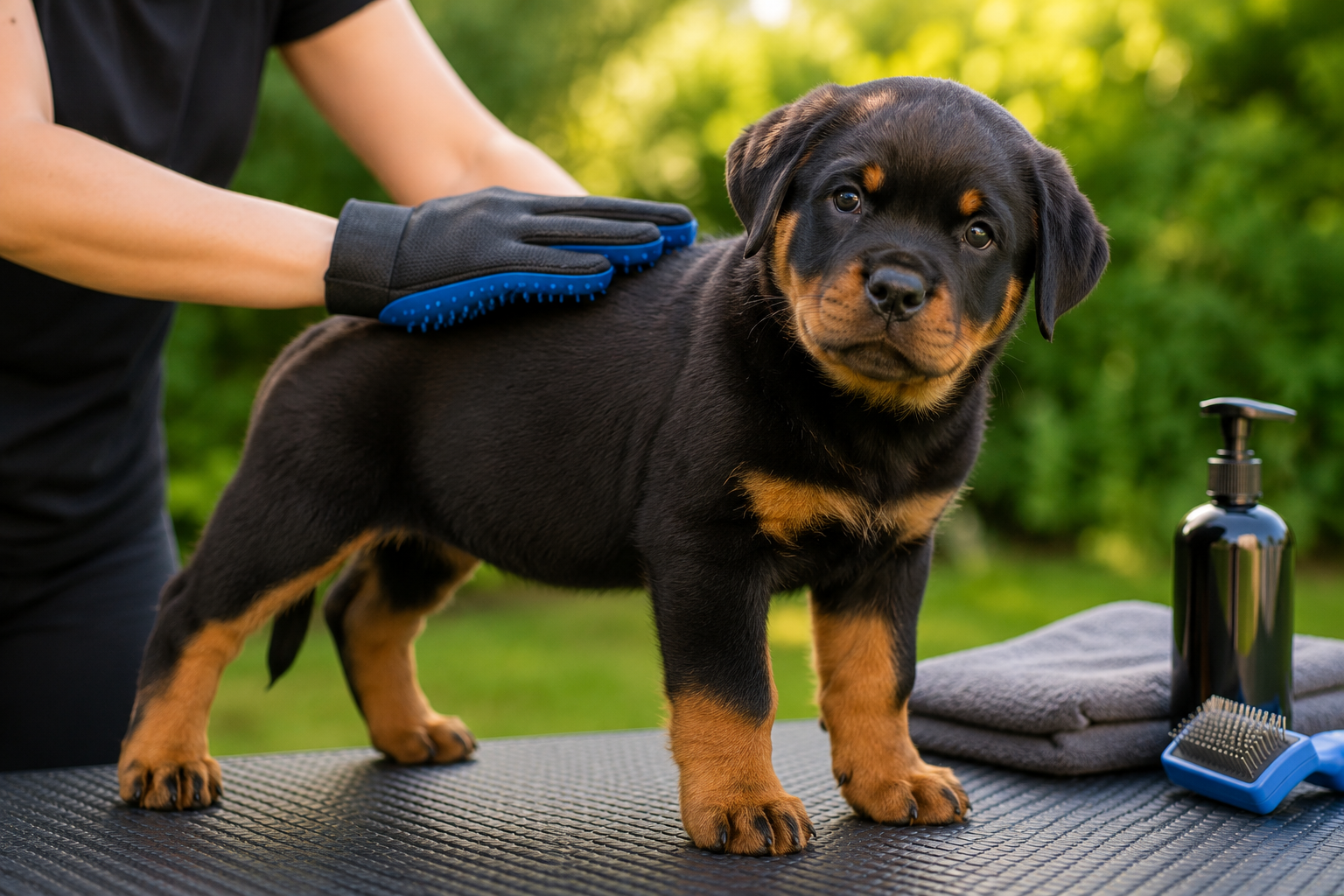
Rottweilers have a short outer coat with an undercoat that may shed more heavily at some times of year. Regular brushing removes loose hair and provides a useful skin check. It does not need to scrape or cut healthy coat.
A simple brushing method
- Let the dog inspect the brush and reward calm contact.
- Use gentle strokes in the direction the hair grows.
- Work in short sections over the shoulders, sides, chest, back and hindquarters.
- Use lighter pressure over bony or sensitive areas.
- Check the skin as hair moves aside.
- Stop if the dog shows pain, or if you find a wound, moist lesion, lump or parasite that needs attention.
A rubber curry brush or grooming mitt can work for routine loose hair. A suitable undercoat tool may help during heavier shedding, but repeated hard passes can irritate the skin or damage the coat. Choose a tool sized for a short-coated large dog and follow the manufacturer's safe-use directions.
Bathing without overcomplicating the schedule
There is no evidence-based universal interval such as "every six weeks" or "every three months" for every healthy Rottweiler. Bathe when the dog is dirty, has residue that should be removed or needs a veterinarian-prescribed skin protocol.
How to bathe safely
- Brush out loose hair before the bath.
- Use lukewarm water and a non-slip surface.
- Use a product formulated for dogs; follow the label and dilute only when instructed.
- Keep shampoo and water out of the eyes and ear canals.
- Rinse thoroughly, especially in the armpits, groin and under the collar area.
- Towel dry and keep the dog warm until fully dry.
- Wash bedding or collars separately when relevant to dirt, allergens or a veterinary plan.
Human shampoo, dish soap, essential oils and strong fragrances are not routine substitutes. If skin is already inflamed, painful, greasy, scaly or infected-looking, ask the veterinarian before trying a new shampoo.
Nail care for thick, dark nails
Nail growth and wear vary. Floor clicking can be a clue, but some nail shapes click before they are functionally too long. Look at stance, toe position and traction, and ask a veterinarian or groomer to show the correct length for your dog.
Clippers or grinder?
Either can be appropriate when the tool suits the dog and the handler is competent. Clippers are quick; grinders remove smaller amounts but create sound, vibration and heat. Grinding is not automatically safer. Introduce either tool gradually.
For dark nails where the quick is hard to see:
- Remove very small amounts.
- Check the cut surface after each step.
- Keep styptic powder within reach.
- Support the toe without twisting the limb.
- Stop before the dog struggles or the tool becomes warm.
If you cut the quick, apply styptic powder and gentle pressure. Seek veterinary help if bleeding does not stop, the nail is split at the base, the toe is very painful or infection is suspected. Never force a painful or injured paw.
Ear checks and cleaning
A healthy ear should be comfortable and should not have persistent strong odor, marked redness, swelling or heavy discharge. Folded ears are not automatically infected, and cleaning a healthy ear too often can irritate it.
When an ear may need veterinary care
- Repeated head shaking or scratching
- Pain when touched
- Marked redness, swelling or heat
- New or strong odor
- Yellow, green, bloody or heavy dark discharge
- A swollen ear flap
- Head tilt, loss of balance or abnormal eye movement
Do not push cotton swabs into the canal. Do not use peroxide, vinegar, essential oils or leftover medication unless your veterinarian instructs you. A ruptured eardrum or particular disease can make an otherwise common product unsafe.
If your veterinarian recommends routine cleaning, use the demonstrated technique and approved product. Dry the outer ear after swimming or bathing without probing the canal.
Teeth and gums
Daily toothbrushing is the best home-care goal for most dogs, and brushing several times a week can still be effective. Use a pet toothbrush or suitable soft brush with toothpaste made for pets. Human toothpaste may contain ingredients that should not be swallowed by dogs.
Build the habit gradually
- Reward calm mouth handling.
- Let the dog taste a small amount of pet toothpaste.
- Lift the lip for a second without forcing the mouth open.
- Brush a few outer tooth surfaces.
- Increase coverage and duration over multiple sessions.
Focus on the outer surfaces where plaque accumulates. Do not scrape hard tartar at home or use tools that can injure enamel and gums.
Call the veterinarian for persistent bad breath, red or bleeding gums, heavy tartar, a broken or loose tooth, facial swelling, mouth pain, dropping food or difficulty eating. Professional dental assessment and treatment address disease below the gumline that brushing cannot remove.
Dental chews may complement brushing if they are appropriately sized and used under supervision. They do not replace toothbrushing or veterinary dental care. Look for products accepted by the Veterinary Oral Health Council when appropriate.
Skin, paws and whole-body checks
Brushing and drying are good opportunities to look and feel from nose to tail.
Check the skin and coat
Look for redness, flakes, scabs, moist areas, hair loss, wounds, ticks, fleas or coat change. Persistent itch needs investigation; repeatedly changing shampoos can obscure or worsen the problem.
Check the paws
Look between the toes and around each pad for grit, cuts, foreign material, irritation or a damaged nail. Rinse residues such as road salt when needed and dry well. Avoid walking on surfaces hot enough to burn pads.
Check for lumps and pain
Use gentle flat hands rather than squeezing. Note a lump's location, approximate size, texture and date found. A photo beside a ruler can help track change, but appearance cannot determine what a mass is. Ask your veterinarian whether sampling is appropriate.
Adapt grooming for puppies, adults and seniors
Puppies
Prioritize learning over cosmetic results. Keep sessions extremely short and pair calm handling with food or play. The detailed puppy grooming hub links to brushing, nails, teeth, ears and bathing lessons.
Adult dogs
Maintain the routine and continue rewarding cooperation. A dog that used to accept care but suddenly resists may be painful; do not label the change stubbornness.
Senior dogs
Use non-slip mats, reduce standing time and support comfortable positions. Arthritis, skin fragility, masses, dental disease, vision change or cognitive change may affect tolerance. Ask the veterinary team how to adapt care.
Does my Rottweiler need a groomer or a veterinarian?
A professional groomer can help with
- Routine brushing and seasonal loose coat
- Bathing a healthy dog
- Nail care when the dog is comfortable and the nail is not injured
- Teaching an owner safe routine technique
- A low-pressure introduction for a puppy
Choose a groomer who uses non-slip surfaces, avoids cage-dryer overheating, records health concerns and stops when a dog is distressed or painful.
A veterinarian should assess
- Painful, infected-looking or repeatedly inflamed skin or ears
- A broken nail, injured paw or uncontrolled bleeding
- A new mass or unexplained swelling
- Sudden coat change, widespread hair loss or intense itch
- Mouth pain, broken teeth, facial swelling or difficulty eating
- A sudden behavior change during handling
- Any problem needing medication or diagnosis
Call your vet — do not groom through pain
Stop the session and contact your veterinary team when touching, brushing, opening the mouth or handling a paw causes new pain or a sudden defensive response. More restraint can worsen fear and may aggravate an injury.
Grooming kit essentials
RottieBuddy may earn a commission from qualifying purchases, at no extra cost to you. Product links never replace veterinary advice.
Choose tools that fit a short-coated, powerful dog.
Compare brush types, nail tools, dog shampoos, toothbrushes and ear-care options. A good tool should make correct technique easier; it should not promise to treat infection, allergy, mites, pain or dental disease.
Compare Rottweiler grooming brushes and toolsContextual product routes for readers who need them:
Continue the Rottweiler grooming guide
Rottweiler health pillar
The complete overview of lifelong Rottweiler health care.
Common health problems
Warning signs, symptom triage and when to call your veterinarian.
Puppy grooming hub
Handling, first brushing and building calm cooperative care.
Grooming tools
Compare brushes, nail tools, ear cleaner and dental options.
Frequently asked questions
How often should I brush a Rottweiler?
About once a week is a practical baseline for many dogs. Brush more often when shedding increases or after activities that leave debris in the coat. Adjust pressure and tool choice to the individual skin and coat.
How often should I bathe a Rottweiler?
There is no universal interval. Bathe a healthy Rottweiler when dirty, oily or noticeably odorous, and follow a veterinarian's directions for medicated bathing. Frequent bathing is not automatically harmful if the product and medical plan are appropriate, but unnecessary harsh washing can irritate skin.
Do Rottweilers shed a lot?
They shed year-round and may lose more undercoat seasonally. Regular brushing helps collect loose hair but cannot stop normal shedding. Sudden patchy or excessive hair loss should be assessed.
Should I clean my Rottweiler's ears every week?
Inspecting weekly is useful; cleaning weekly is not necessary for every dog. Clean when needed or when your veterinarian recommends a routine. Pain, odor, redness or discharge warrants veterinary advice rather than repeated cleaning.
How often should I brush my Rottweiler's teeth?
Daily is the best home-care goal, while brushing several times a week can still be effective. Use pet toothpaste and build the routine gradually. Existing tartar or mouth pain needs veterinary assessment.
Should a Rottweiler be shaved in summer?
Routine full-body shaving is generally unnecessary for a healthy short double coat and does not replace heat-safety measures. Discuss clipping with a veterinarian when there is a medical or surgical reason. Provide shade, water and activity suited to the temperature.
What if my Rottweiler hates nail trims?
Pause the full trim and rebuild the steps with reinforcement: paw touch, tool visible, tool near the nail and one small trim. A qualified reward-based trainer, groomer or veterinary team can create a safe plan. Sudden resistance may indicate pain.
Sources and further reading
This guide provides general educational information and does not diagnose, prevent or treat disease. Contact your veterinarian for advice based on your dog's age, history, symptoms and local risks. Seek urgent veterinary care when emergency signs are present.