12 months · Young adult foundations

Your 1-year-old Rottweiler looks grown up. The brain disagrees.

Your Rottie may be close to adult size, but muscle, confidence and mental maturity are still developing. This stage is about turning puppy skills into reliable adult behavior.

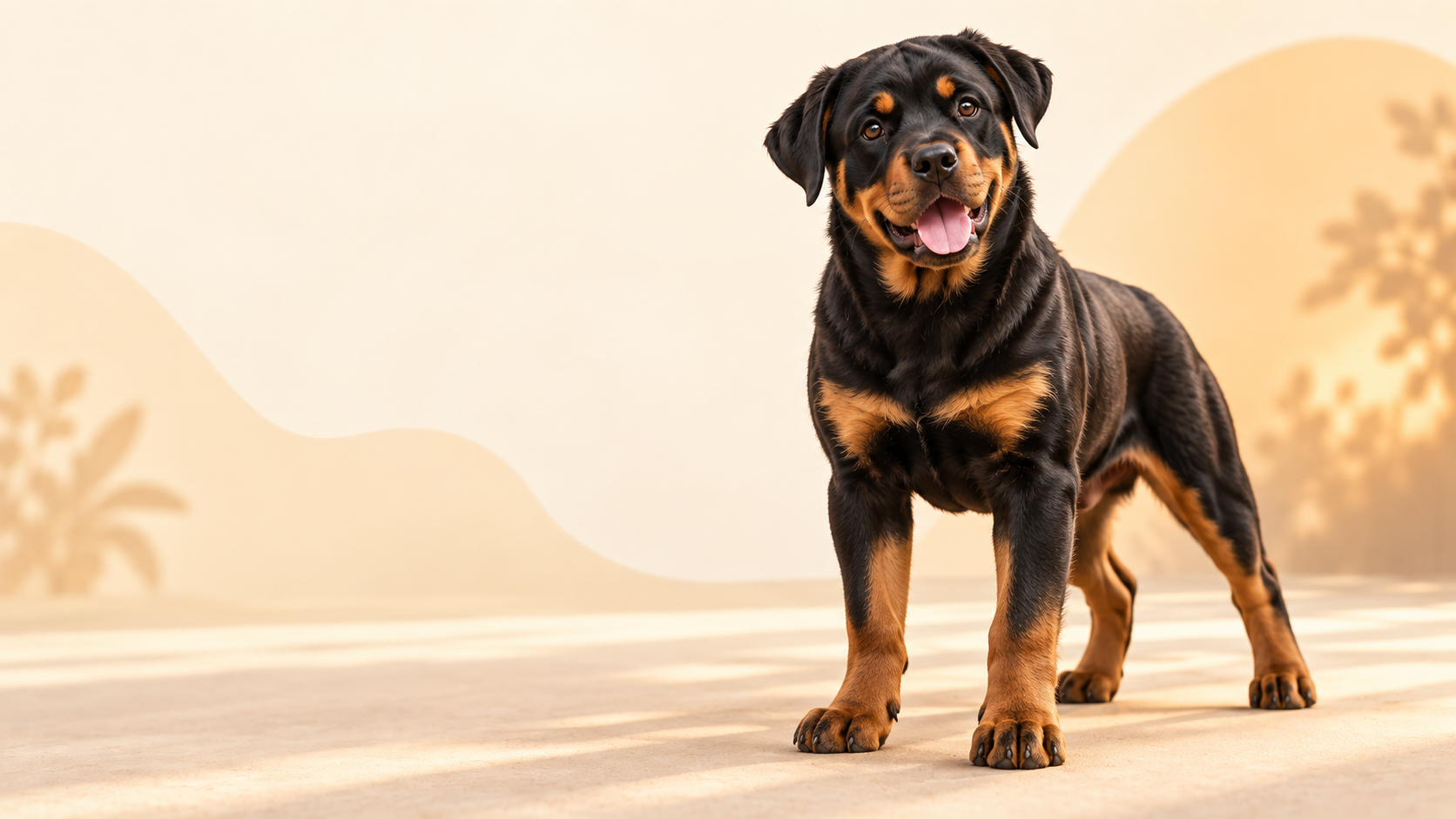
One-year-old Rottweiler standing in warm sunlight
1year old
Remember:
adult-sized doesn’t mean adult-minded.
At a glance

What changes at 1 year?

The biggest mistake at this age is assuming training is finished because your Rottweiler looks like an adult. In reality, this is where real-world reliability starts to matter most.

Appearance
Close to adult size

Height may be nearly there, but the body can keep filling out.

Muscle
Still developing

Chest, frame and overall body composition continue changing.

Mental maturity
Not finished

Adolescent decisions and boundary testing may continue.

Confidence
Usually increasing

Your Rottie may become more aware of territory, strangers and other dogs.

Training
Advanced reliability

Known skills now need to work around real distractions.

Exercise
Gradually increasing

Build fitness progressively and match work to physical development.

Growth

Fully grown? Not necessarily.

At one year, many Rottweilers are close to adult height, but muscle mass, chest development and overall maturity can continue changing well beyond the first birthday.

Better than comparing numbers: watch body condition, steady development and your own dog’s long-term trend.
What to watch

Think condition, not maximum size.

Body conditionMuscle developmentSteady weightJoint comfortEnergy levelRecovery after exercise
Open growth tracker →
Advanced training

Knowing a command is not the same as doing it when it matters.

At one year, the goal is to make familiar behavior work around visitors, dogs, traffic, exciting smells and unfamiliar places.

1

Reliable recall

Build response around bigger distractions and keep an emergency recall separate and highly rewarded.

Recall training →
2

Loose leash

Your adult-sized Rottie should not need pulling to reach every interesting thing.

Leash walking →
3

Extended stays

Increase duration, distance and distraction gradually rather than all at once.

Stay training →
4

Place command

Useful for visitors, meals, busy homes and situations where calm behavior matters.

Place training →
5

Neutrality

Seeing another dog without needing to greet, stare or react is a valuable adult skill.

Socialization guide →
6

Settle in public

Cafés, parks and waiting areas are excellent places to practice doing absolutely nothing.

Calmness training →
Give your Rottie a job

A working brain needs something useful to do.

At this age, structured activities can build focus, confidence and teamwork. Choose activities that fit your individual dog’s physical development.

Explore the training hub →
Obedienceexcellent foundation
Scent workgreat mental job
Trackingnatural outlet
Structured retrievinguseful variety
Behavior at one year

More confidence can mean more opinions.

Increased territorial awareness, dog selectivity, guarding tendencies or renewed boundary testing can appear as your Rottweiler matures.

Territorial awareness

Your dog may notice visitors, sounds and activity around the home more intensely.

Dog selectivity

Not every adult Rottweiler wants to socialize with every dog — neutrality is enough.

Boundary testing

Continue enforcing calm, predictable rules even when your dog already “knows better.”

Guarding behavior

Channel alertness into controlled behavior rather than encouraging unnecessary suspicion.

Physical strength

Bad habits now carry far more force, which makes management and prevention essential.

Recovery & calm

Teach your Rottie to come back down after excitement instead of staying highly aroused.

Adult equipment check

Puppy gear may no longer cut it.

A one-year-old Rottweiler may need stronger, larger and better-fitting equipment than they used only a few months ago.

Collar fitHarness fitCrate sizeBed sizeBowl capacityLeash strengthToy durabilityCar restraint
View Puppy Essentials →
RottieBuddy tip

Time for an equipment reality check.

That tiny collar from puppyhood probably isn’t going to cut it anymore. Inspect fit, hardware, stitching and durability before relying on it with an adult-sized dog.

Especially important: walking gear, crates, car restraints and anything your Rottie can put serious force on.

Is a 1-year-old Rottweiler still a puppy?

In many ways, yes. Keep providing clear boundaries, daily training, mental stimulation, appropriate exercise, positive experiences and plenty of rest. The work you put in now still shapes the adult dog your Rottweiler becomes.

Common questions

1-year-old Rottweiler FAQ

Is a 1-year-old Rottweiler fully grown?

Not necessarily. Height may be close to adult size, but muscle, chest development, body composition and mental maturity can continue changing.

Why is my 1-year-old Rottweiler still testing boundaries?

Adolescent behavior can continue beyond the first birthday. Keep rules predictable and continue practicing known skills around real-life distractions.

What should I train at one year?

Prioritize recall, loose-leash walking, longer stays, place, emergency recall, calm greetings, ignoring unfamiliar dogs, settling in public and reliable leave-it.

What activities are good for a 1-year-old Rottweiler?

Obedience, scent work, tracking, advanced trick training, structured retrieving and suitable dog sports can all be useful when matched to your dog’s physical development.

Looking back?

Missed the 6-month adolescent stage?

Review the earlier guide for recall regression, controlled exercise and early adolescent behavior.

Back to the 6-month guide →