
Back to Rottweiler Puppy Grooming

Rottweiler Puppy Teeth Cleaning and Teething Guide

Dental care should begin before a Rottweiler puppy has visible tartar. Early sessions are less about scrubbing every tooth and more about teaching that lip handling, a toothbrush and dog toothpaste are predictable and safe.

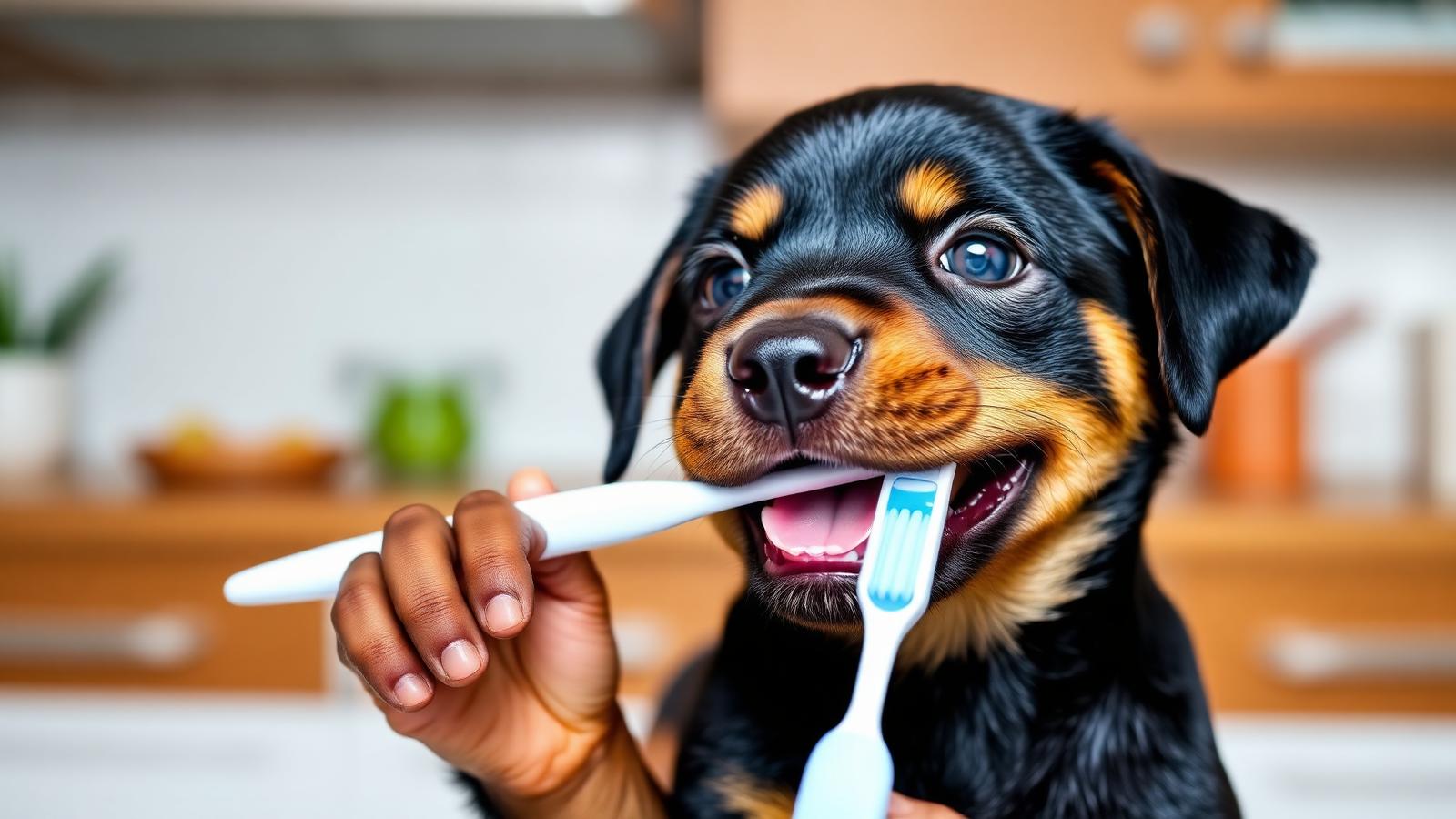
Rottweiler puppy calmly learning to accept a dog toothbrush

Rottweiler Puppy Teeth Cleaning and Teething Guide

Dental care should begin before a Rottweiler puppy has visible tartar. Early sessions are less about scrubbing every tooth and more about teaching that lip handling, a toothbrush and dog toothpaste are predictable and safe.

Daily brushing is the best home-care goal. If daily care is not yet realistic, build toward it through frequent short sessions. Dental chews and other accepted products can support a routine, but they do not replace brushing or veterinary oral examinations.

Last reviewed: August 2026

When do Rottweiler puppies lose their baby teeth?

Puppies commonly begin losing deciduous teeth around three to four months, and most adult teeth have erupted by about six to seven months. Mild gum sensitivity and increased chewing are common during this period.

You may never find the tiny baby teeth because puppies often swallow them without a problem. A small spot of blood on a toy can occur, but persistent bleeding, strong odor, facial swelling, refusal to eat or obvious pain is not normal teething.

Read the destructive chewing guide for safe ways to protect the home while those adult teeth emerge.

What you need to brush puppy teeth

  • A soft dog toothbrush sized for the puppy's mouth
  • Dog toothpaste formulated to be swallowed
  • A nonslip, comfortable position
  • Small rewards or part of the puppy's meal
  • Patience and sessions measured in seconds at first

Never use human toothpaste. Human products are not designed to be swallowed by dogs and may contain unsafe ingredients such as xylitol. Baking soda, peroxide, salt, essential oils and homemade mixtures are not substitutes for a veterinary dental product.

How to brush a Rottweiler puppy's teeth

  1. Touch the side of the muzzle briefly and reward.
  2. Lift one lip for a second without forcing the mouth open.
  3. Let the puppy taste a small amount of dog toothpaste.
  4. Introduce a finger or soft brush to one or two outer tooth surfaces.
  5. Use gentle circular or short back-and-forth motions along the gumline.
  6. Gradually work toward the outer surfaces of the upper and lower teeth.
  7. End while the puppy is still comfortable.

The outer surfaces are a useful priority because the tongue helps clean the inside surfaces. Do not pry the jaws open or continue while the puppy struggles.

Do dental chews work?

Some products have evidence for reducing plaque or tartar. Look for the Veterinary Oral Health Council (VOHC) Seal and read whether the accepted claim is for plaque, tartar or both. Choose the correct product size and age range, supervise chewing and include its calories in the daily total.

Avoid assuming that any hard chew cleans teeth. Very hard objects—including bones, antlers and some rigid chews—can fracture teeth. A product page or enthusiastic review cannot guarantee that a chew is appropriate for your puppy's teeth, chewing style or digestive health.

RottieBuddy may earn a commission from qualifying purchases, at no extra cost to you. Product links never replace veterinary or professional behavior advice.

Browse the Rottweiler dental-chew Buyer's Guide after establishing brushing as the foundation.

Check the mouth once a week

Look for:

  • Red, swollen or bleeding gums
  • Yellow or brown buildup
  • A cracked, discolored or missing tooth
  • Two teeth occupying the same position
  • Strong or suddenly changed breath
  • Swelling under an eye or along the jaw
  • Drooling, pawing at the mouth or dropping food
  • A bite that prevents normal eating or injures soft tissue

Retained baby teeth are especially worth checking when the adult canine teeth erupt. Crowding can trap debris and alter the bite; your veterinarian should assess teeth that remain alongside their adult replacements.

Call your veterinarian

Arrange prompt care for facial swelling, a broken or discolored tooth, persistent mouth bleeding, severe pain, inability to eat, repeated pawing at the mouth or sudden heavy drooling. Dental pain is often hidden, and professional cleaning or extraction must be performed by a veterinary team—not scraped off at home.

Common puppy dental-care mistakes

  • Waiting for bad breath or tartar before starting
  • Using human toothpaste
  • Forcing the mouth open
  • Relying only on chews, water additives or dry kibble
  • Giving chews that are too small or too hard
  • Ignoring retained baby teeth after adult teeth erupt
  • Attempting anesthesia-free tartar scraping as a replacement for veterinary dentistry

Add evidence-based support to daily brushing

Compare dental chews by size, life stage and recognized oral-health claims.

Compare Rottweiler Dental Chews

Explore the Health Buyer's Guide

Compare Rottweiler Dental Chews

Sources and Further Reading

This guide provides general educational information. Skin, ear, nail and dental problems may need veterinary diagnosis and treatment. Stop if grooming causes pain or distress, and ask your veterinarian or a qualified groomer for individual advice.

Frequently Asked Questions

How often should I brush my Rottweiler puppy's teeth?

Daily is the ideal home-care goal. Start with very short sessions and build frequency and coverage gradually.

Can I use a finger brush?

Yes, if it fits securely and your puppy is comfortable. A soft toothbrush may ultimately clean the gumline more effectively, so use the option your veterinarian recommends.

Why is my puppy's breath bad?

Teething can temporarily change breath, but strong or persistent odor can accompany retained teeth, gum inflammation, a foreign object, digestive illness or infection. Ask your veterinarian.

Do dental chews replace brushing?

No. A suitable VOHC-accepted product can support oral care, but brushing remains the home-care gold standard.

Is it normal to see two canine teeth together?

An adult canine can erupt before the baby canine falls out. If both remain, book a veterinary dental check rather than waiting indefinitely.

Continue your puppy grooming guide