
Back to Rottweiler Puppy Health

Rottweiler Puppy Deworming Schedule

Puppies can acquire intestinal parasites before birth, through their mother's milk, from contaminated soil, by swallowing fleas or through infected prey. Some infected puppies look completely healthy, while others develop diarrhea, anemia or poor growth. This is why deworming and fecal testing are part of routine puppy care.

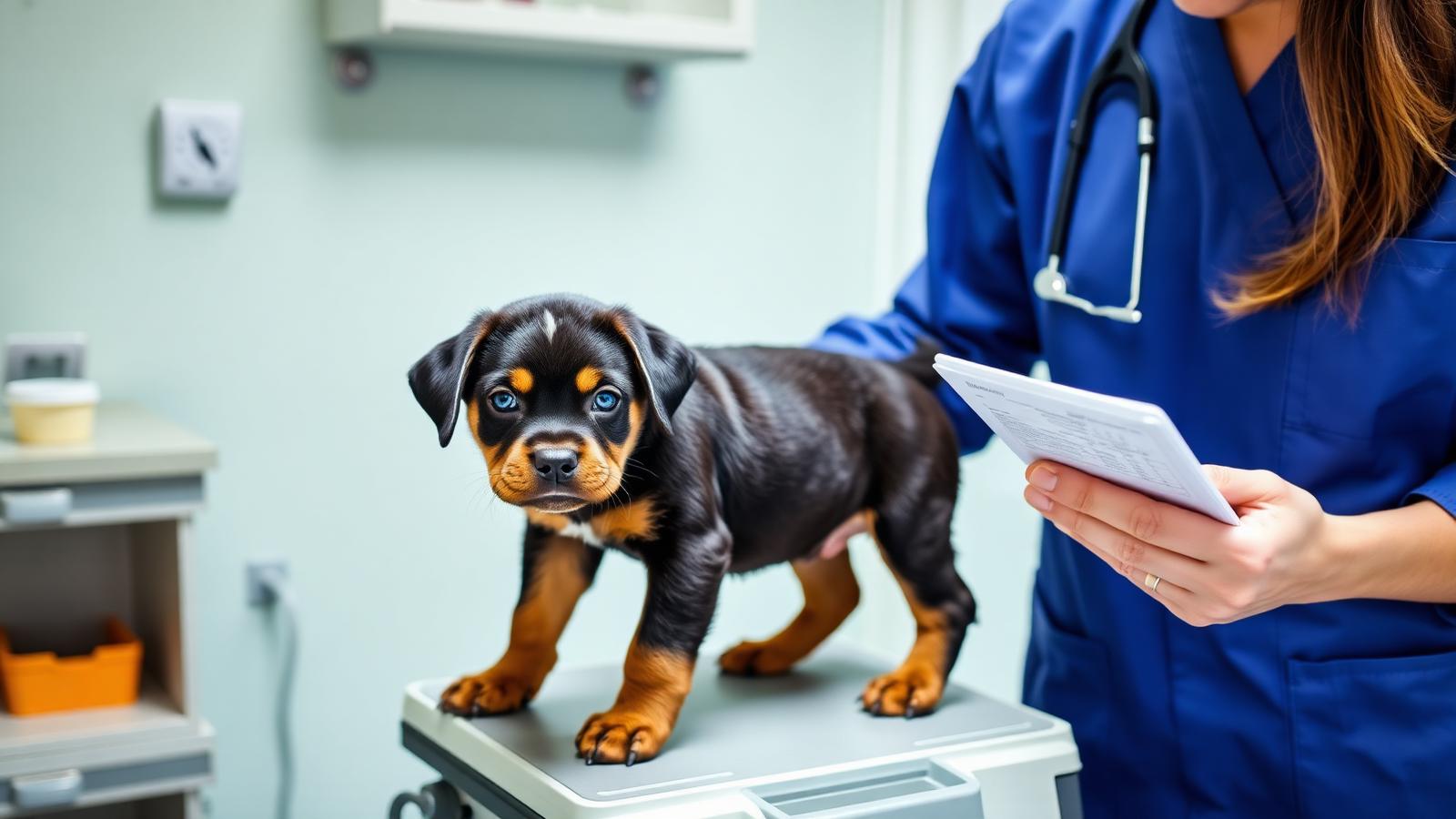
Rottweiler puppy being weighed at a veterinary visit for accurate deworming treatment

Rottweiler Puppy Deworming Schedule

Puppies can acquire intestinal parasites before birth, through their mother's milk, from contaminated soil, by swallowing fleas or through infected prey. Some infected puppies look completely healthy, while others develop diarrhea, anemia or poor growth. This is why deworming and fecal testing are part of routine puppy care.

One "broad-spectrum" product does not automatically treat every parasite. The right drug, dose and schedule depend on age, current weight, test results, location and other prevention products. Use veterinarian-prescribed or veterinarian-recommended treatment and follow the label exactly.

Last reviewed: August 2026

Typical puppy deworming schedule

The Companion Animal Parasite Council's general US guidance is:

AgeGeneral CAPC frameworkVeterinary action
2–8 weeksDeworm every 2 weeksUsually started by the breeder, rescue or veterinarian
2–6 monthsTreat monthlyOften coordinated with monthly broad-spectrum parasite prevention
First yearFecal testing at least four timesFrequency can change with symptoms and exposure
Adult lifeYear-round broad-spectrum control or at least quarterly intestinal-worm treatment, plus fecal testing based on riskFollow local veterinary guidance and product coverage

This is not a universal prescription. Some countries use different risk-based adult schedules, and an infected puppy may need repeat testing or a parasite-specific treatment plan. Bring the breeder or rescue record to the first examination so the veterinarian knows which active ingredient and dose were used.

Which intestinal parasites affect puppies?

Roundworms

Puppies commonly acquire roundworms from their mother. A heavy infection can contribute to a pot-bellied appearance, vomiting, diarrhea, poor coat and slow growth. Eggs passed in feces can contaminate the environment and create a risk for people.

Hookworms

Hookworms attach to the intestinal lining and feed on blood. Young puppies can become dangerously anemic. Dark or bloody stool, pale gums, weakness and collapse require urgent veterinary care.

Whipworms

Whipworms are more often detected as puppies grow older. They may cause recurrent large-bowel diarrhea, mucus, blood, weight loss and dehydration.

Tapeworms

The common flea tapeworm is acquired by swallowing an infected flea. Rice-like segments may appear around the anus or in bedding. Deworming without controlling fleas can lead to reinfection; use the Rottweiler puppy flea and tick guide too.

Giardia and coccidia

These are intestinal protozoa, not worms, and routine dewormers do not necessarily treat them. They can cause diarrhea, especially in puppies from group environments. Diagnosis generally involves fecal testing and targeted veterinary treatment.

Why fecal tests matter even after deworming

A deworming dose only covers the parasites on its label and at susceptible life stages. Reinfection is possible, and some infections are not obvious to the naked eye. A stool that looks normal can still contain parasite stages or antigens.

For a useful sample:

  1. Collect a fresh stool in a clean, leak-proof container or bag.
  2. Label it with the puppy's name and collection time.
  3. Keep it cool—not frozen—if the clinic cannot test it immediately.
  4. Ask the clinic how much it needs and how quickly to deliver it.

Never identify a parasite from an online photo alone. Food, mucus and plant material can be mistaken for worms, while many parasite eggs are microscopic.

Signs of worms in a Rottweiler puppy

Possible signs include:

  • Diarrhea or mucus in stool
  • Blood or unusually dark stool
  • Vomiting
  • Pot-bellied appearance
  • Poor growth or weight loss
  • Dull coat
  • Scooting or licking around the anus
  • Rice-like segments in stool or bedding
  • Coughing in some parasite life cycles
  • Pale gums, weakness or lethargy

The absence of signs does not rule out infection. The presence of diarrhea also does not prove worms; dietary change, parvovirus, bacteria, stress and other conditions can look similar.

Call your vet urgently

Young puppies can dehydrate or become anemic quickly. Contact a veterinarian promptly for repeated vomiting, bloody or black stool, pale gums, a painful or swollen abdomen, refusal to drink, profound lethargy, weakness, collapse or rapidly worsening diarrhea. Do not wait to see whether an over-the-counter dewormer fixes it.

How to prevent reinfection and protect people

  • Pick up feces immediately at home and on walks
  • Wash hands after handling stool, soil or puppy bedding
  • Prevent puppies from eating feces, rodents or carcasses
  • Keep sandboxes covered
  • Clean contaminated indoor areas appropriately
  • Use year-round flea control to interrupt flea-tapeworm transmission
  • Treat every pet according to its own veterinary plan
  • Do not allow children to play in known fecally contaminated areas
  • Continue routine fecal screening

Many intestinal parasites are zoonotic, which means they can affect people. Good hygiene supports the whole household; it does not replace veterinary treatment.

Common deworming mistakes

  • Assuming visible worms are required for diagnosis
  • Repeating one product without confirming what it covers
  • Using an old weight to select the dose
  • Giving a dog product to another species
  • Treating diarrhea without testing a sick puppy
  • Forgetting flea control after tapeworm infection
  • Skipping fecal tests because preventive medicine is used
  • Using home remedies such as garlic, essential oils or tobacco

Make routine puppy care easier to manage

RottieBuddy may earn a commission from qualifying purchases, at no extra cost to you. Product links never replace veterinary advice.

Browse practical health and puppy essentials for cleaning, grooming and everyday care. Parasite medicines themselves should be selected with your veterinarian—not from an affiliate ranking.

Explore the Rottweiler Health Buyer's Guide

Browse Puppy Essentials

Explore the Rottweiler Health Buyer's Guide

Sources and further reading

Sources and further reading
  • Companion Animal Parasite Council (CAPC) guidelines
  • American Veterinary Medical Association (AVMA) parasite resources
  • Centers for Disease Control and Prevention (CDC) zoonotic parasite information
  • American Animal Hospital Association (AAHA) canine parasite guidance

Disclaimer

This guide provides general educational information and does not diagnose, prevent or treat disease. Vaccination and parasite protocols vary by location, lifestyle, medical history and product. Always follow your veterinarian's advice and the product label. Contact a veterinarian promptly when a young puppy is unwell.

Frequently Asked Questions

How often should a Rottweiler puppy be dewormed?

CAPC's general US framework begins every two weeks from 2 weeks through 2 months, then monthly to 6 months. Your veterinarian may change this based on history, location, fecal results and the preventive product used.

Can I deworm my puppy at home?

Medication may be administered at home when a veterinarian has selected an age- and weight-appropriate product and you follow its label. A sick puppy or uncertain diagnosis needs an examination rather than guesswork.

Why does my puppy still have worms after treatment?

The drug may not cover that parasite, immature stages may require repeat treatment, reinfection may have occurred or the material may not be a worm. Contact the veterinarian and bring a fresh fecal sample or clear photo.

Can puppies pass worms to people?

Some dog parasites are zoonotic. Prompt feces removal, handwashing, routine veterinary prevention and keeping children away from contaminated soil reduce risk.

Does a negative fecal test mean my puppy has no parasites?

Not always. Parasite shedding can be intermittent and tests have limits. Your veterinarian interprets the result alongside exposure, symptoms and previous treatment.

Continue your puppy health guide