
Back to Rottweiler Puppy Grooming

How to Brush a Rottweiler Puppy

A Rottweiler's coat is short, but it is not maintenance-free. Beneath the straight outer coat sits a softer undercoat that helps protect the skin and sheds throughout the year. Regular brushing removes loose hair, distributes natural skin oils and gives you a valuable chance to notice ticks, irritation, lumps or sore areas early.

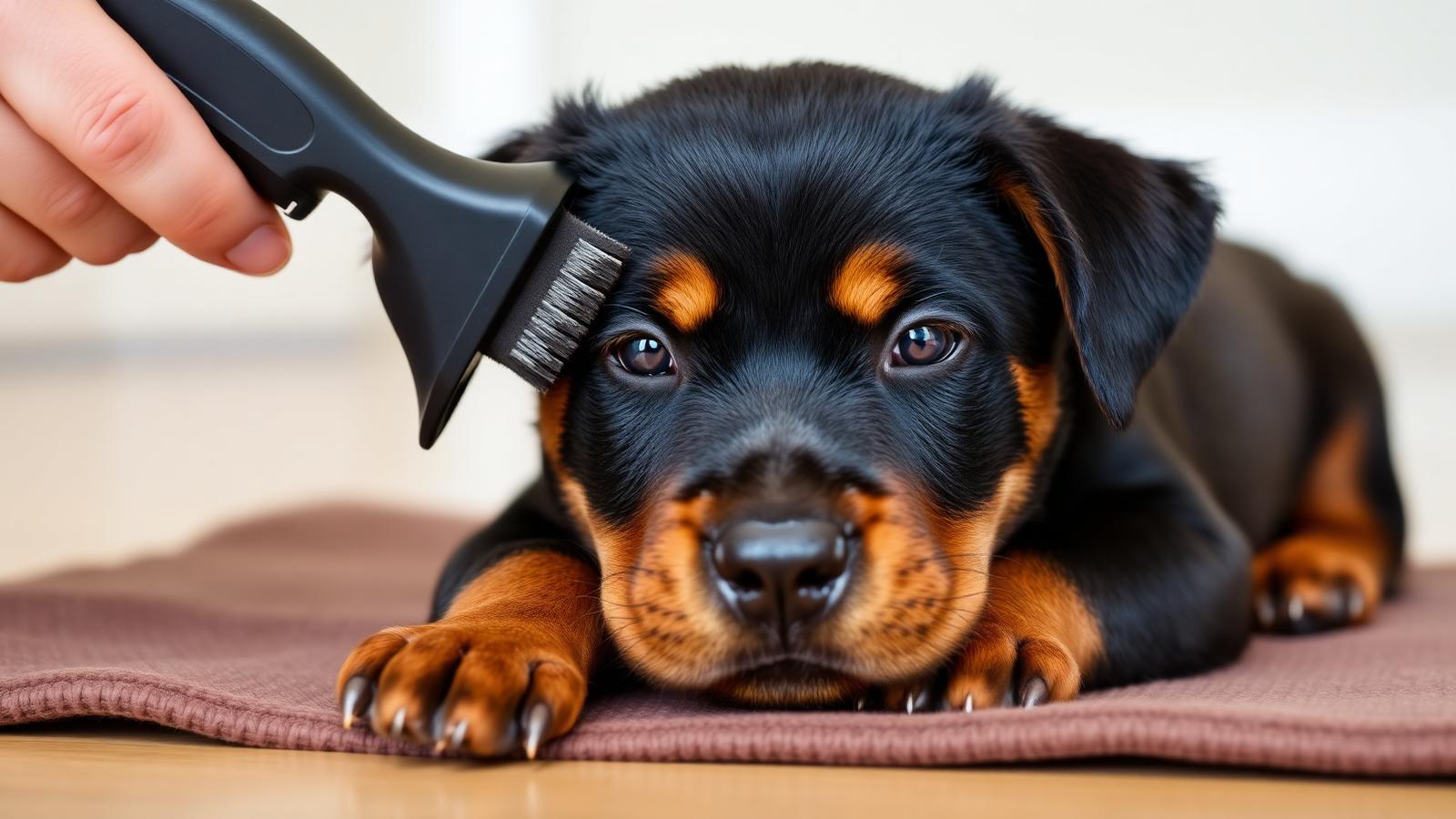
Rottweiler puppy calmly enjoying a gentle brushing session at home

How to Brush a Rottweiler Puppy

A Rottweiler's coat is short, but it is not maintenance-free. Beneath the straight outer coat sits a softer undercoat that helps protect the skin and sheds throughout the year. Regular brushing removes loose hair, distributes natural skin oils and gives you a valuable chance to notice ticks, irritation, lumps or sore areas early.

The best routine is the one your puppy can enjoy. Begin with brief, reward-based sessions and increase the duration gradually. You are teaching a life skill as much as removing hair: a full-grown Rottweiler is far easier to care for when brushing and body handling already predict good things.

Last reviewed: August 2026

How often should you brush a Rottweiler puppy?

For many Rottweilers, one or two thorough sessions per week is a practical baseline. Brush more often when loose undercoat increases, commonly during seasonal coat changes. A quick pass after outdoor adventures can also remove dust, seeds and surface debris.

Frequency should follow the individual coat rather than a rigid calendar. If the skin becomes red, tender or flaky, review your pressure and tool choice and ask your veterinarian about possible skin disease instead of brushing harder.

Best brushes for a Rottweiler's short double coat

ToolBest useWatch out for
Rubber curry brush or grooming mittLoosens surface hair and gently massages the coatExcess pressure over bony areas
Soft bristle brushFinishes the coat and removes fine dustOften does not reach much undercoat alone
Short-coat undercoat toolHelps during heavier sheddingOveruse can scratch skin or damage healthy coat
Metal combChecks feathering behind ears, thighs and tail for missed debrisDo not drag through resistance

Choose a tool that feels smooth against your own inner arm and is appropriate for a puppy. A blade or rake marketed for heavy shedding should never be used aggressively or repeatedly over the same patch.

Step-by-step brushing routine

  1. Let your puppy investigate the brush, then mark and reward calm interest.
  2. Place the puppy on a stable, nonslip surface rather than a high table.
  3. Begin at the shoulder or chest, not immediately at a sensitive paw or tail.
  4. Brush in the direction of hair growth with light, controlled strokes.
  5. Work over the back, sides, chest and thighs, pausing around sensitive areas.
  6. Part the coat occasionally to inspect the skin.
  7. Finish before the puppy becomes restless and offer a calm reward or play break.

Keep the first sessions to seconds, not minutes. If your puppy repeatedly moves away, stiffens, lip-licks, turns to grab the brush or stops taking food, make the next step easier. Cooperative grooming develops through choice and repetition, not restraint.

What to check while brushing

Move your hands over the entire body and look for:

  • Redness, flakes, scabs or moist areas
  • Hair loss or a change in coat texture
  • Lumps, swelling or painful spots
  • Fleas, flea dirt or attached ticks
  • Grass seeds, burrs or other debris
  • Scratches around the ears, neck, belly or paws

If you find parasites, use the separate Rottweiler puppy flea and tick guide. Do not diagnose every flake as dry skin or cover an irritated area with human products.

Call your veterinarian

Book veterinary advice for sudden or patchy hair loss, strong odor, spreading redness, sores, persistent itching, repeated licking, pain, swelling or a coat change accompanied by low energy or appetite loss. Skin problems can have allergic, parasitic, infectious, hormonal or nutritional causes.

Brushing during shedding season

Work in short sessions and remove the loosened coat gradually. More force is not more effective. Bathe only when needed, dry the coat fully and brush again once it is dry if your puppy remains comfortable.

Never shave a healthy Rottweiler double coat simply to reduce shedding. Clipping does not stop the hair cycle and may alter regrowth. A veterinarian may shave an area for a medical procedure, and a professional groomer can advise when coat or skin problems complicate normal care.

Common brushing mistakes

  • Waiting until the puppy is large before introducing a brush
  • Using one harsh tool for every coat condition
  • Brushing repeatedly over red or painful skin
  • Pinning the puppy down to finish the session
  • Forgetting treats, pauses and nonslip footing
  • Assuming frequent scratching is just normal shedding
  • Applying human oils, perfume or styling products to the coat

Build a simple grooming kit for a short double coat

RottieBuddy may earn a commission from qualifying purchases, at no extra cost to you. Product links never replace veterinary or professional behavior advice.

Compare brush types and the other everyday tools used in a complete Rottweiler grooming routine.

Compare Rottweiler Grooming Brushes

Explore the Health Buyer's Guide

Compare Rottweiler Grooming Brushes

Sources and Further Reading

This guide provides general educational information. Skin, ear, nail and dental problems may need veterinary diagnosis and treatment. Stop if grooming causes pain or distress, and ask your veterinarian or a qualified groomer for individual advice.

Frequently Asked Questions

Do Rottweiler puppies shed a lot?

They can shed throughout the year and more heavily during seasonal coat changes. Indoor living, climate and the individual coat affect the pattern.

Can I brush my Rottweiler every day?

Yes, if you use a gentle tool, light pressure and a puppy who remains comfortable. Daily brushing is not necessary for every dog, and aggressive deshedding should not be a daily routine.

What is the best brush for a Rottweiler puppy?

A rubber curry brush or gentle short-coat brush is a useful starting point. During heavier shedding, an appropriate undercoat tool can help when used carefully.

Should I shave my Rottweiler in summer?

Not routinely. The double coat has a protective function, and shaving does not solve the shedding cycle. Discuss a medical or severely damaged coat with your veterinarian and groomer.

Why does my puppy bite the brush?

The puppy may be playful, worried, overstimulated or uncomfortable. Shorten the session, lower the intensity, reward stillness and provide a separate toy rather than turning the brush into a tug toy.

Continue your puppy grooming guide