
Back to Rottweiler Puppy Behavior

How to Stop a Rottweiler Puppy Jumping Up

Jumping works because it brings a puppy closer to faces, hands and attention. Even pushing, talking or eye contact can reward the attempt. A small jumping puppy may seem harmless, but the same habit becomes unsafe when a Rottweiler reaches adult size.

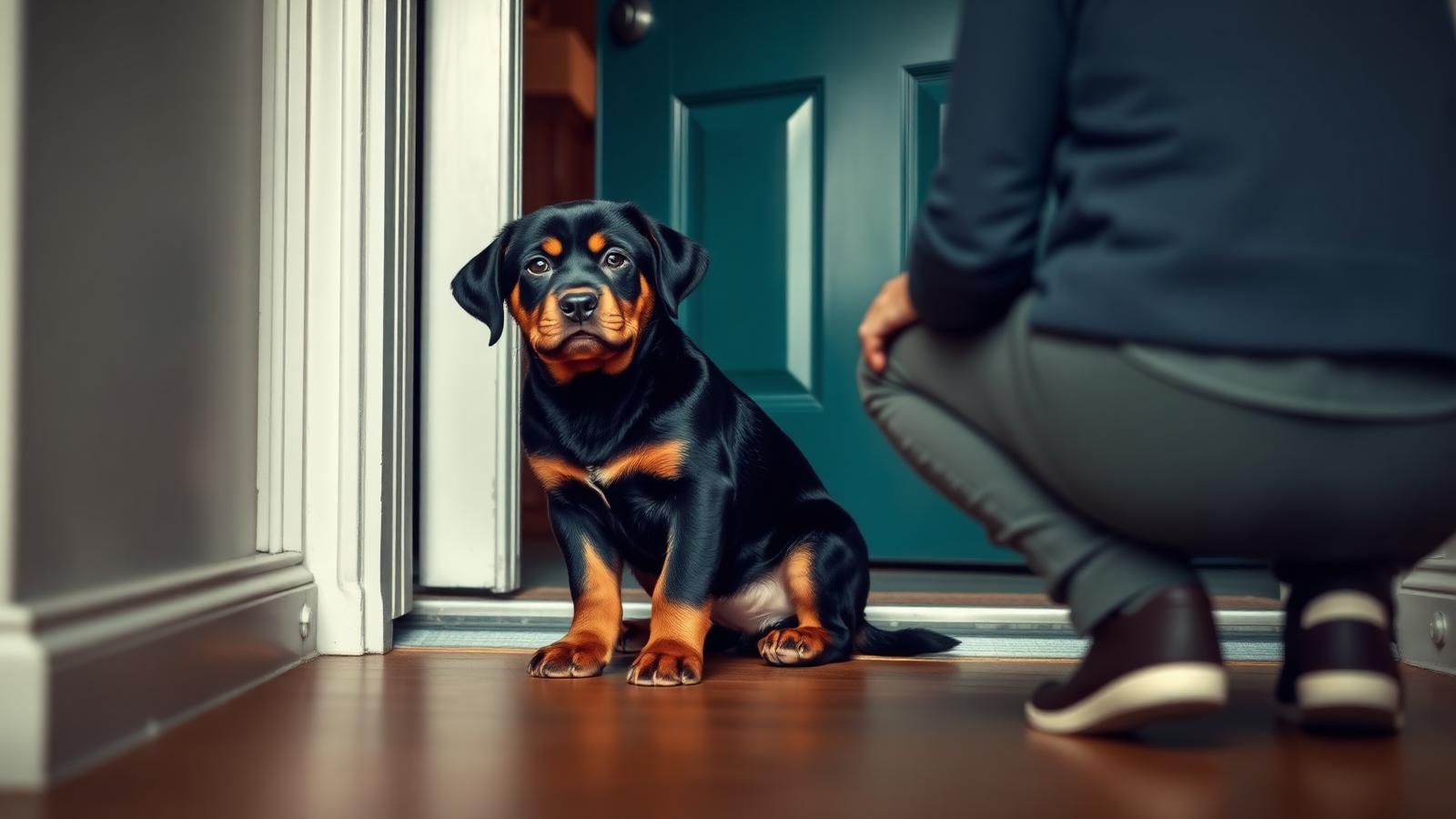
Rottweiler puppy sitting with four paws down during a calm greeting

How to Stop a Rottweiler Puppy Jumping Up

Jumping works because it brings a puppy closer to faces, hands and attention. Even pushing, talking or eye contact can reward the attempt. A small jumping puppy may seem harmless, but the same habit becomes unsafe when a Rottweiler reaches adult size.

Teach the greeting you want now: four paws on the floor, a sit or a station on a mat. Management prevents practice; reinforcement makes the alternative worth choosing.

Last reviewed: August 2026

Why Does My Puppy Jump on People?

  • Social excitement and an attempt to reach the face
  • Attention from hands, voices and eye contact
  • A history of being greeted while jumping
  • Frustration behind a gate or leash
  • High arousal after waiting at a door
  • Uncertainty or appeasement in some greetings
  • Lack of a practiced alternative

Jumping is not evidence that the puppy is trying to dominate a person. Focus on what the behavior achieves and what you want the puppy to do instead.

The Four-Paws-on-the-Floor Exercise

  1. Prepare small rewards before approaching the puppy.
  2. Step closer only while all four paws remain down.
  3. Mark and deliver the reward low, near the floor.
  4. If the puppy jumps, calmly pause or step out of reach.
  5. Re-approach when paws are down.
  6. End after several easy successes.

At first, do not require a long sit. Reinforce the simplest correct choice, then develop duration. Tossing the reward on the floor can reset the puppy for another repetition without luring them upward.

Train Every Family Member the Same Way

Intermittent reinforcement makes jumping persistent. Decide on one household rule:

  • Attention begins when paws are down.
  • People turn slightly away or step out of reach when jumping starts.
  • No one encourages chest wrestling as a greeting.
  • A child does not manage an excited large-breed puppy.
  • Calm greetings happen one person at a time.

If you sometimes allow an invitation to jump into your arms, place it on a clear cue only after the default floor greeting is reliable. For most families, keeping one simple rule is easier.

A Visitor-Arrival Plan

  1. Give the puppy a toilet break.
  2. Attach a leash to a well-fitted harness for management—not correction.
  3. Prepare treats and a mat behind a gate or at a safe distance.
  4. Ask the visitor to ignore the puppy initially.
  5. Reward the puppy for looking at the visitor and returning attention to you.
  6. Permit a brief greeting only while paws remain down.
  7. Move away for a reset before excitement peaks.

If the puppy cannot eat or respond, increase distance. A five-second successful greeting is more valuable than a prolonged struggle.

Continue with Rottweiler puppy socialization around people and teach a reliable sit outside exciting greetings first.

Jumping on Children and Vulnerable People

Use physical separation and adult supervision. Gates, pens and a leash can prevent contact while the puppy learns. Do not depend on a child, older visitor or person with limited balance to turn away fast enough.

Teach the puppy to settle on a mat before practicing controlled greetings. Teach children to stand still, avoid squealing and call an adult rather than pushing the puppy.

Behavior safety

Get professional help when jumping includes grabbing clothing, mouthing, growling, body slamming, guarding the doorway or an inability to recover. Sudden jumping or agitation accompanied by pain, confusion or another health change warrants veterinary assessment.

What Not to Do

  • Do not knee the puppy in the chest
  • Do not step on paws or squeeze toes
  • Do not jerk the leash, choke or pin the puppy
  • Do not shout while continuing to touch the puppy
  • Do not let some visitors encourage jumping
  • Do not repeat "off" when the puppy has not learned it
  • Do not attempt greetings when arousal is already too high

Punishment can add fear or even more excitement to greetings. Prevent access, wait for a doable response and reward it.

Make Precise Reinforcement Easier During Real-Life Greetings

RottieBuddy may earn a commission from qualifying purchases, at no extra cost to you. Product links never replace veterinary or professional behavior advice.

Keep small rewards accessible and use comfortable management equipment without leash corrections.

Compare Rottweiler Treat Pouches

Explore Training Harnesses

Compare Rottweiler Treat Pouches

Sources and Further Reading

American Veterinary Society of Animal Behavior — Humane Dog Training Position Statement. ASPCA — Common dog behavior issues. Merck Veterinary Manual — Behavior modification in dogs.

This guide provides general educational information and is not a diagnosis or an individual behavior plan. Sudden behavior change can have a medical cause. If a puppy threatens, bites, guards resources, panics or creates a safety risk, contact your veterinarian and a qualified reward-based behavior professional.

Frequently Asked Questions

Should I ignore my puppy when they jump?

Briefly removing attention can help, but prevention and rewarding paws-down behavior are essential. Ignoring alone does not teach the desired greeting.

Should I teach sit instead?

Sit is a useful incompatible behavior, but start by reinforcing any calm four-paws-down moment. Excited puppies may find that easier.

Why does my puppy jump more when I turn away?

The movement may briefly increase frustration or trigger pursuit. Step behind a gate, reduce excitement and return at an easier level.

How do I stop jumping on strangers during walks?

Do not permit every greeting. Create distance, reward attention to you and greet only when the person agrees to follow the training plan.

Will my Rottweiler grow out of jumping?

Not reliably. Rehearsed, rewarded behavior can become stronger as the puppy grows, so teach the alternative early.

Continue your puppy behavior guide