
Back to Rottweiler Puppy Grooming

How to Bathe a Rottweiler Puppy

A Rottweiler puppy does not need a bath according to one fixed calendar. Bathe when the coat is genuinely dirty, has picked up an unpleasant substance or when your veterinarian recommends a specific skin-care schedule. Between baths, brushing and a damp cloth can handle much of the routine dirt.

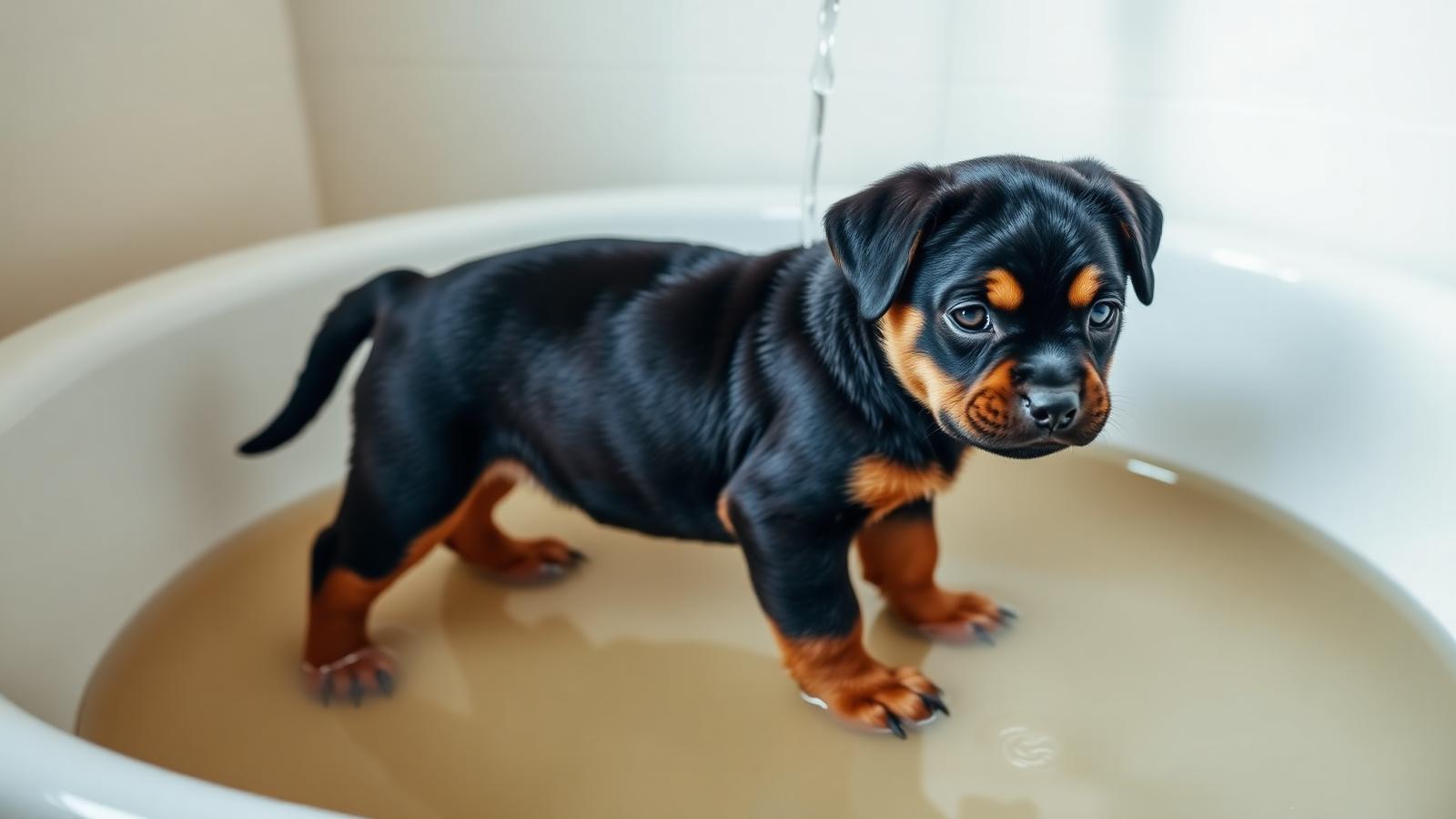
Rottweiler puppy standing calmly on a nonslip mat during a gentle bath

How to Bathe a Rottweiler Puppy

A Rottweiler puppy does not need a bath according to one fixed calendar. Bathe when the coat is genuinely dirty, has picked up an unpleasant substance or when your veterinarian recommends a specific skin-care schedule. Between baths, brushing and a damp cloth can handle much of the routine dirt.

Frequent washing with harsh or unsuitable products can dry and irritate the skin. A well-prepared, positive bath is more useful than chasing an exact frequency rule.

Last reviewed: August 2026

When Can a Puppy Have the First Bath?

A healthy puppy can be introduced to shallow water and gentle bathing after coming home, provided the room is warm, the experience is brief and the puppy can be dried completely. If the puppy is ill, chilled, recently had a procedure or has a skin condition, ask your veterinarian first.

You do not need to wait for the puppy to smell before practicing. Rehearse standing on the dry bath mat, hearing water at a distance and accepting towel touches so the first real wash is not one overwhelming event.

How Often Should You Bathe a Rottweiler?

Many healthy Rottweilers need only occasional baths. Lifestyle matters: mud, swimming, allergens, skin disease and topical parasite products can change the plan. Follow a veterinarian's directions for medicated shampoo because contact time and frequency are part of treatment.

If a clean puppy quickly develops odor, oiliness, flakes or itching, do not simply bathe more often. Those changes can signal an underlying skin or ear problem.

Choose a Puppy-Safe Shampoo

Look for a dog-specific product labeled for the puppy's age and skin needs. A simple, fragrance-light formula is a sensible starting point. Do not use human shampoo, dish soap, essential-oil mixtures or flea shampoo unless your veterinarian specifically recommends it.

Read the label before starting. Some products must be diluted; medicated shampoos may require gloves, a defined contact time or precautions around the eyes and mouth.

Prepare the Bath Before Bringing in the Puppy

Have everything within reach:

  • Nonslip rubber mat or stable towel
  • Dog-safe shampoo
  • Lukewarm water
  • Several absorbent towels
  • Treats in a waterproof container
  • Cup or gentle handheld sprayer
  • Brush for use before or after, as appropriate

Close doors, remove breakable items and keep the puppy from jumping out. A deep, slippery tub is unnecessarily frightening and can cause injury.

Step-by-Step Rottweiler Puppy Bath

  1. Brush out loose hair and check the skin before wetting.
  2. Let the puppy step onto the nonslip mat and reward calm behavior.
  3. Wet from the shoulders backward with lukewarm water.
  4. Keep water and shampoo out of the eyes, nose, mouth and ear canals.
  5. Apply the diluted or measured shampoo according to its label.
  6. Massage gently through the coat without scratching the skin.
  7. Rinse thoroughly until the water runs clear and the coat no longer feels soapy.
  8. Let the puppy shake in a safe space, then towel dry completely.
  9. Keep the puppy warm and indoors until dry.

Use a dryer only on a cool or low-heat setting and introduce its sound gradually. Keep it moving and well away from the skin. Stop if the puppy becomes frightened or the airflow feels hot.

Protect the Ears, Eyes and Skin

Do not pour water into the ear canals. After bathing, dry the outer ear and inspect it, but avoid automatic deep cleaning. Follow the Rottweiler puppy ear-care guide if debris is present.

Rinse longer than seems necessary because shampoo residue can irritate skin. If any product reaches the eye, flush gently as directed on the label and contact your veterinarian if squinting, redness or discomfort persists.

Call your veterinarian

Call your vet

Seek advice for hives, facial swelling, breathing difficulty, widespread redness, severe itching, open sores, a painful hot spot or signs that worsen after a product. If the puppy has rolled in a chemical, paint, fuel, pesticide or unknown substance, prevent licking and call a veterinarian or animal poison service before choosing a cleanser or solvent.

Common Puppy-Bathing Mistakes

  • Bathing more often to cover a recurring medical odor
  • Using hot water or a hot dryer
  • Washing with human shampoo or essential oils
  • Letting the puppy slip or jump from the tub
  • Spraying the face or ears directly
  • Rushing the rinse
  • Chasing and restraining a frightened puppy to finish
  • Applying topical parasite control without checking how bathing affects the product label

Create a Calm, Practical Puppy Grooming Setup

RottieBuddy may earn a commission from qualifying purchases, at no extra cost to you. Product links never replace veterinary or professional behavior advice.

Compare the brush, nail, shampoo, dental and ear-care tools featured in the complete Rottweiler grooming kit.

Explore the Rottweiler Grooming Kit

Browse the Health Buyer's Guide

Explore the Rottweiler Grooming Kit

Sources and Further Reading

This guide provides general educational information. Skin, ear, nail and dental problems may need veterinary diagnosis and treatment. Stop if grooming causes pain or distress, and ask your veterinarian or a qualified groomer for individual advice.

Frequently Asked Questions

How often should I bathe my Rottweiler puppy?

Bathe when the puppy is dirty or as a veterinarian recommends. Healthy Rottweilers usually need occasional rather than very frequent baths.

Can I use baby shampoo?

Use a product formulated and labeled for dogs instead. Human and baby skin products are not designed for the canine coat or for dogs to lick afterward.

How do I remove puppy smell?

Brush bedding and the coat, wash appropriate fabrics and bathe when needed. Persistent or sudden odor can come from skin, ears, mouth or anal glands and needs veterinary assessment.

Can I let my puppy air-dry?

Only in a warm environment where the puppy will not remain chilled or damp. Towel drying is important, especially around paws, folds and the outer ears.

What if my puppy is afraid of water?

Return to dry practice with a nonslip mat, rewards and very small water exposures. Do not force immersion; a qualified reward-based groomer or trainer can help.

Continue your puppy grooming guide