

12–16 weeks · Puppy development

Your 3-month-old Rottweiler is entering the “tiny tank” phase.

More confidence, more curiosity, more teeth — and a body that seems to grow overnight. Here’s what matters most for weight, feeding, training, socialization and sleep right now.

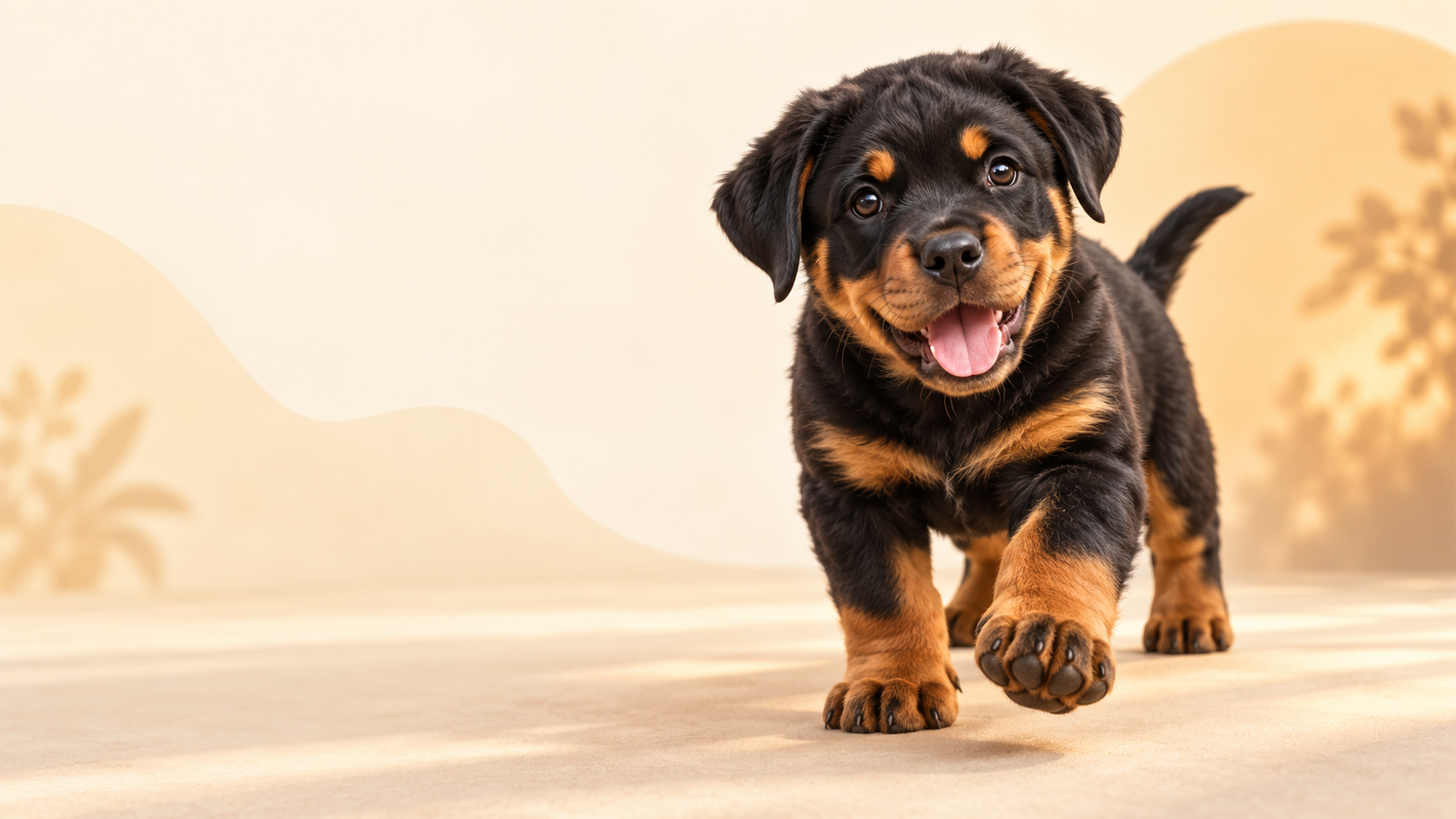
Happy 3-month-old Rottweiler puppy walking toward the camera
3months old
Today’s goal:
build calm habits before your Rottie gets much bigger.
At a glance

What changes at 3 months?

A 3-month-old Rottweiler puppy typically weighs between 30 and 39 pounds and stands about 18 inches tall

Growth
Fast

Longer legs, bigger paws and obvious week-to-week changes.

Training
2–5 min

Several short sessions beat one long lesson.

Teething
Starting

Chewing and puppy biting usually become more noticeable.

Socialization
Critical

Build calm confidence around people, places, sounds and surfaces.

Exercise
Controlled

Choose play, sniffing and training over forced mileage.

Sleep
A lot

Overtired puppies often become bitey little chaos machines.

This month’s roadmap

Four things to build before month four

01

Connection

Name, eye contact and choosing you around mild distractions.

02

Routine

Predictable meals, potty breaks, naps, play and training.

03

Confidence

Positive exposure without overwhelming your puppy.

04

Self-control

Short waits, leave it, drop it and calmness before rewards.

Growth & weight

Don’t chase a “perfect” number. Track the trend.

Healthy Rottweiler puppies vary by sex, genetics and body condition. The useful question is whether your puppy is growing steadily and staying in appropriate condition.

Open the free Growth Tracker →
Example growth trend — use your puppy’s own measurements
Training + behavior

Teach the skills you’ll need when your puppy weighs twice as much.

At three months, training should feel like tiny games woven through the day — not a formal obedience class in your kitchen.

Best skills now

The “big dog later” starter pack

✓ Name response✓ Sit✓ Down✓ Come✓ Leave it✓ Drop it✓ Leash basics✓ Calm handling
Start puppy training →
RottieBuddy tip: reward calm behavior you didn’t ask for. That “boring” puppy lying quietly beside you is exactly what you want more of.
Socialization

Confidence beats “meet everyone.”

Your goal is not to make your Rottweiler greet every person or dog. Teach them to calmly notice the world without needing to rush toward it.

People at a distanceCalm dogsCars & bicyclesHousehold soundsDifferent surfacesNew environments
Open socialization guide →
Keep it positive: short, safe exposures are better than flooding a puppy with too much at once.
Teething + biting

Your hands are not chew toys. Your shoes are apparently negotiable.

Chewing often becomes more intense around this stage. Make the right choice easy by keeping appropriate chews within reach and rotating them to keep them interesting.

2

Pause rough play

If arousal keeps rising, end the game briefly instead of escalating it.

Behavior help →
3

Add naps

An overtired puppy often looks like a puppy who has forgotten every rule in the house.

Puppy routine →
Feeding

Steady growth, not maximum growth.

At this age many puppies are transitioning toward a three-meals-per-day routine. Use a complete large-breed puppy food and adjust portions to body condition and the specific food’s calorie density.

🍖 Large-breed puppy food🥣 Usually 3 meals/day⚖️ Watch body condition📈 Track growth trends
Rottweiler puppy feeding guide →
Exercise + sleep

Use their brain more than their joints.

Sniffing, short training games, free play and age-appropriate exploration can tire a young Rottie without adding unnecessary repetitive stress.

Simple rule: a three-month-old puppy does not need to be “worn out” with long forced walks. Mental work counts.
🩺

When should you call your vet?

Contact your veterinarian if your puppy has persistent vomiting or diarrhea, stops eating, seems unusually lethargic, is limping, loses weight, or if you’re concerned about growth or body condition. This page is general guidance, not individual veterinary advice.

Common questions

3-month-old Rottweiler FAQ

How much should a 3-month-old Rottweiler weigh?

There is no single healthy number. Sex, genetics, frame and body condition all matter. Follow your puppy’s trend over time and discuss unusual changes with your veterinarian.

How long should I train a 3-month-old puppy?

Keep sessions very short — often two to five minutes — and repeat them several times during normal daily routines.

Why is my 3-month-old Rottweiler biting so much?

Mouthing, excitement and early teething all contribute. Redirect to appropriate toys, pause play when needed and make sure your puppy gets enough sleep.

Can I walk my 3-month-old Rottweiler?

Age-appropriate exploration can be useful, but avoid turning exercise into repetitive forced mileage. Follow your vet’s guidance around vaccination status and local disease risk.

Coming next

4 months: more teeth, more strength, more opinions.

See what changes next and which habits become especially important.

Go to the 4-month guide →