
Back to Rottweiler Puppy Nutrition

Best Treats for Rottweiler Puppies

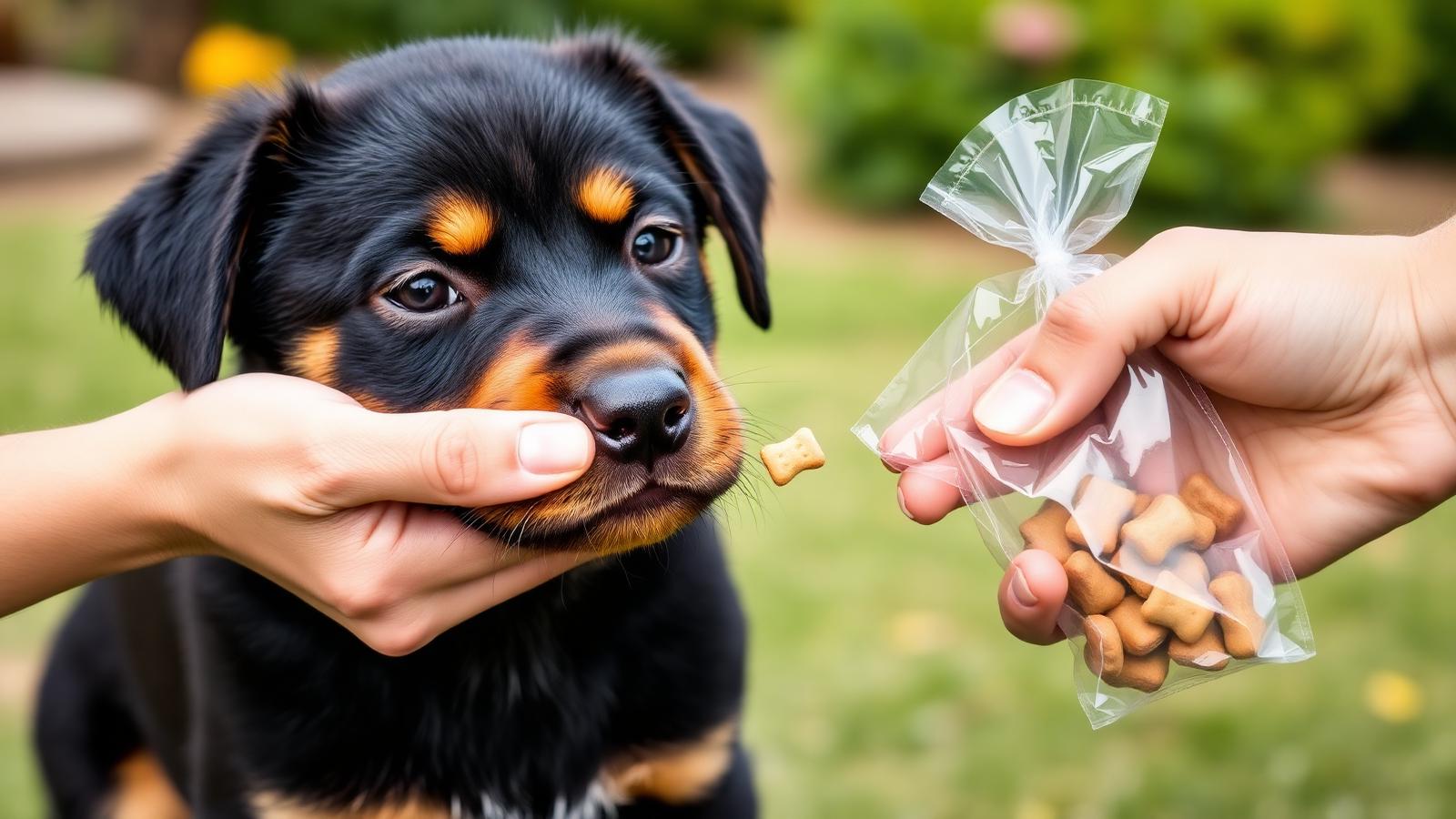
The best treat for a Rottweiler puppy is small, safe, easy to eat and valuable enough to reward the behavior you are teaching. It does not need to be a large biscuit. In fact, a reward about the size of a pea is usually better for fast, repeated training.

Rottweiler puppy receiving a tiny training treat from a hand during a training session

Best Treats for Rottweiler Puppies

The best treat for a Rottweiler puppy is small, safe, easy to eat and valuable enough to reward the behavior you are teaching. It does not need to be a large biscuit. In fact, a reward about the size of a pea is usually better for fast, repeated training.

Treats, chews, toppers and table food should make up no more than about 10% of daily calories. The remaining 90% or more should come from a complete and balanced growth diet. For frequent training, using part of the daily kibble is the simplest way to protect that balance.

Quick list: good puppy training treats

  • Part of the puppy's measured daily kibble
  • Soft commercial puppy training treats broken into tiny pieces
  • Single-ingredient freeze-dried treats in small amounts
  • Tiny pieces of plain cooked chicken, turkey or lean beef
  • Tiny pieces of cooked egg
  • Small pieces of carrot or green bean if your puppy enjoys them
  • A small amount of a veterinarian-approved treat for dietary sensitivities

Introduce new treats one at a time. Rich foods can cause loose stools even when they are not toxic.

How big should a training treat be?

For most puppy training, aim for a pea-sized or smaller piece. Your puppy experiences the reward as an event, not as a measured volume. Five tiny rewards usually create more useful repetitions than one large biscuit with the same calories.

Choose a soft treat that can be swallowed quickly without lengthy chewing. Save larger chews for supervised quiet time rather than fast training sessions.

The 90/10 rule in practice

The 10% limit refers to calories, not the visual size of the food. Cheese and fatty meat can contain many calories in a small piece, while a bit of carrot contains relatively few.

If your puppy's food allowance is adjusted for treats:

  1. Find the food's calories per cup or kilogram.
  2. Find the treat's calories per piece or gram.
  3. Decide on a daily treat budget of no more than about 10% of the total calories.
  4. Keep pieces tiny and count long-lasting chews too.
  5. Reassess body condition weekly using the Rottweiler puppy portion guide.

If calorie information is missing, contact the manufacturer. "Natural" does not mean calorie-free.

Match the reward to the difficulty

Low-distraction practice

Use kibble for easy behaviors at home: name response, eye contact, sit, hand target and settling on a mat.

Moderate distractions

Use a soft commercial treat or tiny cooked-meat piece when practicing around mild outdoor distractions.

High-value moments

Reserve the most exciting safe reward for recall, calm behavior around major distractions or a new experience. High-value should mean more desirable, not physically larger.

Pair food with praise, play, access to sniffing and other real-life rewards. This helps you train effectively without depending on an endless stream of calories. Browse the Rottweiler puppy training guides for exercises that use positive reinforcement.

Treats to avoid

Never give a puppy:

  • Products containing xylitol (also called birch sugar)
  • Chocolate or cocoa
  • Grapes or raisins
  • Onions, garlic or concentrated allium products
  • Alcohol, coffee, energy drinks or other caffeine sources
  • Macadamia nuts
  • Cooked bones
  • Moldy or spoiled food
  • Raw bread dough containing yeast
  • Very fatty leftovers
  • Treats that are too hard, large or easy to swallow whole

Do not rely on the rule "avoid everything ending in -ol." Read the ingredient list specifically for xylitol, store sugar-free gum and candy securely, and contact a veterinarian or animal poison service immediately if exposure is suspected. Do not wait for symptoms.

Are rawhide and bones good puppy treats?

Rawhide quality and digestibility vary, and large pieces can create choking or obstruction risks. Cooked bones can splinter. Raw bones can damage teeth, obstruct the digestive tract and introduce bacteria. Choose supervised, size-appropriate chews and remove them when pieces become small enough to swallow.

No chew is completely risk-free or a substitute for supervision.

Human foods as treats

Plain, unseasoned food can work in tiny amounts, but avoid butter, sauces, salt, onion and garlic. Even safe foods can cause digestive upset when introduced quickly.

FoodTreat guidance
Cooked chicken or turkeyPlain, boneless, skin removed, tiny pieces
Cooked eggPlain and fully cooked, tiny pieces
CheeseVery small amounts if tolerated; calorie-dense
CarrotSmall, manageable pieces; supervise chewing
AppleNo seeds or core; small pieces
Peanut butterOnly if verified xylitol-free; calorie-dense

Treats do not repair an incomplete diet. Choose the best large-breed puppy food first, then fit extras around it.

Treats for sensitive stomachs

If your puppy has frequent loose stools, vomiting, itching or ear problems, stop adding new extras and ask your veterinarian for advice. A simple option during assessment is to use the regular food as the only reward.

For puppies on an elimination or prescription diet, even a tiny unrelated treat can invalidate the dietary trial. Use only the diet or treats approved by your veterinarian.

How to evaluate a commercial treat

  • Suitable size and texture for a puppy
  • Calories stated per treat or per gram
  • Clear ingredient and manufacturer information
  • Easy to break into tiny pieces
  • Not extremely fatty or salty
  • No xylitol or other unsafe ingredients
  • Practical to carry without crumbling excessively
  • Appealing enough for the training environment

A treat does not need an AAFCO "complete and balanced" statement because it is not the main diet. In fact, many are labeled for intermittent or supplemental feeding only. That is another reason to keep the portion small.

Need tiny, practical rewards for your next training session?

RottieBuddy may earn a commission from qualifying purchases, at no extra cost to you. Our recommendations are based on suitability, not commission.

Compare treat size, texture, calories, ingredients and training value in our dedicated Rottweiler treat guide.

Browse the Complete Food Buyer's Guide

Compare Rottweiler Training Treats

Reviewed for accuracy

Last reviewed: August 2026

This guide provides general educational information and does not replace advice from your veterinarian. Puppies with poor growth, sudden weight change, repeated vomiting or diarrhea, loss of appetite, or a diagnosed health condition need individual veterinary guidance.

Frequently Asked Questions

How many treats can a Rottweiler puppy have?

Count calories rather than pieces. Keep treats and all other extras to no more than about 10% of daily calories, and use tiny pieces so you can reward many repetitions.

Can I use kibble as training treats?

Yes. Reserve part of the measured daily food allowance for training. Use higher-value treats selectively when the task or environment is more difficult.

Can an 8-week-old puppy have treats?

Yes, if the treats are puppy-safe, tiny and included in the daily intake. Start with the puppy's regular food to avoid introducing too many new ingredients during the move home.

Are freeze-dried treats safe for puppies?

They can be useful in small amounts when made by a reputable manufacturer and broken into appropriately sized pieces. Check calories and food-safety instructions, and remember that a single-ingredient treat is not a complete diet.

Can a Rottweiler puppy have peanut butter?

Only use a small amount of peanut butter that you have checked carefully and confirmed contains no xylitol. Peanut butter is calorie-dense, so it should be an occasional reward.

Continue your puppy nutrition guide