
Back to Rottweiler Puppy Behavior

How to Stop Destructive Chewing in a Rottweiler Puppy

Chewing is a normal need, not a character flaw. A puppy investigates objects with the mouth, relieves teething discomfort and repeats whatever feels interesting. The problem begins when access, supervision and suitable alternatives do not match that powerful curiosity.

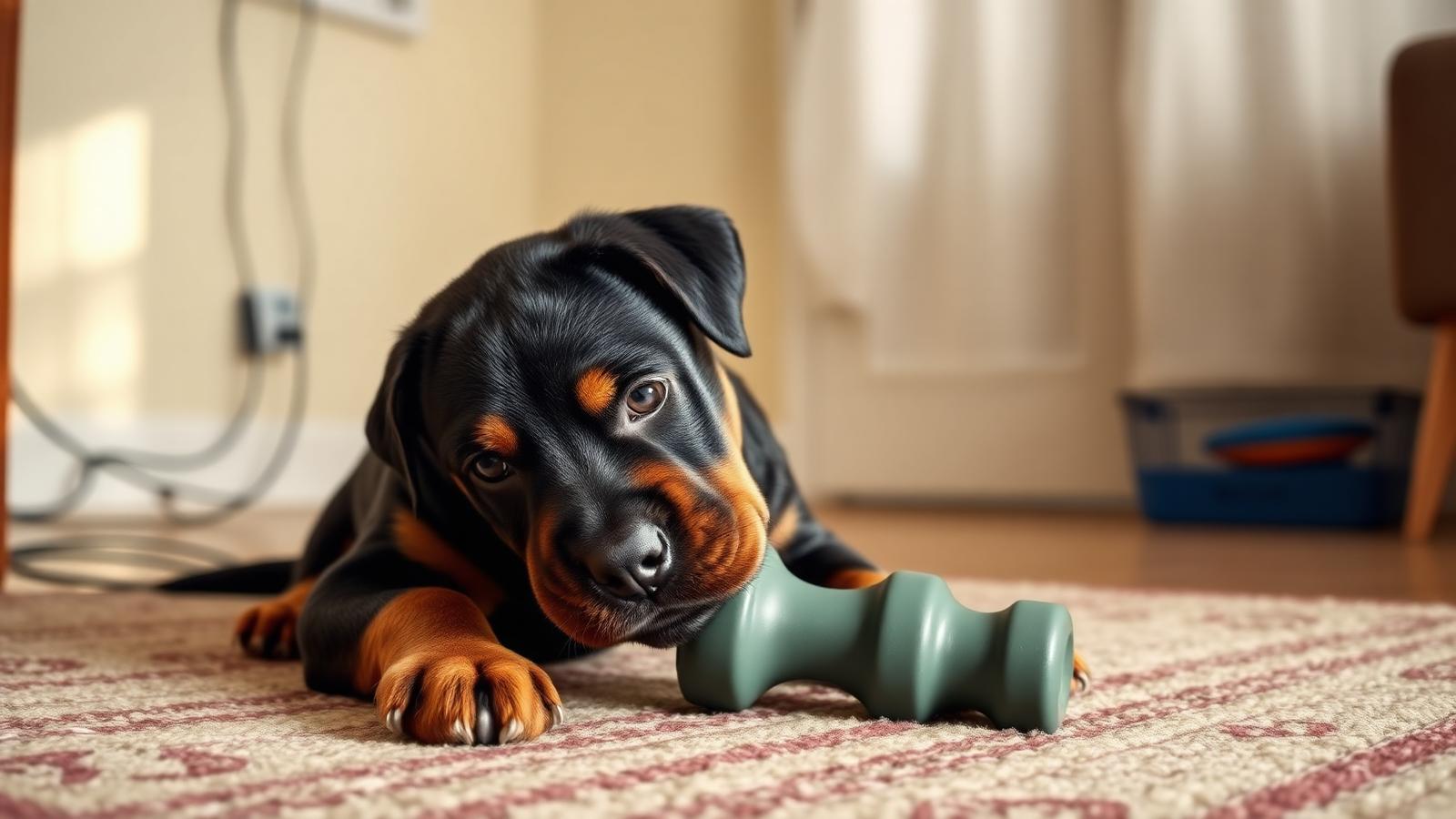
Rottweiler puppy relaxing with a size-appropriate rubber chew toy

How to Stop Destructive Chewing in a Rottweiler Puppy

Chewing is a normal need, not a character flaw. A puppy investigates objects with the mouth, relieves teething discomfort and repeats whatever feels interesting. The problem begins when access, supervision and suitable alternatives do not match that powerful curiosity.

The most effective plan has three parts: prevent access to dangerous or valuable items, provide safe legal outlets and teach the puppy what earns reinforcement. Punishing damage after you discover it does not explain which object was wrong and can make the puppy fear your return.

Last reviewed: August 2026

Why is my puppy chewing everything?

Common contributors include:

  • Teething and oral exploration
  • Too much freedom too soon
  • Boredom or insufficient mental activity
  • Overtiredness and difficulty settling
  • Hunger or a feeding routine that offers little foraging
  • Attention gained when people chase or grab
  • Separation-related distress
  • Pain, digestive disease or compulsive behavior

Chewing only during absences, combined with barking, drooling, escape attempts, toileting or panic, needs a different plan from ordinary teething. Use the Rottweiler puppy alone-time guide and discuss distress with your veterinarian.

Puppy-proof one room at a time

Get down to puppy height and remove or secure:

  • Electrical cords and chargers
  • Medication, nicotine products and household chemicals
  • Shoes, clothing, remote controls and children's toys
  • Trash, food packaging and cooked bones
  • Batteries, magnets and small objects
  • Toxic plants and foods
  • Foam, socks, string, fabric and stuffing
  • Items on low tables and open shelves

Close doors, use gates and provide a safe puppy zone. A crate or pen can prevent rehearsal when introduced positively, but it is not a substitute for exercise, toilet breaks, social contact or gradual crate training.

Choose safer chew outlets

No toy is truly indestructible. Select items that are:

  • Too large to swallow or lodge behind the teeth
  • Appropriate for puppy teeth and age
  • Free from loose strings, sharp edges and detachable parts
  • Durable enough for the individual chewing style
  • Easy to inspect and clean
  • Used with supervision until the puppy's habits are known

Very hard items can fracture teeth, while soft items can be torn and swallowed. Check every toy before and after use and remove it when pieces loosen, cracks deepen or the size becomes unsafe.

Food-stuffed rubber toys can combine chewing, licking and a meal. Introduce them while you are present, use the puppy's regular food where possible and count extras in the daily calorie allowance. See the Rottweiler puppy treats guide.

What to do when your puppy grabs the wrong object

  1. Stay calm and prevent a chase game.
  2. Offer a high-value food trade or appropriate toy.
  3. Mark and reward the release.
  4. Move the forbidden object out of reach.
  5. Redirect to the legal chew and reward continued use.
  6. Improve management so the mistake is harder to repeat.

Teach "drop" through planned exchanges with low-value toys. Never pry an object from the mouth unless there is an immediate emergency; repeated forced removal can create guarding.

A simple daily anti-chewing plan

MomentHelpful outlet
After wakingToilet break, short sniff and breakfast enrichment
After active playCalm chew or lick activity followed by rest
During household tasksSupervised puppy zone with a prepared toy
Before a predictable "witching hour"Brief training, toilet break and lower stimulation
During alone-time practiceFamiliar, previously tested enrichment only if safe unsupervised

Do not try to exhaust a growing puppy with long forced exercise. Sniffing, short training, searching for food and appropriate social play can meet needs without excessive joint load.

Call your veterinarian urgently

If you saw or suspect your puppy swallowed a sock, string, battery, magnet, sharp item, toxin or part of a toy, call a veterinarian or animal poison service immediately. Do not induce vomiting unless specifically instructed.

Repeated vomiting or retching, heavy drooling, abdominal pain or swelling, loss of appetite, lethargy, straining or inability to pass stool can indicate an obstruction. Waiting for an object to "pass" can turn a treatable situation into an emergency.

Common destructive-chewing mistakes

  • Giving full access to the house before the puppy is ready
  • Chasing stolen items
  • Punishing damage after the event
  • Offering a damaged toy because it was marketed as tough
  • Leaving a new chew unsupervised
  • Using bitter spray without addressing access and needs
  • Confining for long periods instead of teaching rest and alone time
  • Ignoring chewing that suddenly appears with pain or anxiety

Sources and Further Reading

This guide provides general educational information and is not a diagnosis or an individual behavior plan. Sudden behavior change can have a medical cause. If a puppy threatens, bites, guards resources, panics or creates a safety risk, contact your veterinarian and a qualified reward-based behavior professional.

Frequently Asked Questions

When does puppy chewing stop?

Teething-related intensity often eases after adult teeth erupt, but chewing remains a normal lifelong behavior. Continue providing appropriate outlets.

Are antlers and bones safe for Rottweiler puppies?

Very hard chews can fracture teeth, and pieces can cause choking or digestive injury. Ask your veterinarian about options suited to your puppy.

Should I use bitter spray on furniture?

It may deter some puppies when the product is dog-safe, but it is only an extra layer. Prevent access and provide better chewing choices first.

Can I leave a chew toy in the crate?

Only after supervised use shows that the specific item remains intact and is appropriate for your puppy. No toy is risk-free when unsupervised.

Why does my puppy destroy things only when alone?

It may be boredom, incomplete confinement training or separation-related distress. Video the early minutes of an absence and seek help for panic signs rather than simply buying a stronger crate.

Continue your puppy behavior guide