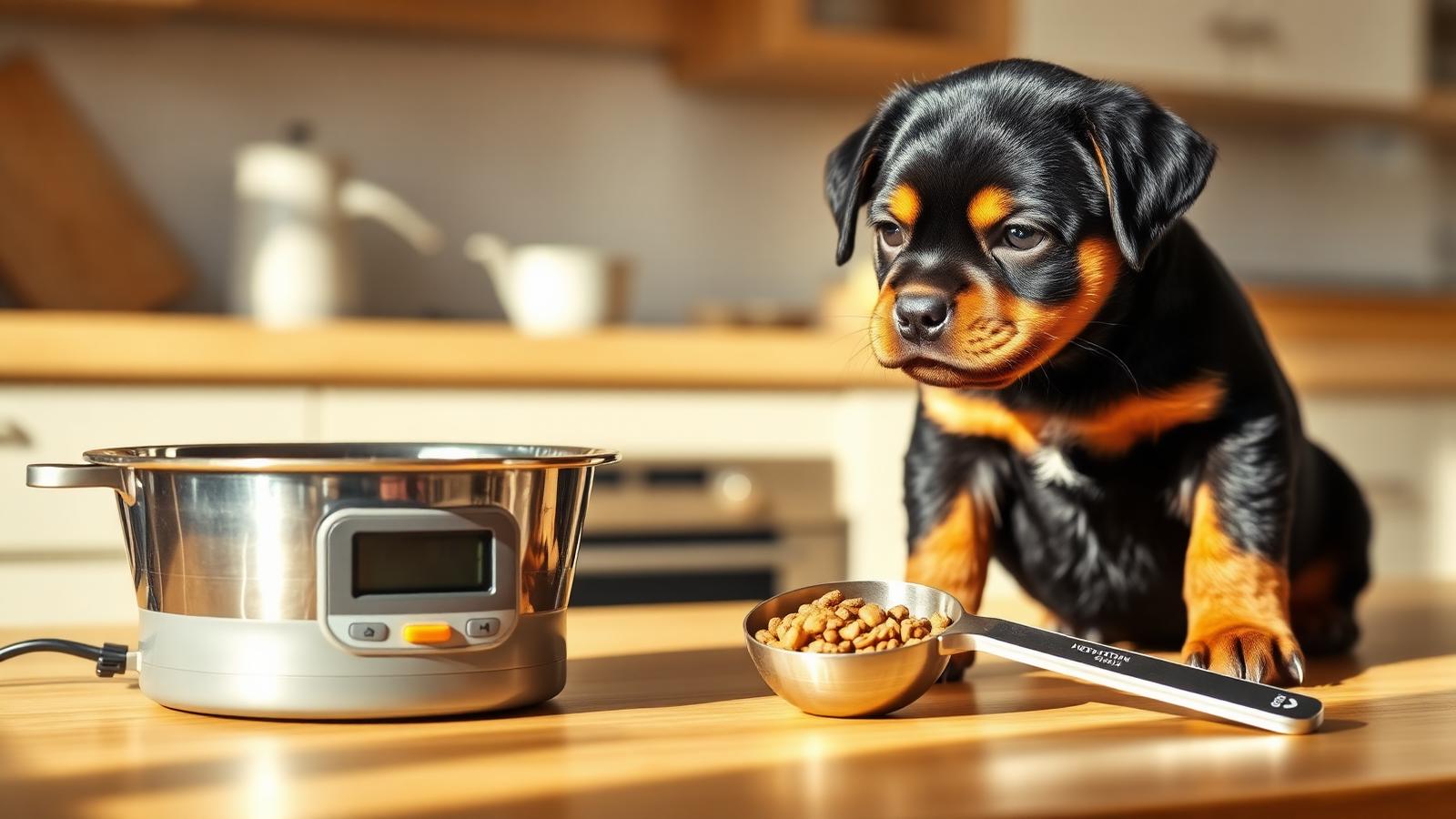
Step 1: confirm that the food is appropriate
For a Rottweiler puppy, look for a nutritional adequacy statement that says the food is complete and balanced for growth including the growth of large-size dogs (70 lb / 32 kg or more as an adult). Do not use a food labeled for adult maintenance as the main diet for a growing puppy.
Step 2: find the label's daily feeding amount
Follow the brand's directions carefully. Some feeding charts use current body weight; others use age, expected adult weight or a combination. Check the heading and footnotes before choosing a row.
Step 3: weigh the daily amount
Grams are more consistent than cups. Put the empty bowl on a digital kitchen scale, press tare, then add the food. If the package gives only cups, contact the manufacturer for grams per cup or calorie information.
Step 4: divide the total into meals
Use the puppy's total daily allowance, then divide it across the day. Do not give the stated daily amount at every meal. See our Rottweiler puppy feeding schedule for meal frequency by age.
Step 5: include every extra calorie
Training rewards, dental chews, stuffed toys, toppers and leftovers all count. If you do several training sessions, reserve some of the daily kibble and use it as rewards. Learn how to keep extras under control in our guide to safe treats for Rottweiler puppies.