Puppy development · 8–12 weeks

Rottweiler Puppy Development (8–12 Weeks)

Between 8 and 12 weeks, your Rottweiler puppy changes incredibly fast. These first weeks at home are when your puppy begins learning household routines, basic training, bite inhibition, social skills and how to feel safe in a new environment.

General guidance only. Growth and health vary by puppy; contact your veterinarian if you have concerns.

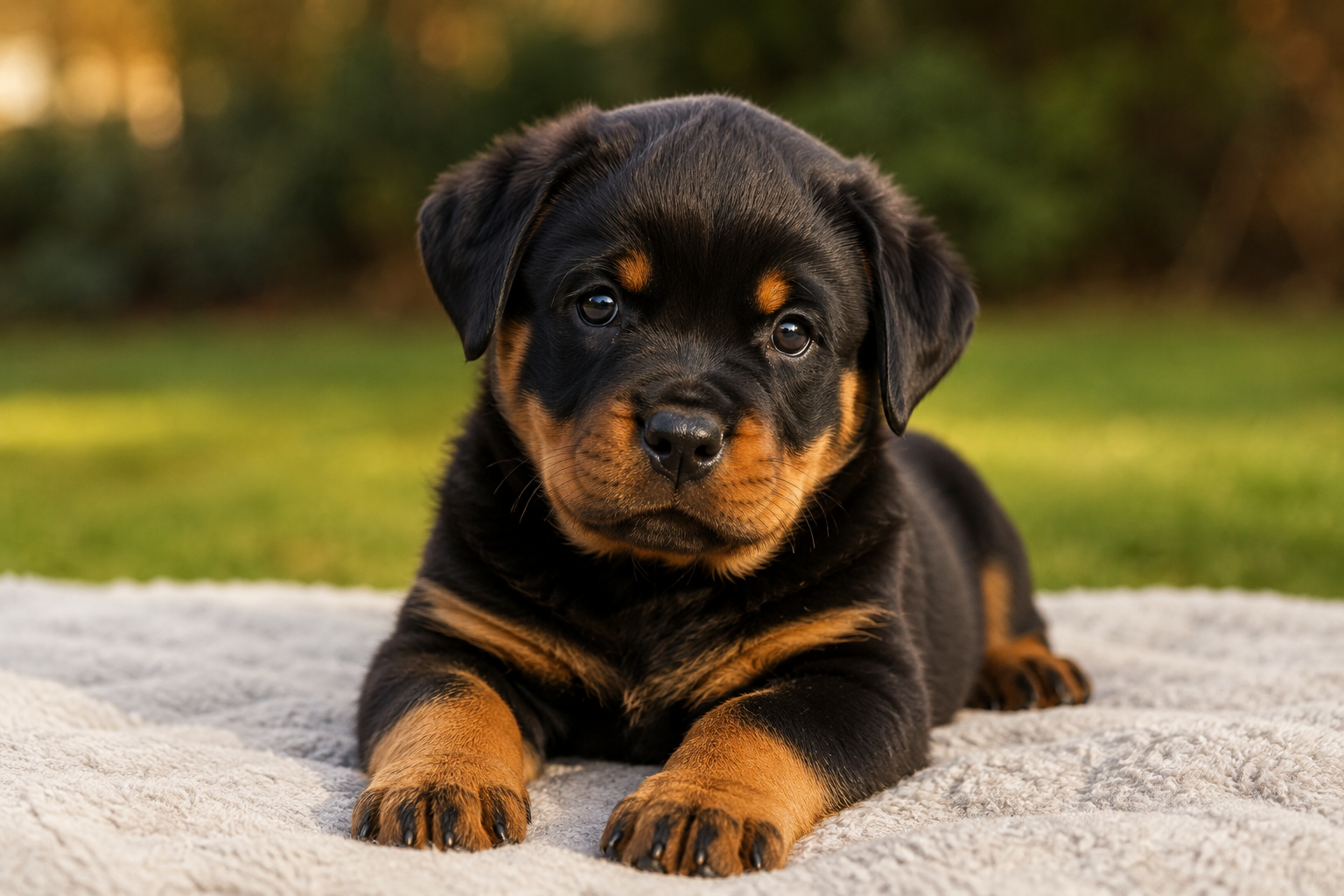
Eight-week-old Rottweiler puppy resting outdoors
8–12 WEEKS
At a glance
⚖️ 7–16 kgtypical range
🍽️ 3–4 mealsper day
😴 18–20 hsleep/day
🎯 Routinemain focus
Quick navigation

What do you need help with?

Skip the long table of contents. Jump straight to the part of puppy life you are dealing with today.

Compare your puppy with real Rotties

Wondering whether your 12-week-old Rottweiler looks small, big, stocky or lanky? See 37 real Rottweiler puppy photos — including weight, sex and build — and discover how much variation is normal at this age.

See 37 real Rottweilers at 12 weeks old →
Week by week

How old is your Rottie?

Select your puppy’s age to surface the most relevant development, training priorities and actions for this week.

This week

Your Rottie at 10 weeks

A 10-week-old Rottweiler puppy may become bolder and start testing boundaries. Consistency matters more than strictness, and mouthing should be redirected rather than punished.

DevelopmentExploring boundaries, stronger play and more confidence.
Training focusBite inhibition, recall, leave it and leash introduction.
Owner priorityConsistent household rules and redirecting biting.
RememberKeep sessions short, positive and age-appropriate.
This week

Focus for week 10

Your Rottie at 8 weeks

A huge transition: leaving the breeder or previous home and learning that your home is safe, predictable and rewarding. An 8-week-old Rottweiler puppy needs routine, bonding and a lot of sleep.

Adjusting to a new home, bonding and lots of sleep.

Name, potty routine, crate comfort and gentle handling.

Bonding, routine and low-pressure positive experiences.

  • Build a predictable routine
  • Practice name recognition
  • Introduce the crate positively
  • Take frequent potty breaks
  • Handle paws and ears gently

Your Rottie at 9 weeks

Many 9-week-old Rottweiler puppies are getting more comfortable, curious and ready for tiny training games throughout the day.

Confidence growing and more curiosity about the environment.

Sit, recall games, grooming practice and calm attention.

Positive socialization without overwhelming your puppy.

  • Continue potty training
  • Practice sit
  • Play short recall games
  • Introduce gentle grooming
  • Explore a new surface

Your Rottie at 10 weeks

A 10-week-old Rottweiler puppy may become bolder and start testing boundaries. Consistency matters more than strictness, and mouthing should be redirected rather than punished.

Exploring boundaries, stronger play and more confidence.

Bite inhibition, recall, leave it and leash introduction.

Consistent household rules and redirecting biting.

  • Continue potty training
  • Practice handling paws and ears
  • Introduce the leash
  • Redirect biting to chew toys
  • Play one short enrichment game

Your Rottie at 11 weeks

Coordination and attention improve in an 11-week-old Rottweiler puppy, although concentration is still very limited and sessions should remain short.

Better coordination and a little more attention.

Recall with mild distractions, leash foundations and calm greetings.

Build confidence around new objects and environments.

  • Practice recall around a mild distraction
  • Try calm leash walking indoors
  • Reward calm greetings
  • Introduce one new object
  • Continue positive socialization

Your Rottie at 12 weeks

A 12-week-old Rottweiler may look noticeably bigger and more independent, but is still very young and needs structure, sleep and support.

More independence, stronger body and growing confidence.

Basic obedience, recall, polite greetings and impulse control.

Safe new experiences and preventing rough habits early.

  • Reinforce basic cues
  • Practice a short wait
  • Continue crate and potty routines
  • Reward four paws on the floor
  • Plan the next development stage
Growth + feeding

Growing fast — but steady is better

Weight guidance, meal frequency and the most relevant feeding products in one logical place.

Typical weight

Rottweiler puppy weight

AgeMaleFemale
8 weeks8–10 kg7–9 kg
10 weeks10–13 kg9–12 kg
12 weeks13–16 kg11–15 kg
Is your puppy on track?Compare age, sex and current weight.
Open tracker →
Feeding

Meals at 8–12 weeks

meals/day at 8–10 weeks
3–4×meals/day at 10–12 weeks
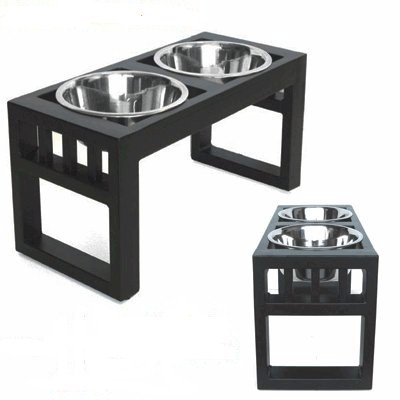
Choose a complete food formulated for large-breed puppies.
Keep fresh water available throughout the day.
Aim for steady, controlled growth rather than rapid weight gain.
Use the food maker’s guide as a starting point, then adjust with professional advice.
Training & behaviour

Start with six simple skills

At this age the goal is not perfect obedience. It is communication, trust, routine and lots of small wins.

1. Name
2. Sit
3. Come
4. Leave it
5. Crate
6. Potty

Puppy biting

Mouthing is normal. Redirect teeth to appropriate chew toys, pause play when biting gets too hard and reward gentle behaviour. Avoid rough hand games that teach your puppy that hands are toys.

Chew & teething toysGive those puppy teeth a better target.

Crate & potty training

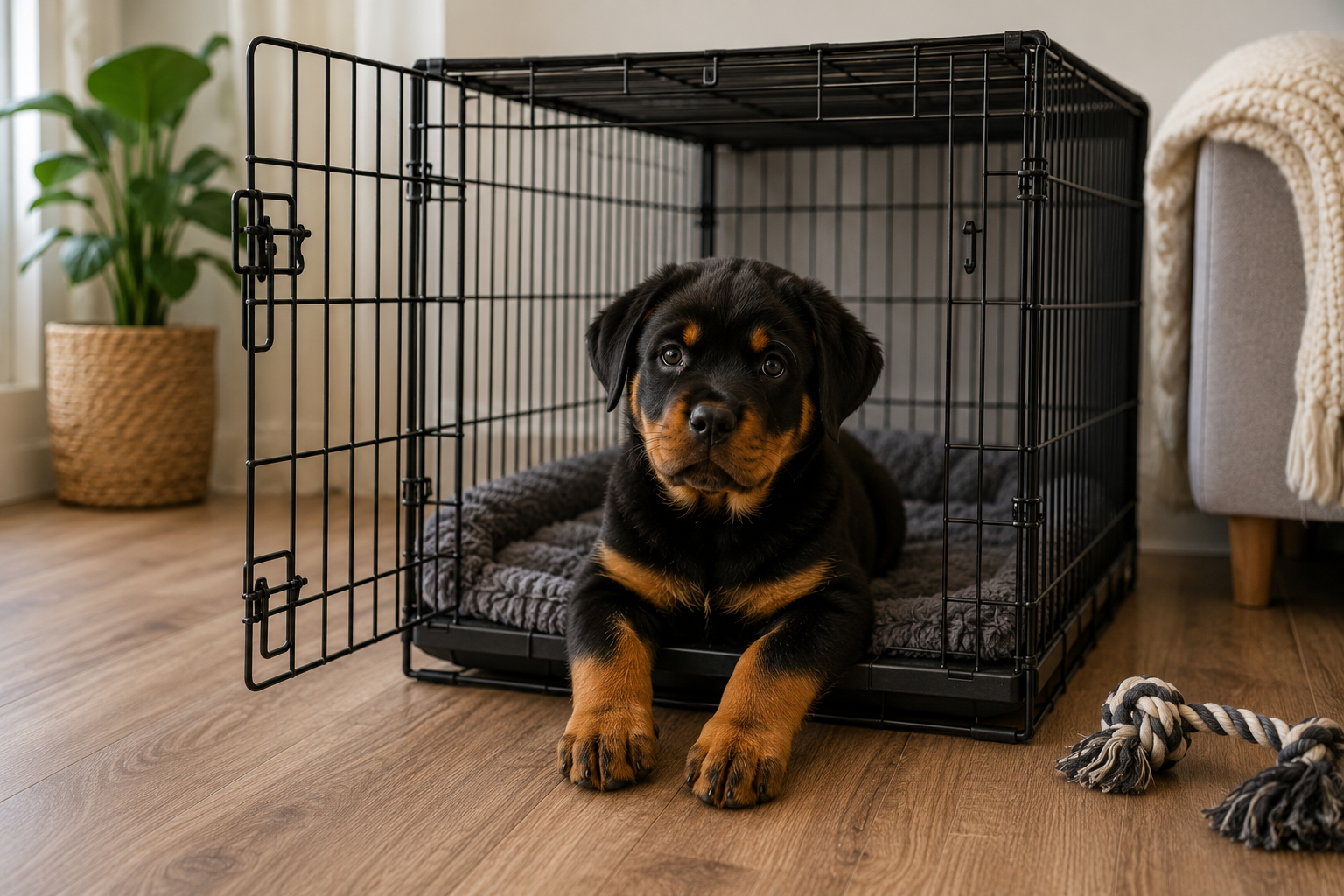
Take your puppy out after waking, eating, drinking, active play and before bedtime. Keep the crate positive, correctly sized and never use it for punishment.

Puppy crateSafe rest space + predictable routine.
Daily rhythm

A typical puppy day

A young Rottweiler may sleep around 18–20 hours. Think in short cycles: potty, food, a little activity, then rest.

Wakepotty break
Mealbreakfast
Training2–3 min
Pottyagain
Naprecovery
Playsocialize
Mealrepeat cycle
Bedtimefinal potty
Confidence + movement

Socialization and exercise

Build a confident adult Rottweiler without overwhelming a young puppy or overloading growing joints.

Positive socialization

  • Adults and supervised children
  • Healthy, friendly, vaccinated dogs
  • Household sounds
  • Different surfaces
  • Calm car rides
  • Handling paws, ears and mouth
Avoid: forcing your puppy into intense or frightening situations. Follow your veterinarian’s advice about vaccination status and disease risk.

Age-appropriate exercise

  • Free puppy play
  • Short sniffing sessions
  • Exploration
  • Short training games
  • Gentle enrichment
  • Plenty of sleep afterward
Avoid: long forced walks, repetitive jumping, stair running and strenuous running.
Health watch

What looks normal — and when to call your vet

Your puppy should have veterinary checkups, vaccinations and parasite prevention as advised by your vet.

Usually reassuring

  • Strong appetite
  • Lots of sleep
  • Curiosity and playfulness
  • Steady weight gain
  • Normal stools and hydration
  • Quick recovery after new experiences

Contact your veterinarian about

  • Persistent vomiting or diarrhoea
  • Unexpected weight loss
  • Loss of appetite
  • Unusual lethargy
  • Excessive scratching
  • Any concern about body condition or development
Planning for unexpected vet costs?Read the Rottweiler pet insurance guide after the health information.
Insurance guide →
Interactive tool

Your puppy’s weekly checklist

Aim to cover each of these every week between 8 and 12 weeks. Your progress is saved on this device.

0 of 9 completed

Weekly routine for 8–12 weeks

0%
Keep it simple

Common mistakes

The habits that cause most trouble in the first weeks at home.

1

Too much exercise

Growing bones and joints need protection. Avoid distance-focused exercise, repeated jumping and stair running.

2

Expecting too much

Attention spans are tiny. A few positive minutes beat long training sessions or punishment-based corrections.

3

Not enough sleep

Overtired puppies often become extra mouthy, excitable and harder to settle. Protect 18–20 hours of rest.

4

Inconsistent rules

Everyone in the household should use the same cues and boundaries — and no one should skip socialization.

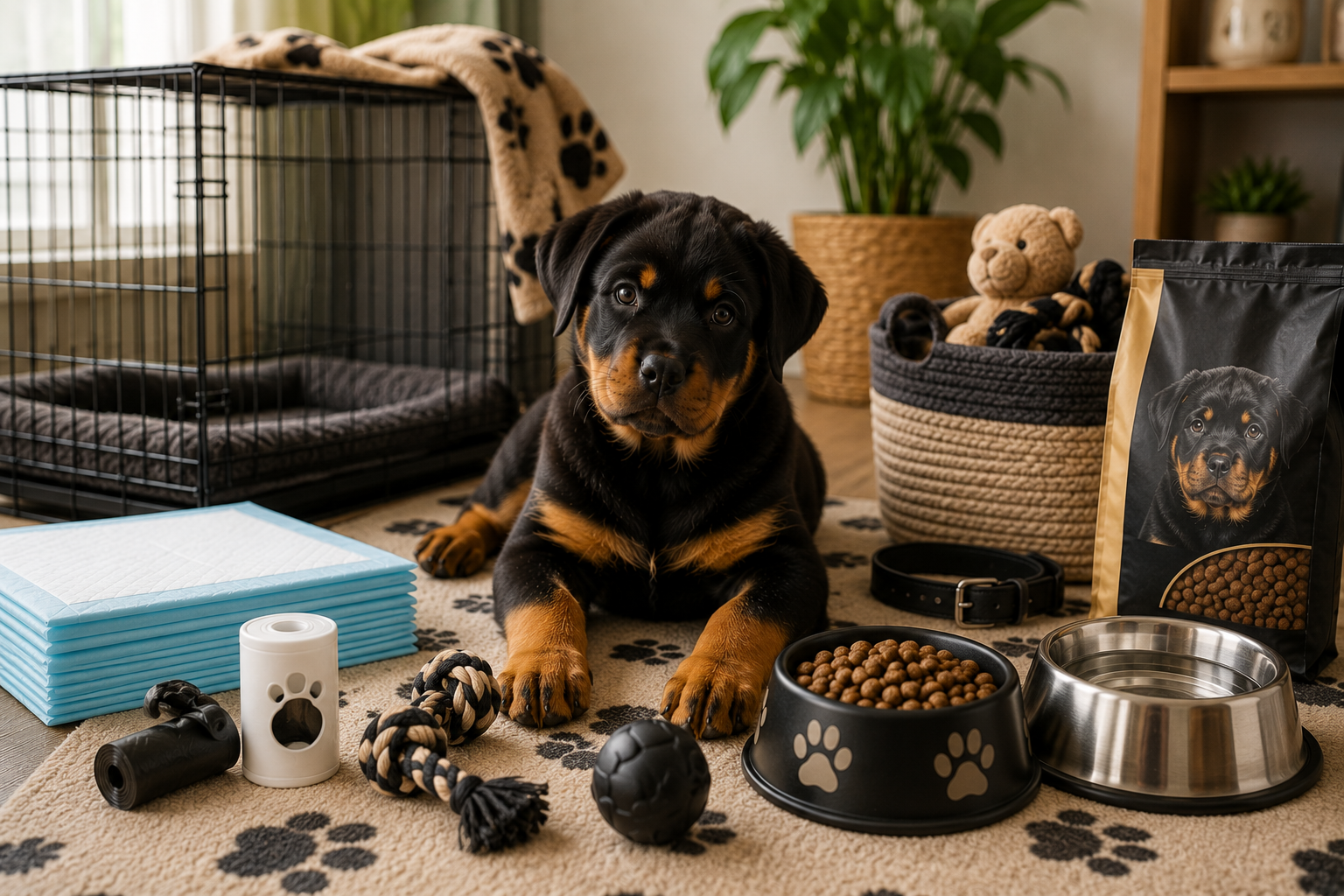
Rottweiler puppy surrounded by puppy essentials such as bowls, a bed and toys
Puppy essentials

Everything for the first weeks together

Crate and sleep setup, feeding gear, teething toys and first-walk equipment — the practical kit that makes the 8–12 week stage easier.

🏠 Crate & sleep🍖 Feeding🦴 Teething & play🦮 First walks
View puppy essentials →

Conclusion

The first month at home shapes much of your Rottweiler's future personality. By focusing on positive training, appropriate nutrition, careful socialization, plenty of sleep and consistent routines, you build a confident companion that is eager to learn and easy to live with.

When in doubt about growth, feeding or health, your veterinarian remains the best source of individual advice.

FAQ

Frequently asked questions