
Rottweiler Health Prevention: How to Keep Your Rottie Healthy
Rottweilers are strong, athletic dogs, but staying healthy is about much more than reacting when something goes wrong. Good preventive care helps you identify health problems earlier, maintain a healthy weight, protect your Rottweiler from preventable diseases, and support their joints, heart, teeth, skin and overall quality of life.
Whether you have an 8-week-old Rottweiler puppy or a senior Rottie, this guide covers the most important steps you can take to help keep your dog healthy.
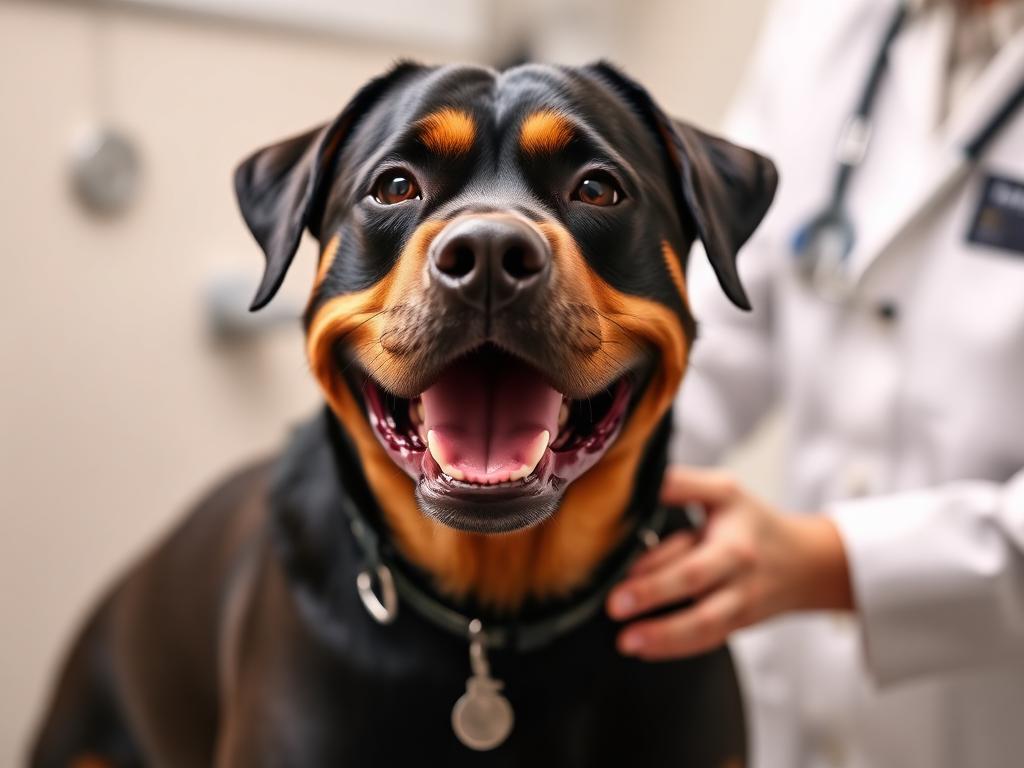
Quick answer
The foundations of Rottweiler preventive health care are regular veterinary checkups, appropriate vaccinations, parasite prevention, maintaining a healthy weight, daily exercise, dental care, breed-specific health awareness, and knowing the warning signs that require veterinary attention.
Jump to the preventive health checklist ↓Why preventive health care matters for Rottweilers
Rottweilers are powerful dogs with a relatively high body weight and rapid growth during puppyhood. They can also be predisposed to certain orthopedic, cardiac and other health conditions. That doesn't mean your Rottweiler will develop these problems — it means prevention and early detection deserve to be part of your routine from puppyhood onward.
Think of preventive care as several layers of protection:
- Veterinary wellness examinations
- Vaccination
- Flea, tick, heartworm and parasite prevention
- Healthy body weight
- Proper nutrition
- Appropriate exercise
- Joint protection
- Dental care
- Regular grooming and body checks
- Breed-specific health screening
- Early recognition of unusual symptoms
Small habits repeated consistently make a big difference over your Rottweiler's lifetime.
1. Schedule regular veterinary checkups
Don't wait until your Rottweiler appears sick before visiting your veterinarian. Routine wellness examinations allow your vet to monitor changes that may not yet be obvious at home. A typical preventive examination may include checking your dog's:
- Weight and body condition
- Heart and lungs
- Teeth and gums
- Eyes and ears
- Skin and coat
- Abdomen
- Joints and mobility
- Lymph nodes
- Overall physical condition
How often should a Rottweiler visit the vet?
- Puppies: several visits during the first months for vaccinations, parasite control, growth monitoring and general health checks.
- Healthy adults: at least one wellness examination each year, although your vet may recommend a different schedule.
- Seniors: more frequent examinations, because health and mobility changes can occur faster with age. Bloodwork, urinalysis or other screening tests may be recommended.
2. Keep your Rottweiler's vaccinations up to date
Vaccination is one of the most important tools for preventing serious infectious diseases. Core vaccines commonly protect dogs against:
- Canine distemper
- Canine adenovirus
- Canine parvovirus
- Rabies
- Leptospirosis
Additional vaccines may be recommended depending on where you live and your Rottweiler's lifestyle — a dog that regularly attends daycare, training classes, shows, boarding facilities or dog parks may have different needs than a dog with limited contact with other dogs.
Important: always discuss vaccination schedules with your veterinarian, because recommendations vary by age, medical history, lifestyle, local disease risk and local regulations.
3. Protect against fleas, ticks, heartworm and other parasites
Parasite prevention isn't just about stopping the itching — parasites can transmit disease and cause serious health problems. Depending on where you live, your vet may recommend protection against:
- Fleas
- Ticks
- Heartworm
- Intestinal worms
- Lungworm or other regional parasites
Because parasite risks vary significantly by location and climate, there is no universal schedule. Ask your veterinarian which parasites are common in your area and whether year-round prevention is appropriate.
Check your Rottweiler for ticks
Rottweilers love grass, trails and forests — exactly where ticks live. After outdoor adventures, check:
- Around the ears
- Neck
- Armpits
- Groin
- Between the toes
- Around the tail
- Under the collar
Regular checks also let you notice lumps, wounds and skin irritation early.
4. Keep your Rottweiler at a healthy weight
One of the most important things you control is your dog's body weight. Rottweilers are naturally muscular, but muscular does not mean overweight. Extra weight places additional stress on the:
- Hips
- Elbows
- Knees
- Spine
- Cardiovascular system
How can you tell if your Rottweiler is overweight?
Rather than relying only on the scale, learn to recognise body condition. In a healthy dog you should be able to feel the ribs without pressing through a thick layer of fat, and there should be a visible waist when viewed from above. Your veterinarian can show you how to use a Body Condition Score (BCS).
If your Rottie is gaining weight, don't dramatically cut portions on your own. Ask your vet whether calorie intake, treats, activity level or another health issue could be contributing. Our Rottweiler nutrition guide covers portions and food choices in more detail.
5. Protect growing Rottweiler puppy joints
Rottweiler puppies grow quickly, which makes appropriate nutrition and exercise especially important. More exercise isn't always better: young puppies don't need repetitive high-impact exercise designed for adult dogs. Focus on age-appropriate activities such as:
- Short walks
- Free play
- Training sessions
- Sniffing games
- Controlled socialization
- Exploring different surfaces and environments
Be cautious with excessive repetitive jumping, forced running or intense exercise while your puppy is still developing. Feed a nutritionally complete diet appropriate for the life stage and discuss large-breed puppy nutrition with your veterinarian.
Related: Rottweiler Puppy Development Guide — what to expect as your puppy grows.
6. Make exercise part of preventive care
Regular activity supports:
- Healthy body weight
- Cardiovascular fitness
- Joint mobility
- Muscle strength
- Mental stimulation
- Better behavior
- Overall wellbeing
Adult Rottweilers generally enjoy a combination of physical and mental activity. Mix traditional walks with:
- Obedience training
- Scent games
- Puzzle toys
- Controlled fetch
- Hiking
- Tracking
- Tug games
- Training challenges
The right amount depends on age, health and fitness — a senior Rottweiler with arthritis shouldn't follow the same routine as a healthy three-year-old.
7. Don't forget mental exercise
Rottweilers are intelligent working dogs. Mental stimulation helps prevent boredom and gives your dog a constructive outlet for their energy — even 10–15 minutes of focused training can be surprisingly tiring.
- Learning new commands
- Food puzzles
- Hide-and-seek
- Nose work
- Finding hidden treats
- Impulse-control exercises
- Trick training
Related: Rottweiler Training Guide — training tips and exercises.
8. Take dental health seriously
Dental problems often develop gradually. Plaque builds up and can eventually contribute to gum disease. Check your Rottweiler's mouth regularly for:
- Bad breath
- Red gums
- Bleeding gums
- Heavy tartar
- Broken teeth
- Difficulty chewing
- Dropping food
- Pawing at the mouth
Brushing with dog-safe toothpaste is one of the most useful habits you can build. Never use human toothpaste unless your veterinarian specifically instructs you to. Your vet can also examine the teeth during wellness visits and advise when professional dental treatment is needed. See our grooming guide for routine care.
9. Know the health conditions Rottweilers can be prone to
Breed awareness helps you know what to discuss with your veterinarian and which changes shouldn't be ignored. Conditions associated with Rottweilers include orthopedic problems such as hip and elbow dysplasia, certain heart conditions and some inherited diseases.
Responsible breeding matters enormously. If you're buying a puppy, ask the breeder about health testing performed on the parents rather than accepting "our dogs have always been healthy" — ask to see documented results. More detail in our common health problems guide.
10. Learn your Rottweiler's normal behavior
One of the best preventive tools costs nothing: know your dog. When you know what is normal, changes become easier to spot. Pay attention to your Rottweiler's normal:
- Appetite
- Water intake
- Energy level
- Walking style
- Bathroom habits
- Breathing
- Sleeping habits
- Weight
- Behavior
A small change doesn't automatically mean something is wrong, but persistent or sudden changes deserve attention.
11. Do a monthly Rottweiler health check at home
Once a month, spend a few minutes deliberately checking your Rottweiler from nose to tail.
Eyes
Look for unusual redness, cloudiness, swelling or discharge.
Ears
Check for redness, excessive wax, unusual odor or persistent scratching.
Mouth
Look at the gums and teeth and check for broken teeth, tartar, swelling or unusual odor.
Skin and coat
Feel through the coat for lumps, bumps, scabs, parasites, wounds or irritated skin.
Paws
Inspect nails, paw pads and between the toes.
Body
Run your hands over the chest, abdomen, back, legs and tail so you know what normally feels like your dog.
Weight
Watch for gradual weight gain or unexplained weight loss.
Movement
Notice stiffness, limping, reluctance to jump, difficulty getting up or changes in walking.
Finding something doesn't necessarily mean there's a serious problem — it means you have useful information to discuss with your veterinarian. Track it with our interactive monthly health checklist.
12. Watch for emergency warning signs
Contact a veterinarian or emergency clinic immediately if your Rottweiler shows any of these signs.
- Difficulty breathing
- Collapse
- Severe weakness
- Pale or blue gums
- Seizures
- Severe trauma
- Persistent unsuccessful attempts to vomit
- A suddenly enlarged or painful abdomen
- Suspected poisoning
- Severe bleeding
- Sudden inability to stand or walk
A swollen abdomen combined with restlessness or repeated unsuccessful retching is particularly concerning in large, deep-chested dogs and requires immediate veterinary attention. When you're uncertain whether something is an emergency, call your veterinarian for guidance.
Rottweiler preventive health checklist
| Prevention | How often? |
|---|---|
| Wellness examination | As recommended by your vet; commonly at least yearly |
| Vaccinations | According to veterinary schedule |
| Flea/tick prevention | Based on regional risk and veterinary advice |
| Heartworm/parasite prevention | Based on regional risk and veterinary advice |
| Weight check | Monthly |
| Body condition check | Monthly |
| Teeth check | Weekly |
| Tooth brushing | Ideally daily or as often as practical |
| Ear check | Weekly |
| Skin/lump check | Monthly |
| Paw and nail check | Weekly |
| Exercise | Daily |
| Mental stimulation | Daily |
| Senior health screening | Discuss with your veterinarian |
Rottweiler health prevention by life stage
Rottweiler puppy
- Vaccination schedule
- Parasite prevention
- Large-breed puppy nutrition
- Controlled growth
- Safe exercise
- Socialization
- Training
- Regular veterinary checks
Adult Rottweiler
- Maintaining healthy weight
- Daily exercise
- Dental care
- Parasite protection
- Annual wellness examinations
- Joint and mobility awareness
- Skin and lump checks
Senior Rottweiler
- More frequent health monitoring
- Mobility changes
- Weight and muscle condition
- Dental health
- New lumps or swelling
- Changes in appetite or thirst
- Changes in behavior or energy
- Veterinary screening recommended for your dog's age and health
Plan ahead for your Rottweiler's veterinary costs
Preventive care keeps your Rottie healthy, but unexpected illness or injury can still happen. See our guide to Rottweiler pet insurance to understand what coverage can include and whether it makes sense for your dog.
Frequently asked questions about Rottweiler health prevention
How can I keep my Rottweiler healthy?
Maintain a healthy body weight, provide appropriate nutrition and daily exercise, keep vaccinations and parasite prevention up to date, care for your dog's teeth, and schedule regular veterinary examinations. Knowing your Rottweiler's normal behavior also helps you identify changes earlier.
How often should a Rottweiler go to the vet?
Healthy adult Rottweilers should generally receive routine veterinary wellness examinations at least annually, although your veterinarian may recommend more frequent visits depending on age, health, medications or existing conditions. Puppies and senior dogs often require more frequent veterinary care.
What health problems should Rottweiler owners watch for?
Rottweilers can be predisposed to several health conditions, including orthopedic problems such as hip and elbow dysplasia and certain cardiac or inherited conditions. This doesn't mean every Rottweiler will develop them. Regular veterinary care and responsible health screening can help identify risks and problems earlier.
How do I know if my Rottweiler is overweight?
You should generally be able to feel your Rottweiler's ribs without pressing through a heavy layer of fat, and your dog should have a visible waist. Ask your veterinarian to evaluate your dog's Body Condition Score if you're unsure.
What vaccines does a Rottweiler need?
Vaccination recommendations depend on age, health, location, lifestyle and local laws. Core canine vaccines protect against serious diseases such as distemper, adenovirus, parvovirus, rabies and leptospirosis. Your veterinarian can create an appropriate vaccination schedule for your Rottweiler.
When is a Rottweiler considered a senior?
There isn't a single birthday when every Rottweiler becomes senior. Large dogs generally age faster than smaller breeds, so preventive health monitoring becomes increasingly important as your Rottweiler enters the later years of adulthood. Your veterinarian can recommend when senior screening should begin for your individual dog.
Prevention is easier than treatment
You can't prevent every illness or injury, but you can give your Rottweiler the best possible foundation. Maintain a healthy weight. Keep your dog active. Protect against preventable diseases and parasites. Check their teeth, skin, paws and body regularly. Schedule routine veterinary care. Most importantly, learn what is normal for your Rottie — nobody sees your dog every day like you do.
Continue your Rottweiler health journey
- Rottweiler Health Guide — health, symptoms and caring for your Rottie.
- Rottweiler Pet Insurance Guide — what coverage can include and whether it makes sense for your dog.
- Rottweiler Nutrition Guide — build a healthy nutritional foundation.
- Monthly Health Checklist — keep track of routine health checks.
Medical disclaimer: this guide provides general educational information about Rottweiler health and preventive care. It is not a substitute for professional veterinary advice, diagnosis or treatment. Always consult a qualified veterinarian about your dog's individual health needs. If you believe your Rottweiler is experiencing a medical emergency, contact a veterinarian or emergency clinic immediately.