
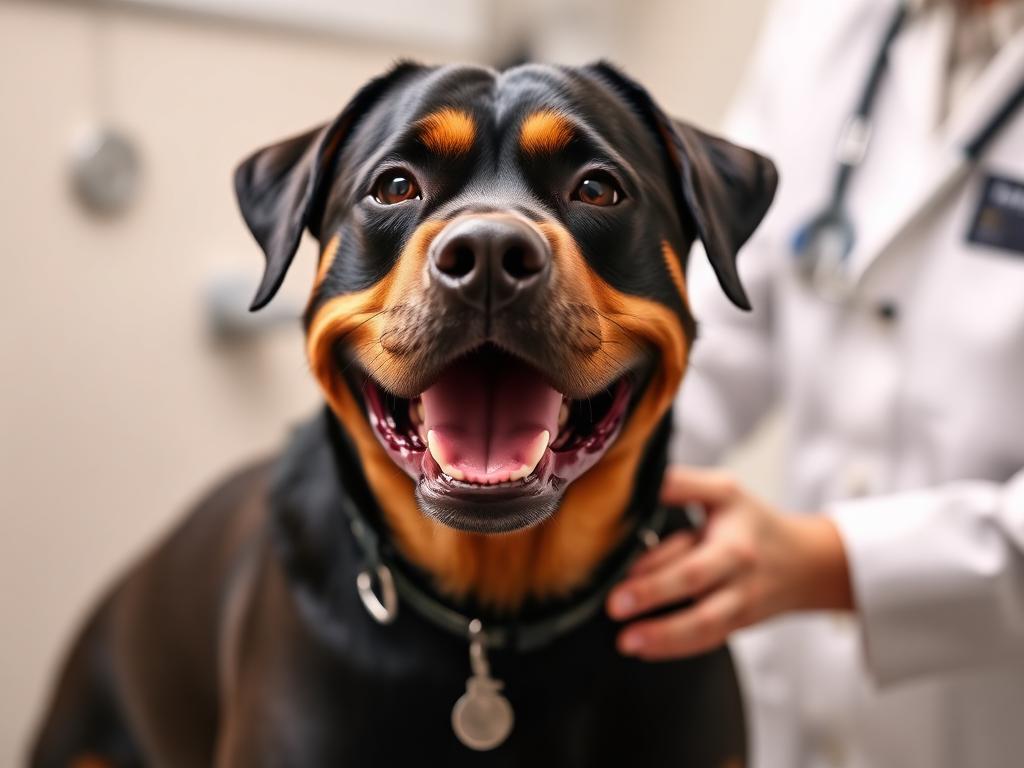
Rottweiler health at a glance
Rottweilers can be strong, active companions, but good health is not something to judge by appearance alone. A useful lifelong plan combines regular veterinary care, an appropriate diet, healthy body condition, exercise that suits the individual dog, parasite control, dental care, grooming and attention to changes at home.
Breed-related risk does not mean your Rottweiler will develop a particular disease. It means you have a better list of questions to discuss with your veterinarian and a stronger reason to act when a meaningful change appears. This guide brings those priorities together and directs you to the detailed RottieBuddy health resources for each stage of life.
Explore the Rottweiler health guide
Preventive care
Build a practical plan for wellness examinations, vaccinations, parasite protection, weight, dental care and life-stage monitoring.
Follow the Rottweiler health prevention guideCommon health problems
Understand orthopedic, cardiac, cancer and emergency concerns associated with the breed—and what signs should prompt veterinary care.
Review common Rottweiler health problemsGrooming and body care
Create a flexible routine for the short double coat, nails, ears, teeth, paws and skin without over-cleaning.
Use the Rottweiler grooming guidePuppy health
Get stage-specific guidance on vaccinations, parasites, growth, weight and developing joints.
Start the Rottweiler puppy health guideNutrition
Choose an appropriate complete diet, measure portions and adjust intake using body condition and veterinary guidance.
Read the Rottweiler nutrition guidePet insurance
Learn how waiting periods, exclusions, reimbursement, limits and hereditary-condition wording can affect coverage.
Understand pet insurance for RottweilersWhat does a healthy Rottweiler look like?
Health is a pattern, not a single number. Learn your dog's usual appetite, thirst, stool, urination, breathing, sleep, energy, gait and behavior. A healthy adult will generally have:
- A body condition appropriate for the individual, with ribs that can be felt without pressing through a heavy fat layer
- A visible waist from above and an abdominal tuck from the side, allowing for natural body-shape variation
- Comfortable movement without persistent limping, stiffness or reluctance
- Clean, comfortable eyes and ears without ongoing discharge, odor or scratching
- Skin without persistent redness, open sores, unexplained hair loss or intense itching
- Teeth and gums that allow comfortable eating, without bleeding, broken teeth or obvious mouth pain
- Normal interest in daily activities for that dog
A muscular silhouette can still carry excess fat, and a wagging tail does not rule out pain. Ask your veterinarian to record body weight, body condition and muscle condition over time instead of relying on one visual impression.
Rottie health tip — Build a personal baseline
Take a short video of your healthy Rottweiler walking toward, away from and across the camera every few months. Record weight and body condition too. A baseline can make gradual changes easier to describe to your veterinarian; it is not a diagnostic test.
Rottweiler health priorities by life stage
Life stage depends on size, health and the individual dog—not a universal birthday.
| Life stage | Main priorities | Useful next page |
|---|---|---|
| Puppy | Veterinary visits, vaccine series, parasite control, controlled growth, large-breed puppy nutrition, safe socialization and handling | Puppy health |
| Young adult | Healthy body condition, appropriate fitness, dental home care, parasite plan and monitoring joints or heart findings | Health prevention |
| Mature adult | Maintain muscle, notice mobility or endurance changes, review lumps and skin, and update the wellness plan | Common health problems |
| Senior | More individualized veterinary monitoring, comfort, mobility, muscle condition, appetite, cognition and quality of life | Health prevention |
Puppies and senior dogs often need more frequent veterinary contact than healthy young adults. The right interval depends on health status, medications, previous findings and your veterinarian's recommendation.
Preventive veterinary care
Preventive care is more than an annual injection. A wellness visit may include a physical examination and discussion of:
- Weight, body condition, muscle condition and diet
- Vaccines based on age, lifestyle, geography and law
- Flea, tick, heartworm and intestinal-parasite risk
- Teeth and gums
- Skin, ears, eyes and coat
- Heart and lungs
- Joints, gait and mobility
- Behavior, sleep, exercise tolerance and pain
- Reproductive health and breed-relevant screening
- Baseline or follow-up laboratory tests when appropriate
The plan should change as your Rottweiler's life changes. Moving to a new region, starting daycare, traveling, swimming, hiking, adding medication or entering the senior stage can all alter preventive needs.
For the detailed checklist, continue to Rottweiler health prevention. Puppy owners can use the focused guides to vaccinations, deworming and flea and tick care.
Unexpected illness or injury can create significant costs at any age. Before you need it, read our Rottweiler insurance guide to compare waiting periods, hereditary-condition wording and reimbursement so a future bill is easier to manage.
Weight, nutrition and movement
Use body condition, not a breed-weight target alone
Adult Rottweilers vary in sex, height, frame and muscle. A scale number cannot tell you whether an individual is over- or underweight. Track weight alongside a veterinarian-assessed Body Condition Score and Muscle Condition Score. Sudden or unexplained change deserves attention.
If a puppy is still growing, use Rottweiler puppy growth and puppy weight tracking. Do not chase the highest number on a growth chart.
Feed for the life stage and the individual
Choose a nutritionally complete diet appropriate for growth, adult maintenance or another veterinary-directed purpose. Measure food, count treats and adjust total calories based on body condition, activity and health. Do not add calcium, joint products or other supplements to a complete diet simply because the breed is large; ask your veterinarian whether there is an individual reason.
The Rottweiler nutrition guide covers food selection and portions in detail.
Match exercise to age and comfort
There is no safe universal promise that every adult Rottweiler needs exactly the same number of exercise minutes. A healthy conditioned adult, a growing puppy and a senior with osteoarthritis need different plans. Combine walks, sniffing, training and suitable play, then adjust for weather, surface, fitness and recovery.
Stop and seek veterinary advice for persistent lameness, unusual weakness, collapse, marked exercise intolerance or breathing difficulty. For daily leash skills, use the Rottweiler walking guide.
Health screening is not the same as diagnosis
These terms should remain distinct throughout the site:
- Breeding health screening evaluates apparently healthy dogs for selected inherited or breed-relevant concerns and supports breeding decisions.
- Routine wellness monitoring looks for changes or findings that merit follow-up.
- Diagnostic testing investigates a symptom or abnormal examination finding in an individual patient.
- Genetic status can show whether a tested variant is clear, carrier or at-risk, but it does not summarize every health risk.
A CHIC number means the program's required tests were completed and results made public; it is not a guarantee that every result was normal or that the dog will remain disease-free. Requirements can change, so verify the current Rottweiler protocol through the Orthopedic Foundation for Animals and the relevant national breed club.
Grooming, teeth and skin are part of health care
Routine handling helps you notice changes and makes care easier, but grooming should not be used to treat an unexplained medical problem.
- Brush the short double coat regularly and more often when shedding increases.
- Check nail length and trim or grind as needed.
- Inspect the ears; clean only when needed and with a suitable product or veterinary instruction.
- Brush teeth ideally every day with pet toothpaste; several times a week can still be useful.
- Bathe when dirty or when a veterinarian recommends a treatment plan.
- Check paws, skin and the whole body for pain, wounds, parasites, new masses or other changes.
Use the complete Rottweiler grooming guide. For teaching a young dog to accept care, continue to Rottweiler puppy grooming.
A simple monthly home health check
Once a month, in addition to normal daily observation:
- Record weight if you have a suitable scale and review body condition.
- Watch your dog walk and rise on a safe, non-slip surface.
- Look at the eyes, outer ears, teeth and gums.
- Feel gently over the neck, chest, abdomen, limbs, paws and tail.
- Part the coat to look for irritation, wounds, parasites or hair loss.
- Note changes in appetite, thirst, elimination, sleep, energy or behavior.
Do not squeeze a lump, probe a painful ear or force a sore joint. Photograph or measure a visible change, note when it began and contact your veterinarian for advice.
Emergency warning signs
Emergency — contact a veterinarian or emergency clinic now
Do not wait for an online answer if your Rottweiler has difficulty breathing, collapses, has pale or blue gums, experiences a seizure, has uncontrolled bleeding, suffers major trauma, may have swallowed a toxin, cannot stand, or repeatedly tries to vomit without producing anything—especially with restlessness or a suddenly enlarged, painful abdomen. Call while arranging transport if possible.
First aid does not replace veterinary care. Keep your regular clinic, nearest emergency clinic and poison-control resources saved before an emergency happens. Do not give human pain relievers or try to induce vomiting unless a veterinary professional specifically instructs you.
RottieBuddy may earn a commission from qualifying purchases, at no extra cost to you. Product links never replace veterinary advice.
Build a practical care kit—not a medicine cabinet.
Compare grooming, dental and joint-support categories with selection criteria for a large, powerful dog. Ask your veterinarian before using supplements or products intended to address a symptom.
Explore the Rottweiler Health Buyer's GuideContinue the Rottweiler health guide
Preventive health care
Vaccinations, parasite control, dental care and routine veterinary visits.
Common health problems
Warning signs, symptom triage and when a veterinarian should assess your dog.
Grooming and body care
Coat, nails, ears, teeth and whole-body checks at every life stage.
Puppy health
Growth, vaccinations, joints and body condition in the first year.
Rottweiler nutrition
Food choices, portions and keeping a healthy body condition.
Pet insurance guide
How coverage, waiting periods and hereditary clauses actually work.
Frequently asked questions
Are Rottweilers unhealthy dogs?
No breed is defined by a diagnosis. Rottweilers can live active, comfortable lives, but the breed is associated with health risks that make responsible breeding, body-condition management, routine veterinary care and early attention to symptoms important.
What health problems should Rottweiler owners know about?
Areas commonly discussed include hip and elbow dysplasia, cruciate-ligament and arthritis problems, certain heart conditions, osteosarcoma and GDV. Skin, ear, dental and weight problems can also affect individual dogs. A breed association is not a diagnosis; use the common issues guide and your veterinarian.
How often should a Rottweiler visit the veterinarian?
Healthy adults commonly receive at least yearly wellness care, while puppies, seniors and dogs with symptoms, medication or chronic conditions may need more frequent visits. Follow the schedule your veterinarian recommends for the individual dog.
How do I know whether my Rottweiler is overweight?
Use body condition as well as weight. You should generally be able to feel the ribs without pressing through a heavy fat layer, and a waist should be visible from above. Muscular dogs can still be overweight, so ask the veterinary team to score body and muscle condition.
What health tests should a Rottweiler breeder perform?
Current US breed-program materials include hip, elbow, cardiac and eye evaluations, with JLPP DNA status also important in breeding decisions. Requirements differ by country and can change. Verify the current protocol and the actual parents' public results rather than relying on badges or screenshots.
How can I help my Rottweiler live longer?
No routine can guarantee lifespan. Focus on modifiable factors: appropriate body condition, complete nutrition, suitable activity, dental and parasite care, prevention plans, safe handling, early response to changes and regular veterinary care.
Sources and further reading
This guide provides general educational information and does not diagnose, prevent or treat disease. Contact your veterinarian for advice based on your dog's age, history, symptoms and local risks. Seek urgent veterinary care when emergency signs are present.