
Back to Rottweiler Puppy Health

Rottweiler Puppy Growth: What Healthy Development Looks Like

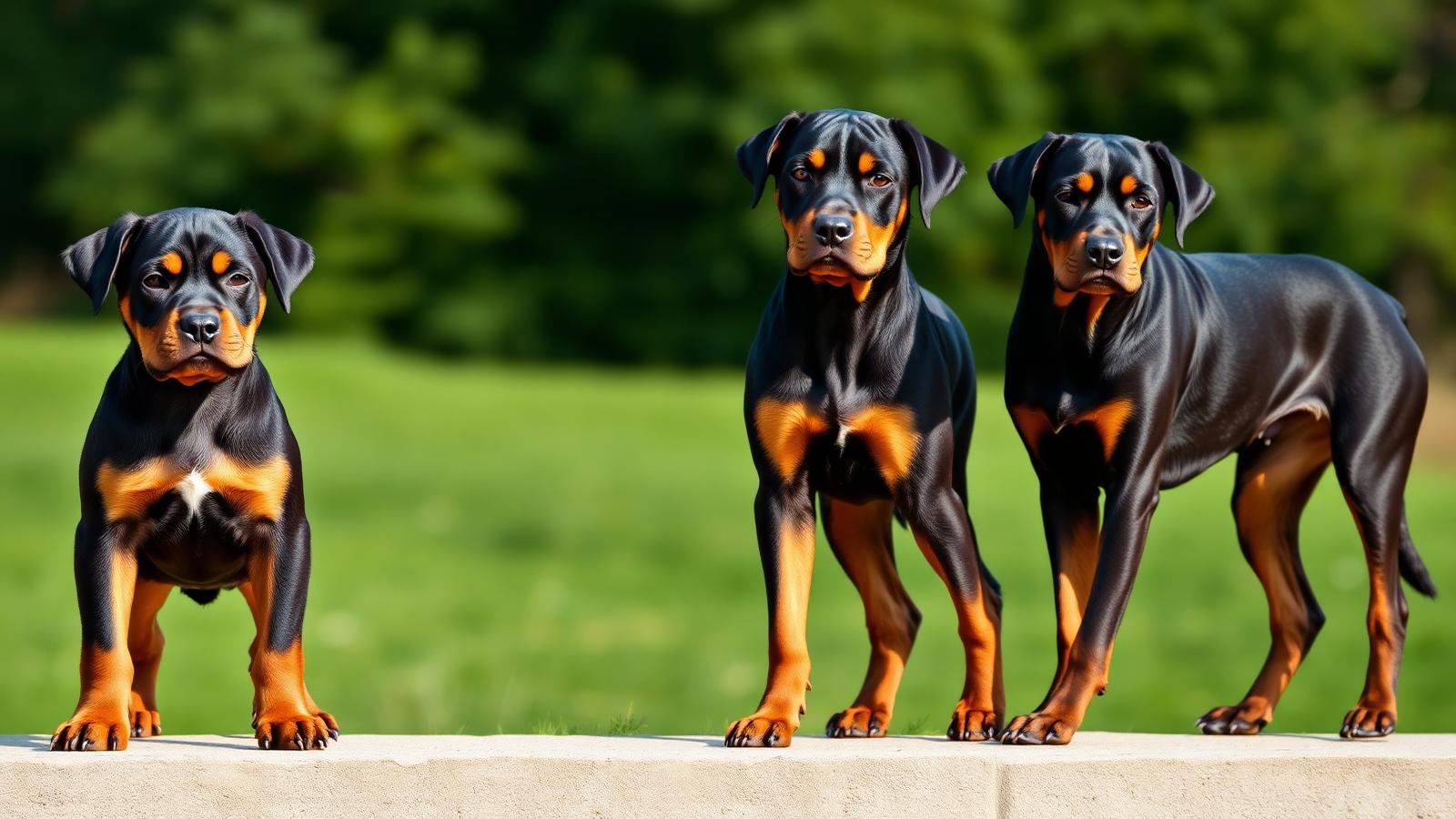
Rottweilers grow rapidly during the first months, but healthy growth is not a race. Overfeeding cannot improve genetics or create a better adult frame; it can add unnecessary body fat and increase stress on developing bones and joints. The goal is a puppy that follows a steady personal growth curve while remaining lean, active and comfortable.

Young and adolescent Rottweilers standing together to show healthy growth stages

Rottweiler Puppy Growth: What Healthy Development Looks Like

Rottweilers grow rapidly during the first months, but healthy growth is not a race. Overfeeding cannot improve genetics or create a better adult frame; it can add unnecessary body fat and increase stress on developing bones and joints. The goal is a puppy that follows a steady personal growth curve while remaining lean, active and comfortable.

Large-breed puppies grow for longer than small dogs. Merck notes that puppy growth is fastest during roughly the first five months, begins to plateau after six months and may not reach skeletal maturity until about 10–16 months in large and giant breeds. A Rottweiler may continue developing muscle, chest and adult proportions after the most obvious height increase slows.

For age-specific numbers, use the Rottweiler puppy weight chart. This page focuses on the process of growth and how to support it.

Last reviewed: August 2026

Rottweiler Growth Stages at a Glance

StageWhat is changingOwner priority
8–12 weeksRapid learning, coordination and physical growth; settling into a new homeConsistent routine, complete large-breed growth food, sleep and safe socialization
3–6 monthsFast weight and height gain, teething, longer legs and temporary clumsinessWeekly weight/body-condition checks and age-appropriate activity
6–12 monthsGrowth begins to slow; adolescence increases strength before maturityMaintain lean condition, controlled training and avoid forced repetitive impact
12–18 monthsApproaching skeletal maturity; height gain slowsAsk the veterinarian when to transition food and increase athletic work
18–24+ monthsContinued muscle and body development in many RottweilersGradual adult conditioning and long-term weight control

These stages overlap. Sex, genetics, neuter/spay timing, nutrition, health and family line all affect the individual timeline.

How Fast Should a Rottweiler Puppy Grow?

There is no single safe number of pounds per week for every puppy. Merck reports an average across puppies of approximately 2–4 g per day per kilogram of anticipated adult weight during the rapid first five months, but breed-specific data are limited. A plotted curve and body-condition assessment are more useful than forcing a puppy to match an internet average.

Healthy development usually looks like:

  • A rising weight trend without sudden large jumps
  • Ribs that are easy to feel
  • A visible waist and abdominal tuck
  • Balanced use of all four limbs
  • Normal energy, appetite and stool
  • Gradual gains in coordination and strength
  • No persistent pain or lameness

Weigh weekly during rapid growth and record the number. Your veterinarian can plot it on a puppy growth chart and assess whether the puppy is staying near its individual centile.

Nutrition for Controlled Large-Breed Growth

Choose a complete and balanced food whose adequacy statement includes growth of large-size dogs. This gives a controlled balance of energy, calcium, phosphorus, protein and other nutrients.

Avoid:

  • Feeding adult-maintenance food to slow growth
  • Free-feeding an unlimited bowl
  • Adding calcium, bone meal or vitamin D
  • Using "high protein" as the only quality test
  • Increasing food merely because another puppy weighs more
  • Letting treats and chews become a second diet

Use the Rottweiler puppy nutrition guide and its detailed page on how much to feed to measure portions.

Exercise While Growth Plates Are Developing

Normal movement is important for coordination, muscle and confidence. The answer is not to keep a healthy puppy inactive; it is to avoid forced, repetitive or high-impact conditioning before the dog is ready.

Useful activities include:

  • Free play on safe, varied surfaces
  • Short sniffing walks suited to the individual puppy
  • Reward-based training
  • Controlled exploration and socialization
  • Gentle balance and body-awareness games recommended by a professional
  • Swimming only when safely introduced and supervised

Be cautious with:

  • Running beside a bike or human for distance
  • Repetitive ball launches with hard stops and turns
  • Repeated jumping from vehicles or furniture
  • Long runs on hard surfaces
  • Slippery floors without traction
  • High-impact agility obstacles
  • Exercise continued through fatigue or lameness

There is no scientifically precise "five minutes per month of age" rule that fits every puppy. Ask your veterinarian about activity based on body condition, orthopedic health and the surfaces available.

Growth Spurts and Temporary Clumsiness

An adolescent Rottweiler may look all legs one week and broader the next. Minor awkwardness can occur as proportions change, but do not dismiss repeated stumbling, knuckling, pain, a persistent abnormal gait or reluctance to move as "just growing."

Fast-growing large breeds can develop orthopedic conditions that need examination. Early assessment can preserve more diagnostic and treatment options. See our hip and elbow dysplasia guide for related signs.

When Does a Rottweiler Stop Growing?

Many Rottweilers approach adult height during the second year, while body mass and muscle can continue developing afterward. Skeletal maturity and "filling out" are not the same event. Do not use appearance alone to decide that growth food should stop or high-impact conditioning should begin.

Your veterinarian can assess growth, body condition and—when medically relevant—skeletal development. Continue appropriate growth nutrition until the recommended transition point.

Warning Signs During Growth

Call your vet

Arrange an examination for:

  • Persistent or recurring lameness
  • Bunny-hopping or an altered gait
  • Pain when rising, walking or being handled
  • Limb swelling, heat or deformity
  • Reluctance to bear weight
  • Repeated collapse or profound exercise intolerance
  • Weight loss or stalled growth
  • Rapid abdominal enlargement
  • Ongoing vomiting, diarrhea or poor appetite
  • Sudden extreme weight gain

Non-weight-bearing lameness after injury, severe pain, collapse or an obviously deformed limb requires urgent care.

Common Growth Myths

"The biggest puppy will become the best adult"

Early size does not measure future health, temperament, structure or quality.

"More food creates a bigger frame"

Genetics strongly influences adult size. Extra calories mainly risk extra weight and faster growth.

"Puppies need calcium supplements for strong bones"

An appropriate complete growth food already contains balanced minerals. Extra calcium can be harmful to large-breed puppies.

"A tired puppy is a well-exercised puppy"

Fatigue is not a safe training target. Puppies also need substantial sleep and mental enrichment.

Support Steady Growth With the Right Foundations

RottieBuddy may earn a commission from qualifying purchases, at no extra cost to you. Product links never replace veterinary advice.

Compare large-breed puppy foods using life-stage suitability and practical feeding criteria—not promises of maximum size.

Compare Rottweiler Puppy Foods

Explore the Health Buyer's Guide

Compare Rottweiler Puppy Foods

Sources and Further Reading

Merck Veterinary Manual guidance on puppy growth and skeletal maturity; AAFCO nutrient profiles for growth of large-size dogs; veterinary orthopedic resources on developmental conditions in large-breed puppies.

This guide provides general educational information and does not diagnose, prevent or treat disease. Growth needs vary by location, lifestyle, medical history and product. Always follow your veterinarian's advice. Contact a veterinarian promptly when a young puppy is unwell.

Frequently Asked Questions

When do Rottweilers stop growing?

Large-breed skeletal maturity may occur around 10–16 months, while many Rottweilers continue developing adult muscle and proportions into the second year. Individual timing varies.

How can I make my Rottweiler puppy grow bigger?

You should not try to accelerate growth. Feed an appropriate measured growth diet, maintain lean body condition and allow genetics to determine adult size.

Is it normal for a Rottweiler puppy to look skinny?

A healthy large-breed puppy should be lean, but prominent bones, weight loss, poor coat, diarrhea, low energy or stalled growth need veterinary assessment. Use body condition, not appearance alone.

When do Rottweiler growth plates close?

There is no exact breed-wide date for every growth plate. Large-breed skeletal maturity often falls within roughly 10–16 months, and different bones mature at different times. Ask your veterinarian before beginning high-impact conditioning.

Continue your puppy health guide