
Back to Rottweiler Puppy Health

Rottweiler Hip and Elbow Dysplasia: Puppy Guide

Hip and elbow dysplasia are developmental orthopedic conditions seen in large breeds, including Rottweilers. Genetics plays an important role, while growth, body weight, activity, injury and other environmental factors can influence whether and how severely a dog develops clinical problems. Good care cannot guarantee that a genetically predisposed puppy will never develop dysplasia. It can support healthy development, reduce unnecessary joint load and help you recognize problems early—when more diagnostic and treatment options may be available.

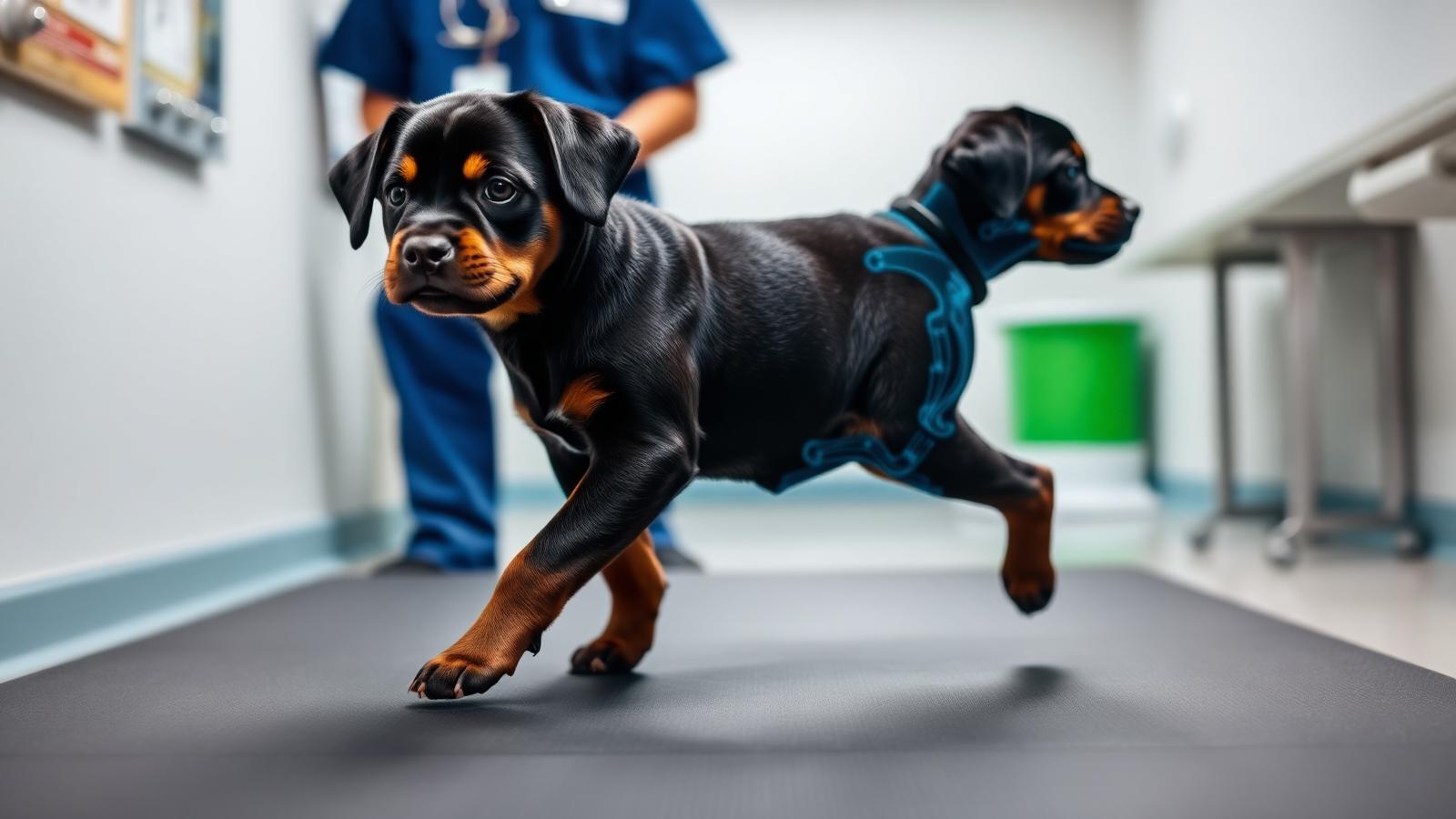
Rottweiler puppy walking during a veterinary hip and elbow assessment

What is canine hip dysplasia?

The hip is a ball-and-socket joint. In canine hip dysplasia, abnormal joint development and laxity allow the ball and socket to fit or move together poorly. Repeated abnormal movement can damage cartilage and lead to osteoarthritis and pain.

X-ray severity and day-to-day symptoms do not always match. Some dogs with marked radiographic changes remain active, while others with less dramatic changes experience significant pain. A gait video or home observation cannot replace examination and diagnostic imaging.

What is elbow dysplasia?

Elbow dysplasia is an umbrella term for several developmental abnormalities involving the three bones of the elbow. Uneven joint fit or cartilage/bone lesions can cause inflammation, lameness and progressive arthritis. Both elbows can be affected, making the dog look stiff or exercise-intolerant rather than obviously lame on one side.

ACVS notes that signs may begin from around five months, although some dogs are diagnosed later.

Signs to watch for in a puppy

Possible hip signs:

  • Bunny-hopping with the hind legs
  • Difficulty rising or using stairs
  • Reluctance to jump or run
  • Swaying rear gait
  • Reduced hind-leg muscle
  • Stiffness after rest
  • Pain or lameness after activity

Possible elbow signs:

  • Front-leg lameness
  • Shortened stride or head bob
  • Feet turning outward
  • Stiffness that worsens after exercise
  • Reluctance to complete a walk
  • Pain when the elbow is flexed or extended

These signs have many possible causes, including soft-tissue injury, panosteitis, fracture or another joint condition. Seek a veterinary diagnosis rather than testing the joint's range of motion at home.

Call your vet promptly

Call your vet promptly

Book an examination for recurring lameness, bunny-hopping, difficulty rising, exercise intolerance or pain. Seek urgent care for a puppy that suddenly will not bear weight, cries in severe pain, has a visibly deformed limb, collapses or develops major swelling after injury.

How hip and elbow dysplasia are diagnosed

The veterinarian may:

  1. Review age, family history, growth, activity and symptoms.
  2. Observe walking and trotting.
  3. Examine joint motion, pain and muscle condition.
  4. Recommend properly positioned radiographs, often with sedation for reliable positioning.
  5. Refer for specialist assessment, CT or arthroscopy when indicated—particularly for elbow disease.

Do not wait for severe limping. Some hip-preserving surgical options are time-sensitive in young dogs and require diagnosis before advanced arthritis develops.

Breeder health screening: what to verify

Before buying a puppy, ask for verifiable results, not "the parents have never limped." Screening systems vary by country.

In the United States:

  • OFA grades adult hips as Excellent, Good, Fair, Borderline, Mild, Moderate or Severe; Excellent, Good and Fair are within normal limits.
  • OFA preliminary hip evaluations are available for dogs 4–23 months old.
  • Elbows can also be submitted for OFA evaluation.
  • PennHIP is another method that assesses hip laxity and can be performed earlier by trained veterinarians.

Other countries use FCI or national scoring schemes, so a label such as HD-A or ED-0 should not be presented as the only valid global format. Search the relevant registry for both parents and, when available, relatives. Health-tested parents reduce risk; they cannot guarantee every puppy's outcome.

Rottie tip — Verify the number yourself

Ask the breeder for registered names or identification numbers and search the official database. A screenshot without a searchable identity is weaker evidence than a public registry result.

Supporting healthy joints during growth

Keep the puppy lean

Ribs should be easy to feel, with a visible waist and abdominal tuck. Excess body fat adds mechanical load. Use our Rottweiler puppy weight guide to track both scale weight and body condition.

Feed an appropriate growth diet

Use a complete food whose adequacy statement includes growth of large-size dogs. Do not add calcium, vitamin D, bone meal or joint powders without veterinary advice.

Build strength without repetitive impact

Normal, controlled activity supports muscle and coordination. Favor short walks, safe free play and gradual conditioning. Avoid forced distance running, repeated hard jumping, slippery footing and activity continued through fatigue or lameness.

Prevent avoidable falls

Use rugs or runners on slippery floors, help a young puppy in and out of high vehicles, keep nails an appropriate length and block unsafe stair access when unsupervised. The aim is sensible traction and supervision—not lifelong inactivity.

Do joint supplements prevent dysplasia?

No supplement can correct inherited hip laxity or guarantee prevention of hip or elbow dysplasia. Evidence, ingredients and product quality vary, and some products add calories or minerals. Ask your veterinarian whether a specific supplement is appropriate for your puppy's diet, age and diagnosis.

Do not let a supplement delay an orthopedic examination. Early diagnosis can matter far more than adding an over-the-counter chew.

Treatment and long-term management

Treatment depends on age, joint, severity, arthritis and lifestyle. It may include:

  • Weight management
  • Individual controlled exercise
  • Veterinary rehabilitation
  • Prescribed pain/anti-inflammatory medication with monitoring
  • Joint-specific surgery in selected young dogs
  • Total hip replacement or other procedures in appropriate cases

Orthopedic surgery and long-term pain management can be expensive. Before costs arise, read our guide to covering Rottweiler health costs to understand how insurance, waiting periods and hereditary-condition wording may apply to a dog with joint disease.

Comparing policies early — before any signs appear — gives you the widest choice of cover. See our Rottweiler pet insurance guide for what to look for.

Never give human pain medication. Ibuprofen, naproxen and other products can be dangerous to dogs.

Common joint-health myths

"No stairs means no hip dysplasia"

Hip dysplasia is multifactorial. Sensible stair management can reduce falls or repetitive strain but cannot erase genetic risk.

"Bunny-hopping proves hip dysplasia"

It is a reason for examination, not a diagnosis.

"Normal parents guarantee normal hips"

Screening reduces risk across breeding decisions but does not produce a guarantee for every puppy.

"A puppy must rest completely until grown"

Healthy puppies need appropriate movement for muscle, coordination and welfare. Avoid excessive forced impact rather than all activity.

Discuss joint products after you understand the need

RottieBuddy may earn a commission from qualifying purchases, at no extra cost to you. Product links never replace veterinary advice.

Our health guide can help you compare product formats and questions to ask, but no bed or supplement replaces diagnosis, lean body condition and an individualized veterinary plan.

Explore Rottweiler Joint-Support Products

Browse the Health Buyer's Guide

Explore Rottweiler Joint-Support Products

Sources and further reading

Sources and further reading
  • Orthopedic Foundation for Animals (OFA) — hip and elbow evaluation programs
  • PennHIP — hip laxity screening methodology
  • American College of Veterinary Surgeons (ACVS) — canine elbow and hip dysplasia overviews
  • World Small Animal Veterinary Association (WSAVA) — musculoskeletal and growth guidance

Reviewed for accuracy

Last reviewed: August 2026

This guide provides general educational information and does not diagnose, prevent or treat disease. Vaccination and parasite protocols vary by location, lifestyle, medical history and product. Always follow your veterinarian's advice and the product label. Contact a veterinarian promptly when a young puppy is unwell.

Frequently Asked Questions

Can hip dysplasia be prevented in a Rottweiler?

Not completely. Genetics is important. Verified breeder screening, lean body condition, appropriate growth nutrition and sensible activity can reduce avoidable risk and support joint health.

At what age do signs of hip dysplasia appear?

Signs can appear in puppies or later in adulthood. Some affected dogs show little obvious pain despite radiographic changes. Recurring abnormal gait or lameness warrants examination at any age.

How are Rottweiler hips tested?

A veterinarian takes correctly positioned radiographs for diagnostic assessment or a recognized screening scheme such as OFA, PennHIP or a national/FCI system.

Is bunny-hopping normal in a puppy?

An occasional movement during excited play is not diagnostic, but repeated bunny-hopping—especially with stiffness, pain or reluctance to exercise—should be assessed by a veterinarian.

Should I give my Rottweiler puppy a joint supplement?

Ask your veterinarian first. Supplements cannot prevent inherited dysplasia, may duplicate ingredients or minerals and vary in evidence and quality.

Continue your puppy health guide