



Why nutrition matters
A balanced diet supports nearly every aspect of your dog's health:
- Healthy bone development
- Strong muscles
- Joint protection
- Healthy digestion
- Strong immune system
- Healthy skin and coat
- Better energy levels
- Healthy weight management
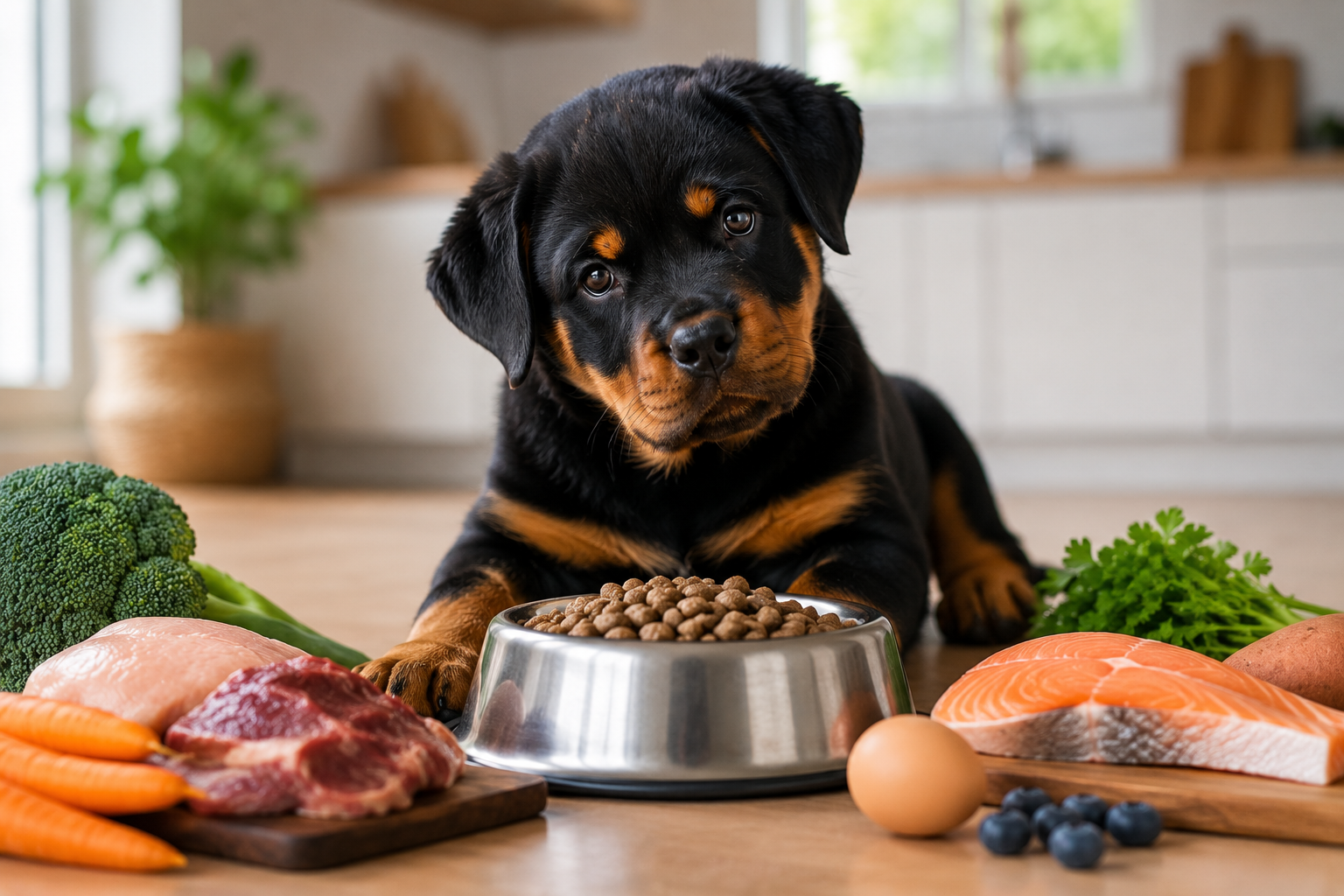
For large breeds like the Rottweiler, nutrition during puppyhood is especially important because growing too quickly increases the risk of orthopedic problems. Feeding a large-breed puppy formula helps control growth by providing appropriate calorie and calcium levels.
Nutritional needs by life stage
Your puppy is growing rapidly and needs frequent, controlled meals.
- Large-breed puppy food
- High-quality protein
- Controlled calcium levels
- 3–4 small meals per day
- Fresh water at all times
Growth continues while your puppy starts developing real muscle.
- Maintain a lean body condition
- Avoid overfeeding
- Continue a large-breed puppy diet
- Reduce from four to three meals when appropriate
Adolescence. Large breeds usually stay on puppy food until 12–18 months.
- Large-breed puppy food
- Controlled growth
- Two to three meals daily
- Follow your vet's advice
Healthy adult Rottweilers do well on a stable, consistent routine.
- Two meals daily
- High-quality animal protein
- Moderate fat levels
- Balanced vitamins and minerals
- Monitor weight monthly
Older dogs benefit from lighter, joint-friendly nutrition.
- Lower-calorie diets
- Joint-support ingredients
- Easily digestible protein
- Increased omega-3 fatty acids
- Regular veterinary checkups
How much should you feed a Rottweiler?
Every dog is different. The ideal amount depends on:
- Age
- Current weight
- Activity level
- Metabolism
- Food type
- Health status
Rather than feeding by guesswork, use the feeding guide on your dog's food and monitor their body condition. You should be able to feel the ribs without seeing them prominently.
Rottweiler feeding schedule
| Age | Meals per day |
|---|---|
| 8–12 weeks | 4 |
| 3–6 months | 3 |
| 6–12 months | 2–3 |
| Adult | 2 |
| Senior | 2 |
Keeping a consistent feeding routine helps digestion and reduces begging.
Choosing the best food
Look for foods that are:
- Complete and balanced
- Designed for large breeds
- Appropriate for your dog's life stage
- Made by reputable manufacturers
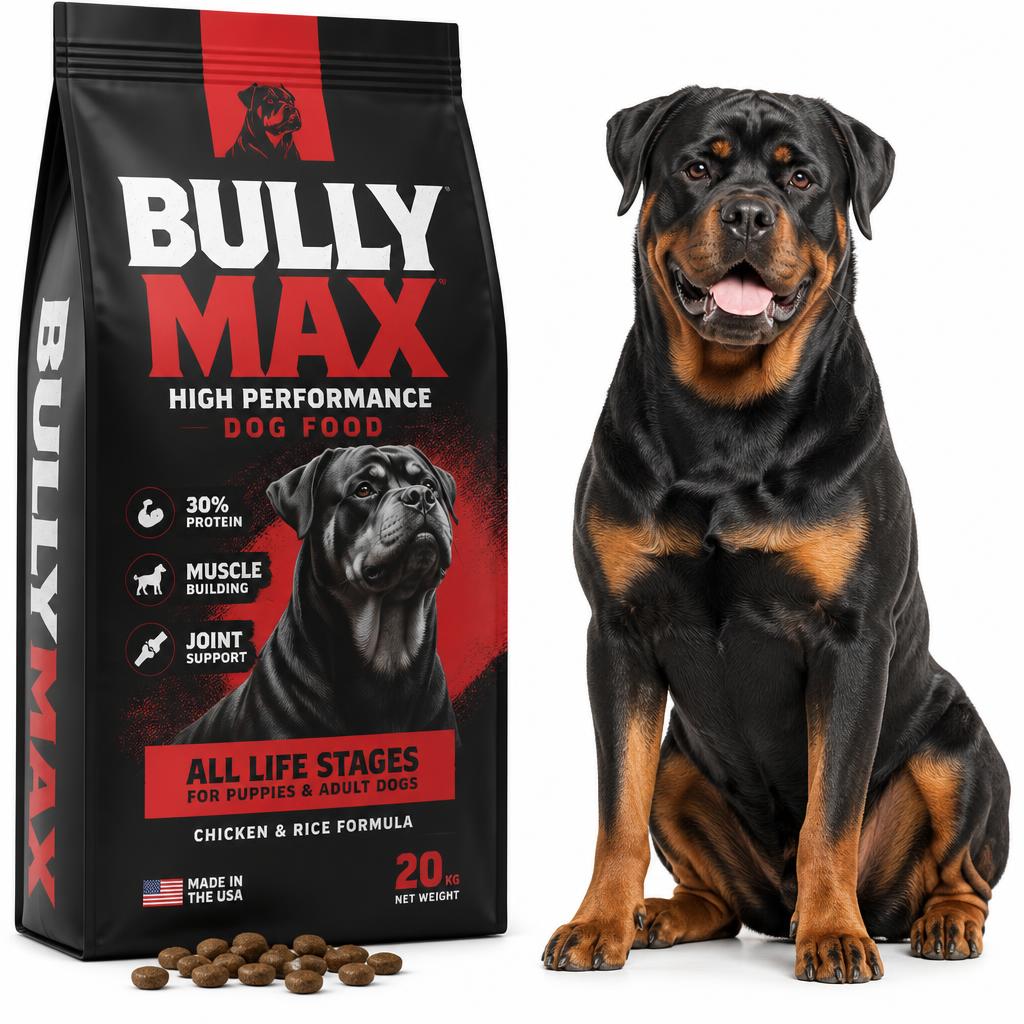
Quality foods formulated for large-breed puppies are designed to support slower, healthier growth and reduce stress on developing joints.
See our recommended food and bowlsUnderstanding the ingredient list
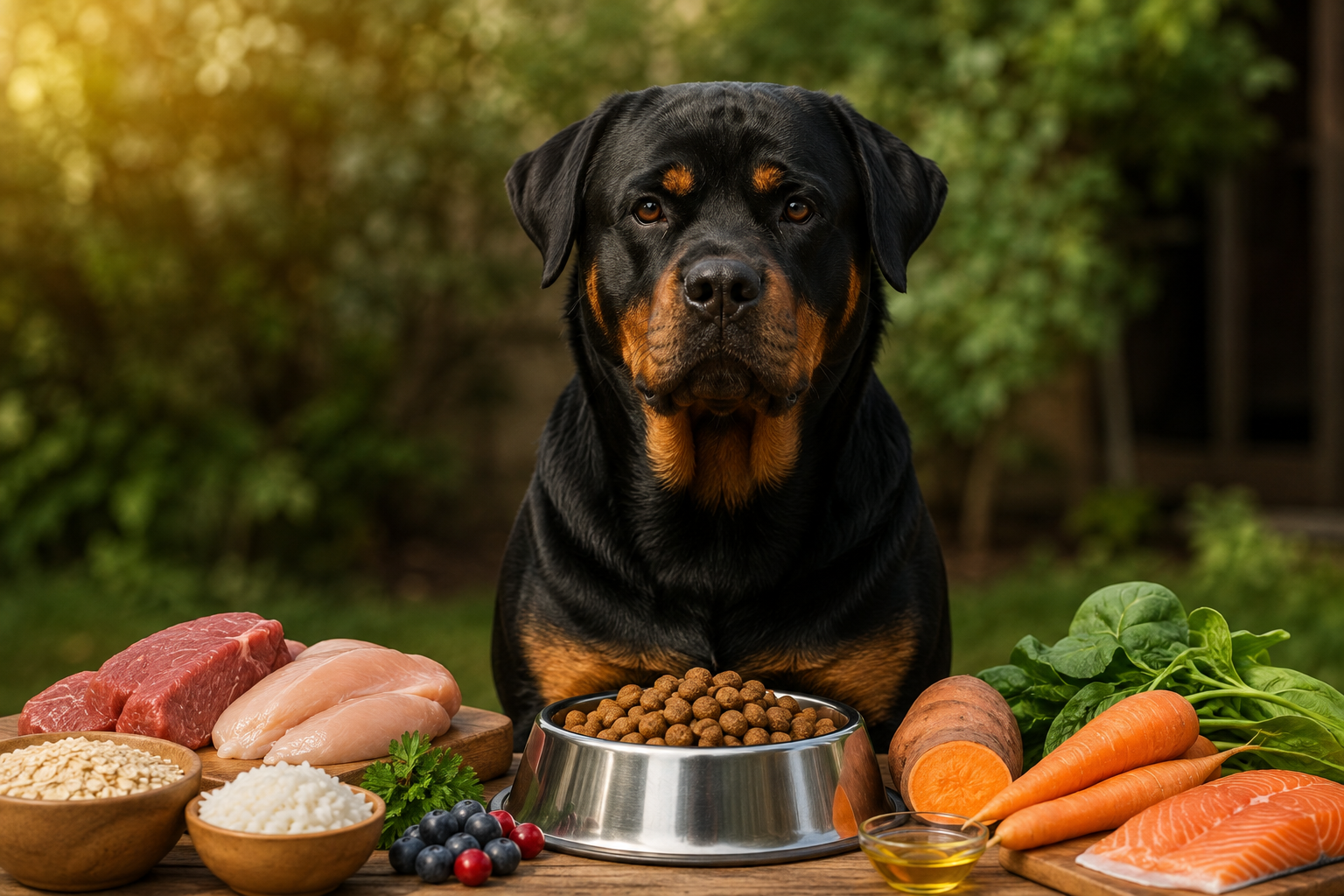
Good foods generally contain:
- Named meat source first (chicken, beef, lamb, salmon)
- Healthy fats
- Whole grains or appropriate carbohydrates
- Fruits and vegetables
- Essential vitamins and minerals
Avoid judging a food based on marketing claims alone. Focus on nutritional completeness.
Protein requirements
Protein supports:
- Muscle development
- Tissue repair
- Healthy immune function
Growing large-breed puppies benefit from diets containing approximately 26% protein, without excessive calories that encourage overly rapid growth.
Healthy fats
Healthy fats provide energy, brain development, healthy skin and a shiny coat. Look for sources such as:
- Fish oil
- Salmon oil
- Chicken fat
- Flaxseed
Omega-3 fatty acids can also support joint health.
Carbohydrates
Healthy carbohydrate sources include:
- Brown rice
- Oats
- Sweet potato
- Barley
They provide energy and dietary fiber.
Fresh water
Fresh, clean drinking water should always be available. Replace water daily and wash bowls regularly — a large adult Rottweiler can easily drink several liters a day, especially in warm weather or after exercise.
Foods to avoid
Never feed:
- Chocolate
- Grapes
- Raisins
- Onions
- Garlic
- Xylitol
- Alcohol
- Cooked bones
- Macadamia nuts
If your dog eats something potentially toxic, contact your veterinarian immediately.
Healthy treats
Treats should make up no more than 10% of daily calories. Great options include:
- Small training treats
- Carrot sticks
- Apple slices (without seeds)
- Blueberries
- Cooked pumpkin
- Green beans
Remember to reduce meal portions if you use lots of treats during training.
Full snack and chew guideSupplements
Many healthy dogs eating a complete diet do not require supplements. Speak with your veterinarian before adding:
- Joint supplements
- Fish oil
- Probiotics
- Vitamins
- Calcium
Extra calcium should not be added to large-breed puppy diets unless specifically recommended by a veterinarian, as excessive calcium can interfere with healthy skeletal development.
Weight management
Keeping your Rottweiler lean is one of the best things you can do for long-term health. A healthy weight reduces the risk of:
- Hip dysplasia
- Elbow dysplasia
- Arthritis
- Heart disease
- Diabetes
Check your dog's weight monthly and adjust food as needed.
Nutrition during training
Training is the perfect time to reinforce good nutrition:
- Use tiny treats
- Count training treats as part of daily calories
- Reward with praise as well as food
- Avoid high-fat snacks
Signs your diet is working
A well-fed Rottweiler should have:
- Bright eyes
- Healthy coat
- Firm stools
- Strong muscles
- Steady energy
- Healthy weight
- Good appetite
If you notice persistent digestive problems, unexplained weight loss, or changes in appetite, consult your veterinarian.
Nutrition checklist
- Fresh water available
- Correct life-stage food
- Healthy body condition
- Two or more regular meals
- Healthy treats only
- No table scraps
- Monthly weight check
- Clean food bowls
- Regular veterinary checkups
Frequently asked questions
What is the best food for a Rottweiler puppy?
Choose a high-quality large-breed puppy food that provides balanced nutrition with controlled calories and calcium to support steady, slower growth and healthy joints.
How often should I feed my Rottweiler?
Puppies need 3–4 meals daily, adults do well on 2 meals daily, and seniors also eat twice a day with portions adjusted if their activity level decreases.
Can Rottweilers eat raw food?
Some owners choose raw diets, but they require careful nutritional balancing and strict food-safety precautions. Consult your veterinarian or a board-certified veterinary nutritionist before switching.
Should I give supplements?
Most healthy Rottweilers eating a complete commercial diet do not need extra supplements unless recommended by a veterinarian. Never add calcium to a large-breed puppy diet without veterinary advice.
How can I tell if my Rottweiler is overweight?
You should be able to feel the ribs easily without pressing hard, and your dog should have a visible waist when viewed from above. If you're unsure, ask your vet for a body condition score.
Final thoughts
A healthy diet lays the foundation for your Rottweiler's entire life. Feeding the correct food, maintaining a lean body condition and following a consistent routine can significantly reduce the risk of obesity and orthopedic problems while supporting a long, active life. Combine good nutrition with regular exercise, preventive healthcare and positive training to give your Rottweiler the very best start.