
Back to Rottweiler Puppy Grooming

How to Check and Clean Rottweiler Puppy Ears

Healthy Rottweiler ears should be comfortable, relatively clean and free from strong odor or heavy discharge. Check them weekly so you learn what is normal for your puppy—but do not assume every healthy ear needs routine cleaning.

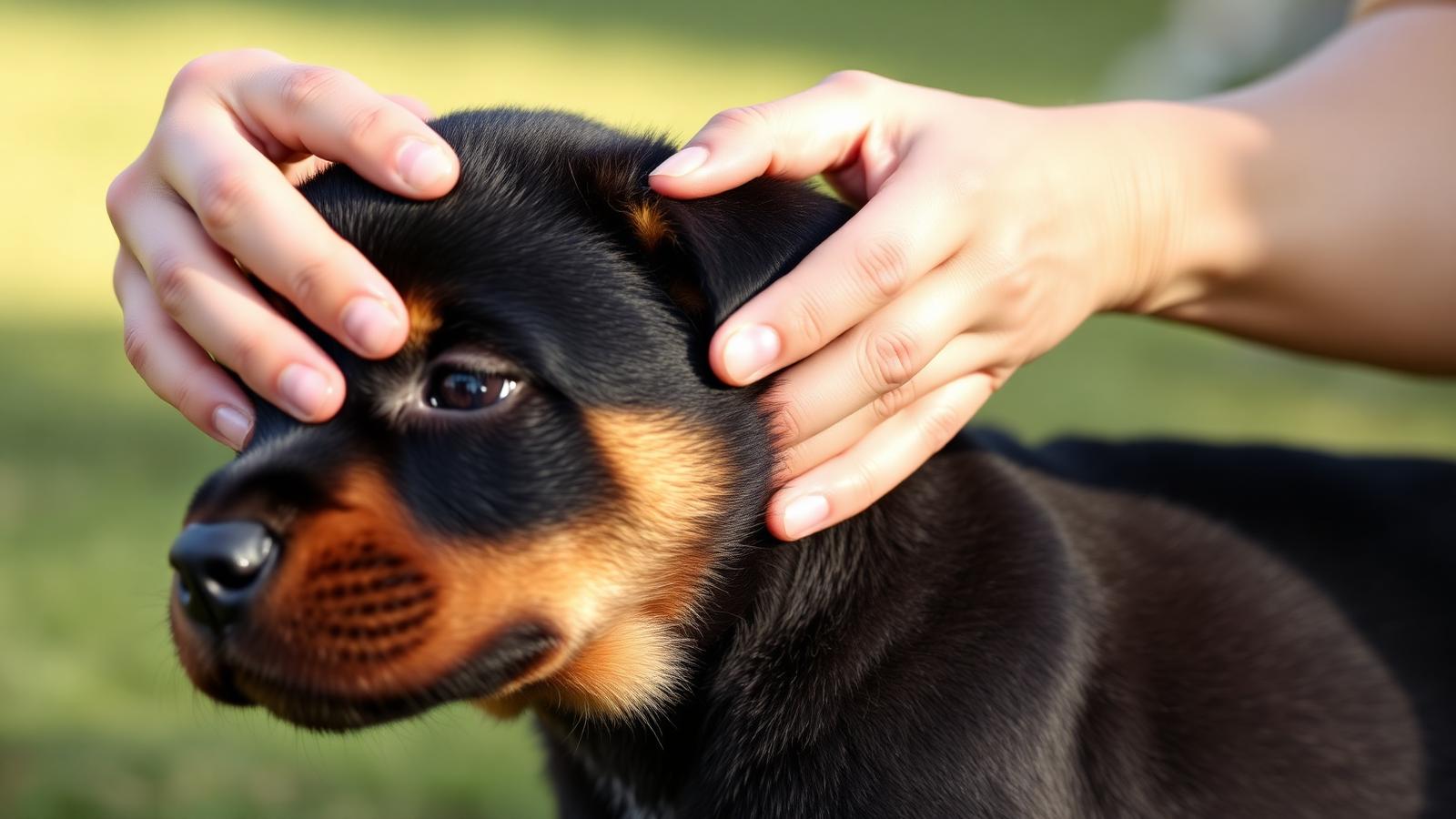
Rottweiler puppy calmly accepting a gentle outer-ear check

How to Check and Clean Rottweiler Puppy Ears

Healthy Rottweiler ears should be comfortable, relatively clean and free from strong odor or heavy discharge. Check them weekly so you learn what is normal for your puppy—but do not assume every healthy ear needs routine cleaning.

Overcleaning and unsuitable products can irritate the ear canal. Your veterinarian should guide the frequency if your puppy swims regularly, produces excess wax, has allergies or has experienced ear disease.

Last reviewed: August 2026

What Does a Healthy Puppy Ear Look Like?

A healthy ear commonly has:

  • Pale pink skin without marked redness
  • Little visible wax or debris
  • No strong or yeasty odor
  • No pain when the ear flap is handled gently
  • No repeated head shaking or scratching

The two ears should look and smell broadly similar. A sudden one-sided change can be caused by infection, inflammation, a foreign body or injury and deserves veterinary assessment.

When Should You Clean the Ears?

Clean only when there is visible light debris, after a veterinarian recommends a routine or as directed for an individual medical condition. Some puppies may need occasional cleaning after swimming; others with healthy ears need very little intervention.

Do not clean a painful, very red or heavily discharging ear before asking your veterinarian. The ear drum may need examination, and indiscriminate cleaning can cause pain, obscure diagnostic material or push debris deeper.

What to Use—and What to Avoid

Use a veterinarian-recommended canine ear cleaner and soft cotton or gauze for the visible ear. Follow the specific product label.

Avoid:

  • Cotton swabs pushed into the canal
  • Hydrogen peroxide or rubbing alcohol
  • Vinegar mixtures unless prescribed for this dog
  • Essential oils
  • Human ear drops
  • Leftover medication from a previous infection
  • Tweezers or fingers inserted into the canal

Medication chosen for one type of infection may be ineffective or harmful for another, especially if the ear drum is damaged.

Step-by-Step Ear Cleaning

Only use this routine for a comfortable ear and a product approved for your puppy:

  1. Choose an easy-clean area and have treats and cotton ready.
  2. Let the puppy investigate the closed bottle.
  3. Lift the ear flap gently without pulling.
  4. Apply cleaner exactly as the label or veterinarian directs.
  5. Massage the base of the ear only if instructed and comfortable.
  6. Let the puppy shake their head.
  7. Wipe loosened material from the parts you can easily see.
  8. Stop if the puppy shows pain or escalating fear.

Never insert a tool to "reach the bottom." A dog's ear canal is deep and L-shaped; the safe home goal is to let an appropriate solution loosen debris and wipe only what becomes accessible.

Ear Infection and Foreign-Body Warning Signs

Watch for:

  • Strong, sweet, yeasty or foul odor
  • Redness, heat or swelling
  • Brown, yellow, bloody or pus-like discharge
  • Frequent scratching or head shaking
  • Crying or pulling away when touched
  • Holding one ear differently
  • Head tilt, loss of balance or unusual eye movement
  • Sudden signs after running through long grass

Call your veterinarian

Call your vet

Arrange prompt assessment for pain, odor, discharge, swelling, repeated head shaking or a sudden one-sided problem. Seek urgent care for head tilt, loss of balance, severe swelling, neurological signs or marked distress. Do not keep trialing cleaners on an ear that is worsening.

Keeping Ears Dry Without Overcleaning

After bathing or swimming, gently dry the ear flap and the visible entrance with a towel or cotton pad. Do not pack material into the canal. If your puppy repeatedly develops problems after water exposure, ask the veterinarian for an individualized preventive plan.

Bathing and ear care overlap, so continue with the Rottweiler puppy bathing guide.

Choose an Ear-Care Product for Routine Cleaning

RottieBuddy may earn a commission from qualifying purchases, at no extra cost to you. Product links never replace veterinary or professional behavior advice.

Compare gentle dog ear cleaners, then confirm suitability with your veterinarian if your puppy has symptoms or a history of infection.

Compare Rottweiler Ear Cleaners

Explore the Health Buyer's Guide

Compare Rottweiler Ear Cleaners

Sources and Further Reading

This guide provides general educational information. Skin, ear, nail and dental problems may need veterinary diagnosis and treatment. Stop if grooming causes pain or distress, and ask your veterinarian or a qualified groomer for individual advice.

Frequently Asked Questions

How often should I clean my Rottweiler puppy's ears?

Check weekly, but clean only when needed or advised. Healthy ears may require little routine cleaning, while some dogs need an individualized schedule.

Can I use cotton swabs?

Do not insert them into the ear canal. They can push debris deeper and injure sensitive tissue.

Why does my puppy's ear smell?

Strong odor can indicate inflammation or infection. Cleaning may temporarily mask it without treating the cause, so arrange a veterinary examination.

Is dark ear wax normal?

A small amount can be normal, but heavy, crumbly, smelly or suddenly increased debris needs assessment. Color alone cannot identify yeast, bacteria or mites.

Can I use human ear drops?

No, unless your veterinarian specifically prescribes that product for your dog. Ear treatments depend on the diagnosis and condition of the ear drum.

Continue your puppy grooming guide