
6–9 months · Early adolescence

Your 6-month-old Rottweiler has the body of a big dog and the brain of a teenager.

Commands may suddenly feel optional, confidence is rising and your puppy is becoming seriously strong. This stage is less about teaching new tricks and more about rebuilding reliability in the real world.

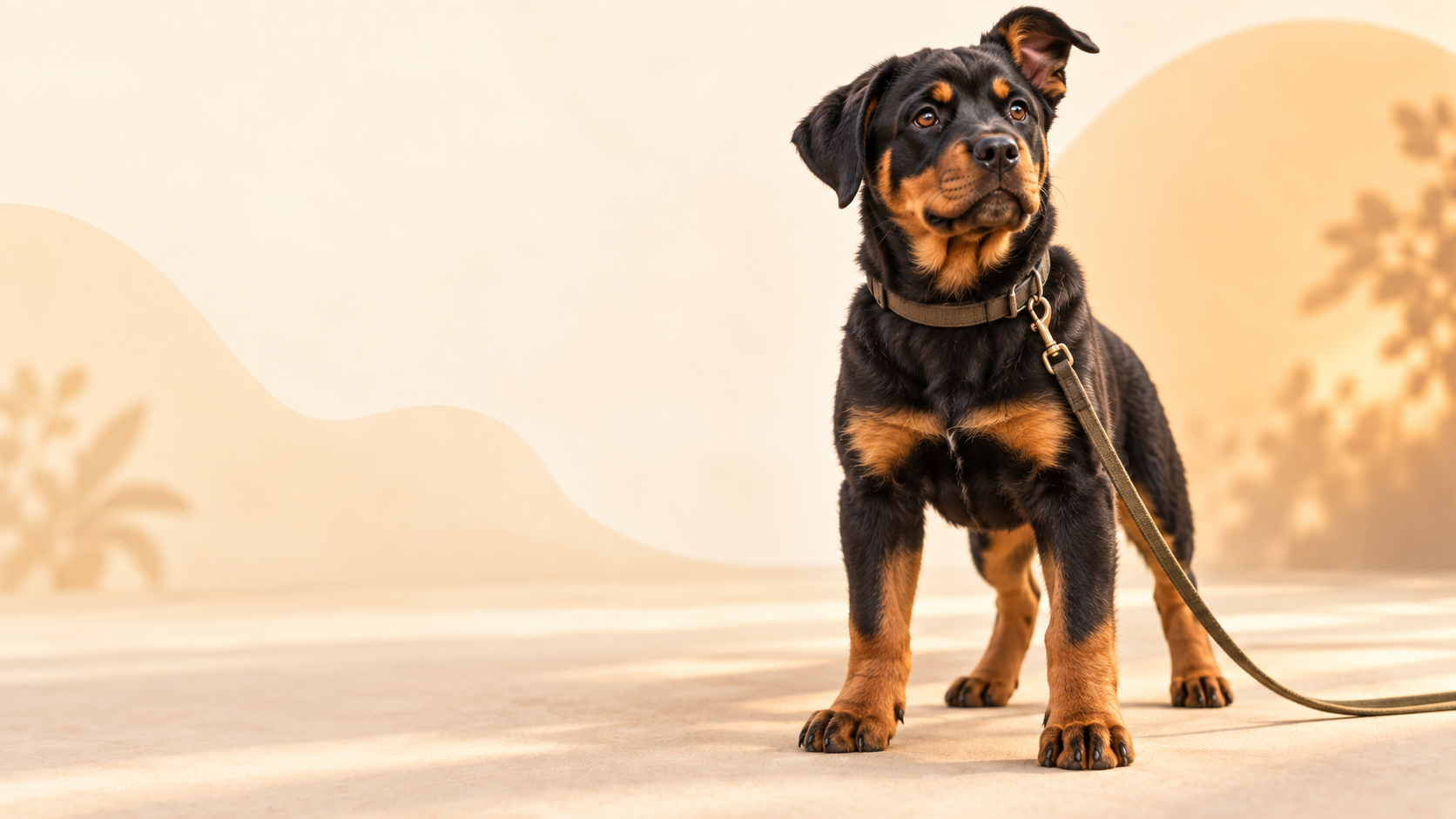
Six-month-old Rottweiler puppy standing on a leash in warm sunlight
6months old
Main lesson:
big body ≠ mature brain.
At a glance

What changes around 6 months?

This is the point where many owners wonder what happened to their beautifully trained puppy. In reality, adolescence is beginning and familiar skills often need to be rebuilt around distractions.

Life stage
Early adolescence

More confidence, curiosity and independent decision-making.

Strength
Increasing fast

Management matters more because mistakes now have more physical force behind them.

Training
Regression possible

Known cues may become less reliable in distracting places.

Behavior
Boundary testing

Your puppy may experiment with what rules are actually negotiable.

Exercise
Still controlled

A larger body does not mean fully developed joints.

Social skills
Neutrality matters

Calmly ignoring dogs and strangers is a valuable adult skill.

Adolescent brain

“Sit?” Absolutely. “Come?” Never heard of it.

Ignoring familiar commands, pulling harder, staring at other dogs, barking at unfamiliar things and testing boundaries can all become more noticeable during this stage.

Important: don’t turn regression into a battle. Calm, predictable rules and easier repetitions are more useful than escalating confrontation.
What to do instead

Lower difficulty. Rebuild success.

Use a long lineIncrease reward valueAdd distanceReduce distractionsRepeat known cuesReward calm choices

The goal is not to prove your puppy “knows” a command. The goal is to make that command reliable in more and more situations.

Training priorities

Build real-world reliability before your Rottie becomes even stronger.

Practice skills on streets, in parks and around safe everyday distractions. Keep sessions short enough that your adolescent can still succeed.

1

Recall

Use a long line and pay generously for choosing you over the environment.

Recall training →
2

Loose leash

Don’t let pulling become the fastest route to whatever your puppy wants.

Leash walking →
4

Place

A place cue becomes extremely useful when visitors or distractions arrive.

Place training →
5

Calm greetings

Polite greetings become essential once enthusiasm comes with serious body weight.

Jumping help →
6

Settle

Teach your Rottie to exist around activity without needing to join every event.

Calmness training →
Physical maturity

They look big. Their joints are still developing.

A six-month-old Rottweiler can be extremely powerful while still physically immature. Controlled walks, sniffing, training and enrichment are usually better choices than repetitive high-impact exercise.

Read puppy exercise guidance →
Sniff walksgreat choice
Short traininggreat choice
Free playuse judgment
Forced long runsavoid
Mental exercise

A tired brain is often more useful than tired legs.

Adolescent Rottweilers benefit from jobs that require thinking, self-control and using their nose.

Scent games

Hide food or toys and let your Rottie solve the problem with their nose.

Food puzzles

Turn part of a meal into a slow, thoughtful activity instead of a 30-second bowl.

Find it

Scatter or hide rewards and practice searching on cue.

Controlled tug

Build rules around start, stop, drop and re-engagement.

Place work

Mental discipline can also mean choosing to stay still.

Trick training

New low-impact skills add variety without relying on physical exhaustion.

Gear check

Stronger puppy = stronger gear.

Lightweight puppy equipment may no longer be appropriate. Check fit, hardware and durability before something fails when you need it most.

Collar hardwareHarness strengthLeash clipsCrate sizeChew durabilityCar restraint
Explore Puppy Essentials →
Weekly habit

Inspect before you trust.

Rapid growth plus adolescent strength is a good reason to inspect buckles, stitching, clips and fit every week.

Especially check: any leash or restraint that has already been chewed, dragged or exposed to repeated hard pulling.

Your main goal at six months

Build a Rottweiler that can calmly function in everyday life: walk past another dog, see strangers, wait at doors, settle in public and recover from excitement without needing to interact with everything.

Common questions

6-month-old Rottweiler FAQ

Why is my 6-month-old Rottweiler suddenly ignoring commands?

Early adolescence often makes familiar skills less reliable around distractions. Reduce difficulty, use better rewards and rebuild the behavior in gradually more challenging places.

Can a 6-month-old Rottweiler do long runs?

A larger body does not mean full physical maturity. Avoid repetitive high-impact exercise and forced long-distance work while joints are still developing.

Is guarding behavior normal at six months?

Some puppies become more alert or vocal as confidence develops. Focus on calm neutrality and seek qualified professional help if behavior is escalating or difficult to manage.

How do I tire out a 6-month-old Rottweiler?

Combine controlled physical activity with scent work, food puzzles, short obedience sessions, find-it games and calm settling practice.

Next stage

1 year: almost adult-sized, still mentally developing.

Move from puppy foundations toward real-world reliability, fitness and long-term habits.

Go to the 1-year guide →