Start Early, Before the Strength Arrives
Start loose-leash training early, while your puppy is learning that staying near you makes the walk continue. Pair it with name recognition and recall training.

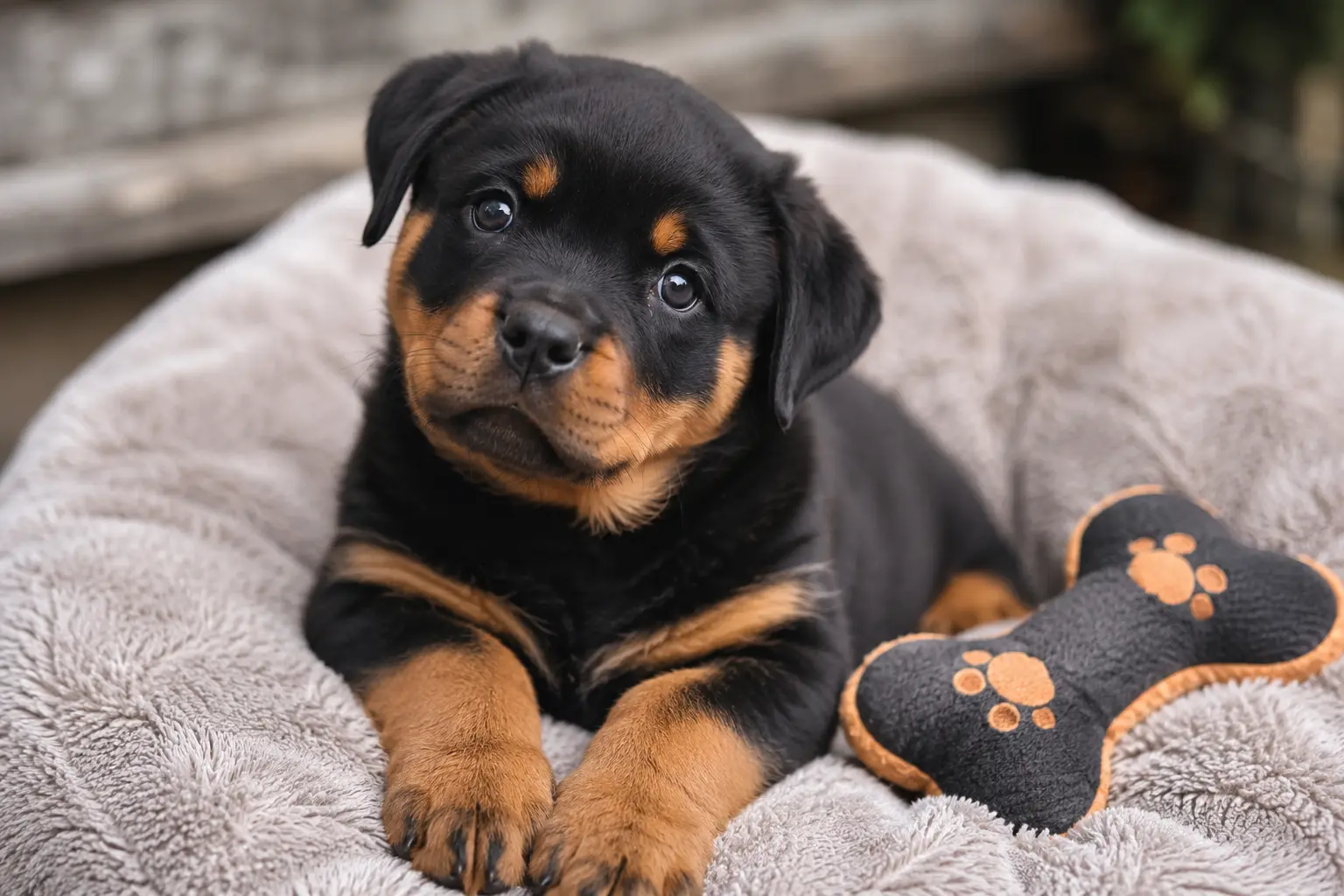
A Rottweiler puppy is cute when pulling toward every interesting smell. A powerful adult Rottweiler doing the same thing is much harder to manage.
Start loose-leash training early, while your puppy is learning that staying near you makes the walk continue. Pair it with name recognition and recall training.
Loose-leash walking means the leash remains relaxed rather than constantly tight. It does not require a formal competition heel. Your puppy can sniff and explore while learning that pulling does not move them toward what they want.
Before tackling a distracting street:
Stop moving when the leash becomes tight. When your puppy returns or creates slack, mark the behavior and continue walking.
| Puppy behavior | Your response |
|---|---|
| Leash loose | Continue walking |
| Puppy beside you | Reward regularly |
| Leash tight | Stop |
| Puppy returns | Mark, reward, continue |
| Strong distraction ahead | Create more distance |
Consistency is more important than speed.
Frequently reward your puppy beside your leg. This makes staying near you valuable. Vary rewards between treats, praise, permission to sniff and continuing toward something interesting.
Equipment should fit safely and comfortably. A harness can provide additional management for some dogs, but equipment does not replace training. Avoid relying on tools alone to solve pulling.
The outside environment is much more stimulating. Begin somewhere quieter and increase distractions gradually.
Not necessarily. Loose-leash walking can allow safe sniffing and exploration while keeping the leash relaxed.
Increase distance, regain your puppy's attention and reward calm behavior rather than allowing pulling to result in access.