Rottweiler Puppy Guide: Weight, Feeding & the Best Food for Healthy Growth
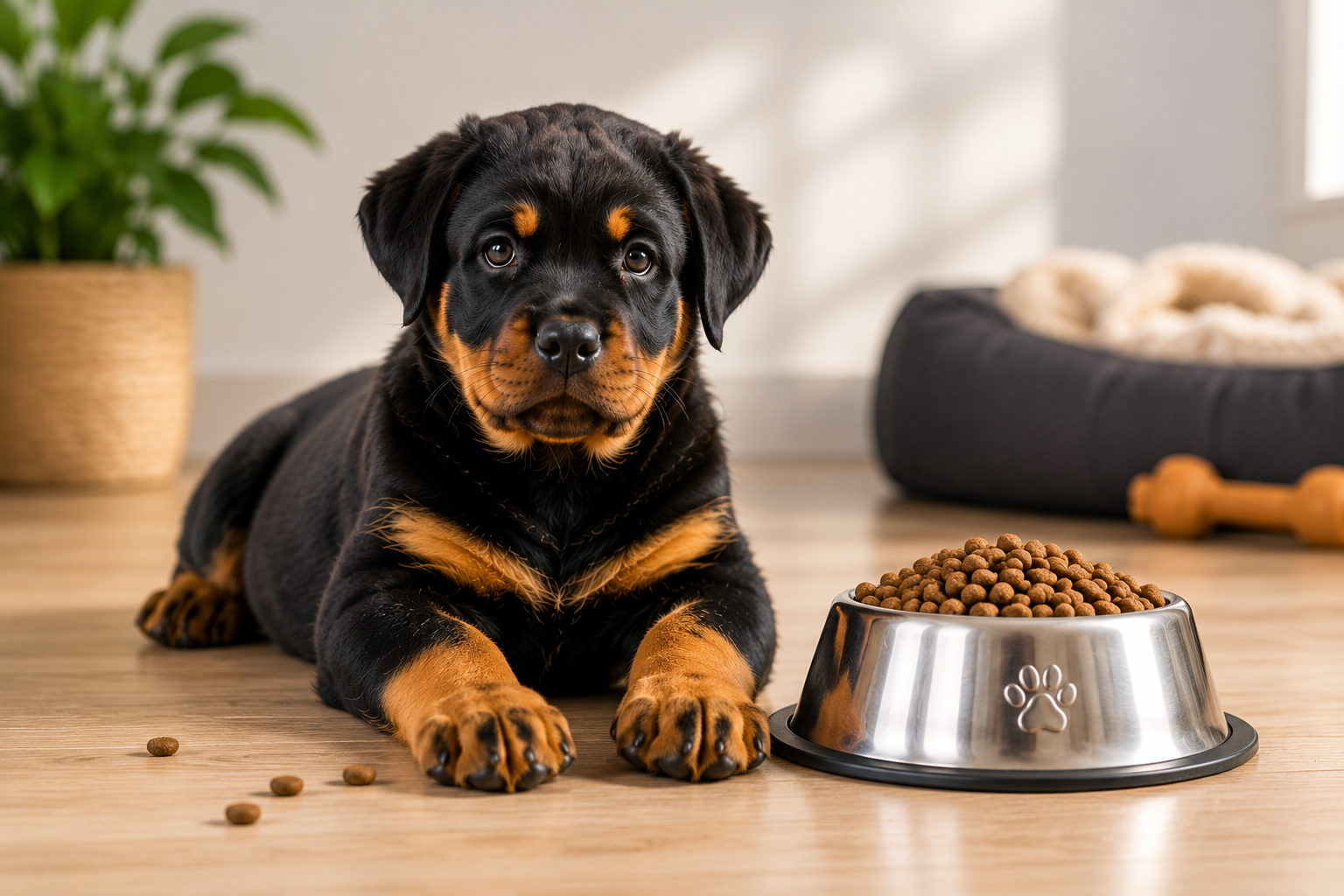
How much should a Rottweiler puppy weigh, how much should you feed, and what is the best food for healthy, controlled growth? A practical guide with weight and feeding charts by age.
Bringing home a Rottweiler puppy is exciting, but it also comes with plenty of questions. How fast should your puppy grow? How much food does a Rottweiler puppy need? And what type of food is best for this powerful, fast-growing breed?
Because Rottweilers grow into large, muscular dogs, nutrition and healthy growth are especially important during the first year of life. Feeding more isn't automatically better, and comparing your puppy with another Rottweiler of the same age doesn't tell you whether your puppy is developing normally.
In this guide we answer the most common questions Rottweiler puppy owners ask about weight, feeding schedules and choosing the right food. For the full picture, also see our Rottweiler Puppy Guide and the Rottweiler Nutrition Guide.
How Much Should a Rottweiler Puppy Weigh?
There isn't one perfect number. A puppy's healthy weight depends on age, sex, genetics, the size of the parents, activity level, nutrition and overall health. Male Rottweilers generally become larger and heavier than females, but individual development varies considerably.
Instead of focusing only on the scale, watch your puppy's body condition. You should be able to feel the ribs without them being extremely prominent, and your puppy should gradually develop a visible waist.
Rottweiler Puppy Weight Chart by Age
A weight chart is a guideline, not a target. Approximate ranges look like this:
| Age | Male Rottweiler | Female Rottweiler |
|---|---|---|
| 8 weeks | 12–16 lbs | 10–14 lbs |
| 3 months | 30–40 lbs | 25–35 lbs |
| 4 months | 43–55 lbs | 35–45 lbs |
| 6 months | 65–80 lbs | 55–70 lbs |
| 9 months | 80–100 lbs | 70–85 lbs |
| 12 months | 90–115 lbs | 75–95 lbs |
These numbers are approximate — a healthy puppy can fall outside them. Steady development over time matters far more than a single measurement. Our growth guide explains the Rottweiler growth curve in more detail.
How Often Should You Weigh Your Puppy?
You don't need to weigh daily. Recording weight every week or two gives a much clearer picture. Keep a simple record: Date → Age → Weight → Food → Activity → Notes. Over time you build your own personalised growth chart.
How Much Should I Feed My Rottweiler Puppy?
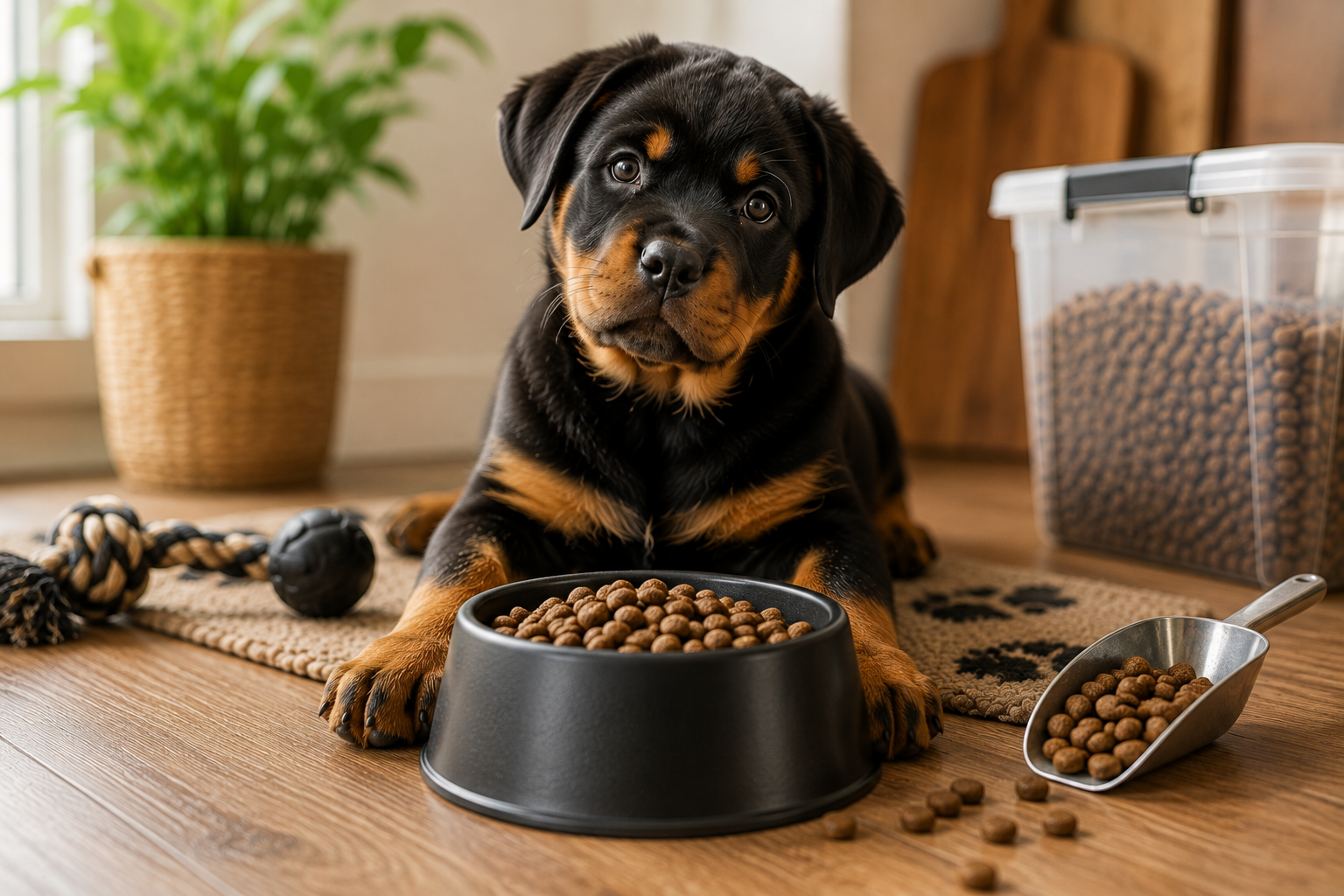
There is no universal number of cups. The right amount depends on age, current body weight, the calorie density of the food, activity level, growth rate and individual metabolism. Start with the manufacturer's feeding guidelines and adjust based on body condition and veterinary advice.
Avoid increasing food simply because your puppy seems hungry. Rottweilers grow quickly during puppyhood, but faster growth isn't healthier growth.
Rottweiler Puppy Feeding Chart by Age
| Puppy Age | Meals Per Day |
|---|---|
| 8–12 weeks | 3–4 meals |
| 3–6 months | 3 meals |
| 6–12 months | 2–3 meals |
| 12+ months | Usually 2 meals |
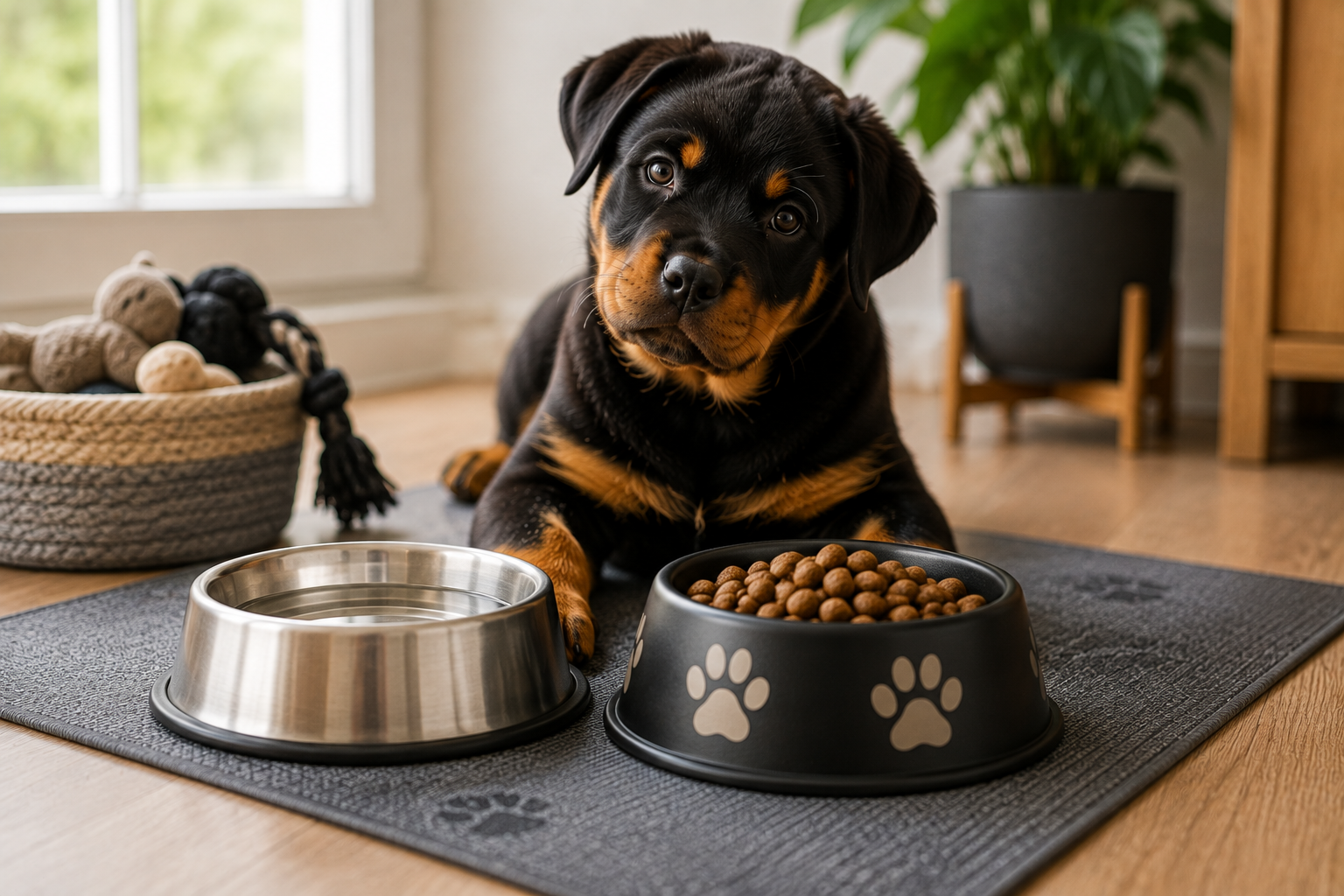
Dividing the daily allowance into several meals makes feeding easier to manage and builds a predictable routine. As your Rottweiler matures, transition gradually toward two meals a day. Sturdy, correctly sized bowls help — see our bowls and food storage picks.
Why Portion Control Matters
It's tempting to think a big puppy needs a huge bowl of food, but more food doesn't create a stronger Rottweiler. Large-breed puppies need balanced nutrition that supports controlled development; excess calories only add weight. The goal is steady growth + appropriate body condition + balanced nutrition. Keeping your Rottweiler lean also reduces unnecessary stress on developing joints.
Best Food for a Rottweiler Puppy
Instead of chasing brand names, look for food that is complete and balanced, appropriate for the life stage and suitable for a dog expected to become large.
- Large-breed puppy formulation: designed for controlled growth of big dogs.
- Quality protein sources: judge the overall diet, not just the highest protein percentage.
- Appropriate calories: a calorie-dense food needs surprisingly small portions, which is why you can't copy another owner's cup count.
- Complete and balanced nutrition: the right balance of vitamins and minerals during development, not protein alone.
Read more in our puppy food guide and healthy food guide.
Best Dog Food for Adult Rottweilers
Once puppyhood is over, requirements depend on weight, activity level, age, body condition, food sensitivities, health and whether the dog is neutered or intact. A working Rottweiler may need considerably more calories than one that relaxes at home. The goal isn't the most expensive food — it's a nutritionally appropriate diet that keeps your dog in healthy body condition.
Signs You May Be Feeding Too Much
- Rapid weight gain
- Difficulty feeling the ribs
- Loss of a visible waist
- Consistently exceeding the expected growth pattern
- Too many calorie-dense treats between meals
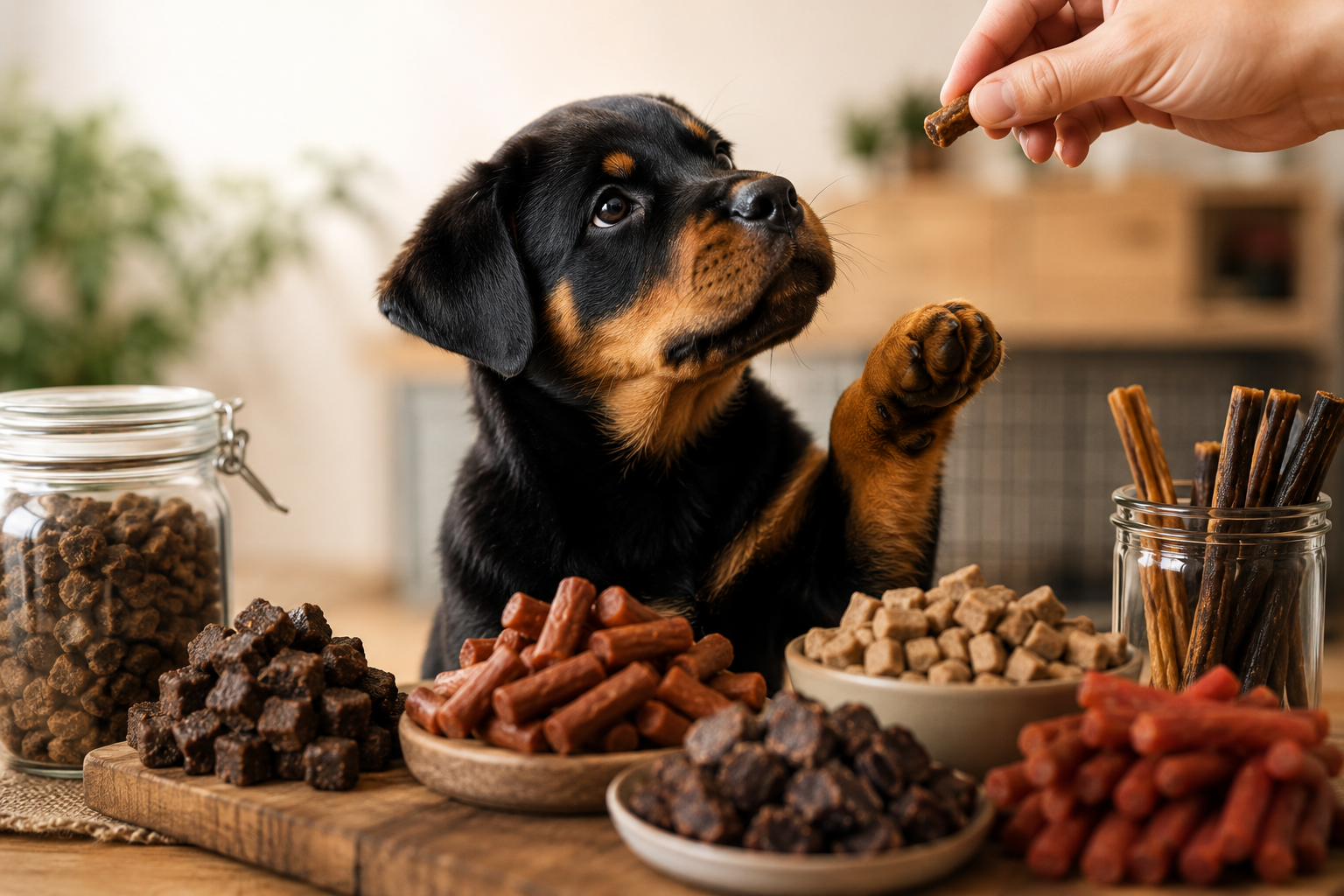
Treats count too. Training a Rottweiler puppy involves a lot of rewards, and those calories add up fast. A useful trick: reserve part of the daily food allowance and use those pieces as training rewards, or pick low-calorie options from our training treats guide.
Signs Your Puppy May Need More Food
Insufficient nutrition is also a problem. Contact your veterinarian if your puppy looks unusually thin, isn't gaining as expected, loses weight, or shows low energy, vomiting or persistent digestive problems. Don't simply double the portion without understanding why.
How to Monitor Growth
Combine weight tracking with observation. Can you feel the ribs without pressing through a layer of fat? Is there a visible waist when viewed from above? Is the weight increasing steadily rather than jumping? Is your puppy active and developing normally? Weight is only one part of the picture — our puppy health guide covers the rest.
Don't Compare Your Puppy Too Closely With Others
Imagine two six-month-old Rottweilers: one weighs 60 pounds, the other 75. That doesn't mean the heavier puppy is healthier or the lighter one needs more food. Parents, sex, bone structure and genetics differ. Use growth charts to spot trends, not to turn development into a competition.
Frequently Asked Questions
How much should a Rottweiler puppy weigh at 8 weeks?
Many eight-week-old Rottweiler puppies weigh around 10–16 pounds, although healthy puppies can fall outside this range depending on sex, genetics and development.
How much should I feed my Rottweiler puppy?
It depends on age, weight, activity and the calorie content of the food. Start with the manufacturer's recommendation for that specific food and adjust to body condition and veterinary advice.
How many times should a Rottweiler puppy eat per day?
Young puppies commonly eat three or four smaller meals per day. As they mature, the number of daily meals gradually decreases to two.
What is the best food for a Rottweiler puppy?
A complete and balanced puppy food appropriate for growth and suitable for a dog expected to become a large adult. Your veterinarian can help you select the right diet.
Should Rottweiler puppies eat large-breed puppy food?
Yes — food formulated for the growth of large-breed dogs provides nutrients and calories in proportions designed for controlled development.
When should a Rottweiler switch to adult food?
Large breeds mature slowly. Rather than switching on a fixed birthday, discuss timing with your veterinarian based on development, body condition and current food.
Build Healthy Habits From Day One
Your Rottweiler puppy doesn't need to get as big as possible as quickly as possible — they need time to grow. Monitor weight, provide balanced nutrition, keep portions appropriate and adjust as your puppy develops.
Want to make Rottweiler puppy life easier? Start with the free puppy checklist, browse the Rottweiler buyer's guide, or try the cost calculator in our tools section.
Share this article
Read also
Pause for a moment
Three moments showing why Rottweilers are so special.