
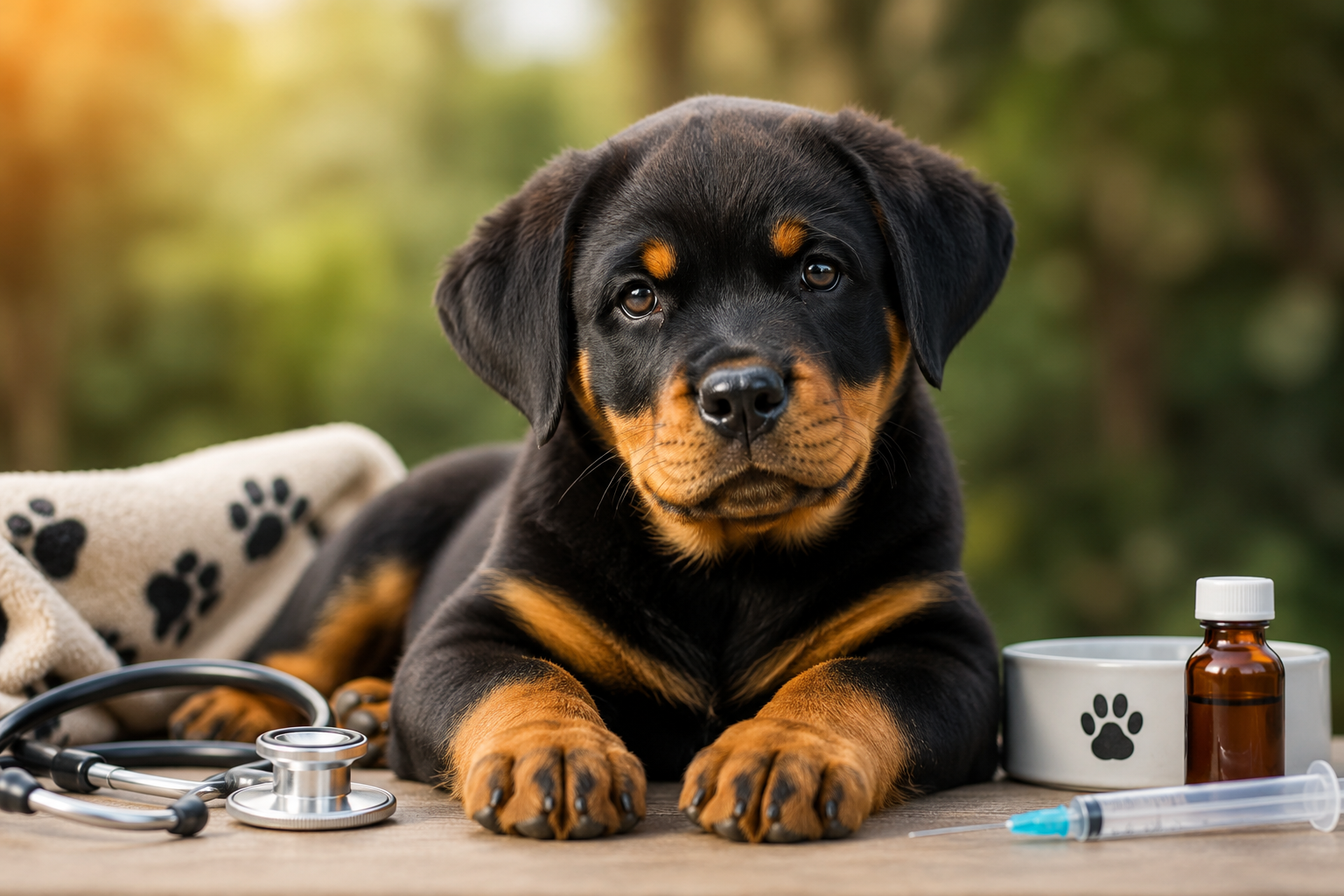
Why Puppy Health Matters
Large breeds like the Rottweiler grow rapidly, which makes preventive healthcare especially important. By understanding the most common health risks you can recognise problems early and help your puppy thrive. Rottweilers are generally robust dogs, but as a large breed they benefit from careful joint protection, appropriate feeding and routine veterinary care.
A solid healthcare routine helps prevent:
- Joint problems
- Serious infectious diseases
- Parasites
- Obesity
- Heart problems
- Dental disease
Rottweiler Puppy Vaccination Schedule
Vaccinations protect your puppy against dangerous diseases. Always follow your veterinarian's schedule, which can vary by country and region.
| Puppy age | Recommended vaccination |
|---|---|
| 6–8 weeks | First vaccination |
| 10–12 weeks | Booster |
| 14–16 weeks | Final puppy booster |
| 12 months | Annual booster |
Common vaccinations include distemper, parvovirus, hepatitis, leptospirosis and rabies (depending on country). Read more in our puppy vaccinations guide.
Deworming Schedule
Puppies commonly carry intestinal worms. The recommended schedule is:
- Every 2 weeks until 12 weeks
- Monthly until 6 months
- Every 3–6 months afterwards
Signs of worms include a pot belly, diarrhea, weight loss, a poor coat or visible worms in the stool. See the full protocol on our deworming page.
Common Rottweiler Puppy Health Problems
Hip dysplasia
Rottweilers are genetically predisposed. Symptoms: limping, bunny hopping, difficulty standing and reluctance to jump. Prevention: keep your puppy lean, avoid stairs and jumping, and feed large-breed puppy food. More detail on hips and elbows.
Elbow dysplasia
Another common orthopedic condition. Watch for front-leg lameness, swollen joints and pain after exercise. Early diagnosis improves long-term outcomes.
Bloat (GDV)
Rare in young puppies but extremely important for adult Rottweilers. Feed smaller meals, avoid vigorous exercise after eating, use a slow feeder if needed and prevent gulping.
Heart disease
Some Rottweilers inherit heart conditions. Warning signs are fatigue, coughing, exercise intolerance and fainting. Routine veterinary checks are essential.
Eye problems
Cataracts, entropion and eyelid abnormalities are occasionally seen. Seek veterinary advice for excessive tearing, squinting, red eyes or cloudy eyes.
Parvovirus
One of the most dangerous diseases for puppies: bloody diarrhea, vomiting, extreme lethargy and refusing food. Parvo requires emergency veterinary treatment.
Nutrition & Healthy Growth
Proper nutrition is one of the biggest contributors to lifelong health. Choose a large-breed puppy food and avoid adult dog food, excessive calcium supplements and overfeeding. Large-breed puppies benefit from controlled growth rather than rapid weight gain, which reduces stress on developing joints. See our full Rottweiler puppy nutrition guide.
Healthy Weight
An overweight puppy places extra stress on growing joints. A healthy puppy has a visible waist, easily felt ribs and good muscle tone. If you are unsure, ask your veterinarian for a Body Condition Score.
When Should You Visit the Vet?
Contact your veterinarian immediately if your puppy has:
- Repeated vomiting
- Bloody diarrhea
- Difficulty breathing
- High fever
- Refusal of food for 24 hours
- Severe limping
- Collapse
Early treatment often makes a significant difference. Because emergency and orthopedic care can be costly, many owners explore insurance for a Rottweiler puppy while their dog is still young and before pre-existing conditions apply.
Dental Care
Healthy teeth start young. Brush your puppy's teeth several times per week, offer safe chew toys and avoid hard bones that may crack teeth.
Grooming & Skin Health
Weekly grooming helps detect problems early. Check for fleas, ticks, skin irritation, ear infections and nail length. A healthy coat should be shiny and free from bald spots. See our puppy grooming guide.
Safe Exercise
Young Rottweilers should avoid excessive impact. Recommended: short walks, mental stimulation, gentle play and socialisation. Avoid long-distance running, jumping off furniture, stair climbing and agility training before skeletal maturity.