Why Nutrition Matters
Feeding too much — or the wrong type of food — can increase the risk of joint problems and excessive growth. This guide explains exactly what to feed a Rottweiler puppy, how often to feed, and how to avoid common nutrition mistakes.
A balanced diet helps your puppy develop:
- Strong bones
- Healthy joints
- Lean muscles
- Healthy skin and coat
- A strong immune system
- Good digestion
- Stable energy levels
- Healthy brain development
Large-breed puppies should grow steadily, not as quickly as possible. Overfeeding and excess calories can contribute to orthopedic problems later in life.
Nutritional Requirements for a Rottweiler Puppy
Unlike small breeds, Rottweiler puppies benefit from food formulated for large-breed puppies, with carefully balanced calories, calcium and phosphorus.
| Nutrient | Why it matters |
|---|---|
| High-quality protein | Builds muscle |
| Healthy fats | Energy and brain development |
| DHA | Supports brain and eye development |
| Calcium | Strong bones (avoid excessive amounts) |
| Phosphorus | Bone growth |
| Vitamins & minerals | Overall development |
| Fiber | Healthy digestion |
Best Food for a Rottweiler Puppy
Look for a puppy food that is:
- Specifically made for large-breed puppies
- Complete and balanced
- Rich in animal protein
- Contains DHA
- Includes omega-3 fatty acids
- Has controlled calcium levels
- Appropriate for slow, healthy growth
Avoid changing foods frequently unless recommended by your veterinarian. Compare our picks in the puppy essentials buyer's guide.
Feeding Schedule by Age
| Age | Meals per day |
|---|---|
| 8–12 weeks | 4 meals |
| 3–6 months | 3 meals |
| 6–12 months | 2 meals |
| 12–18 months | 2 meals (large-breed puppy food) |
Large breeds stay on puppy food longer than small breeds because they mature more slowly. See what else changes week by week in our puppy development guide.
How Much Should You Feed?
The exact amount depends on age, weight, activity level, food brand and metabolism. Instead of following online charts blindly:
- Follow the feeding guide on your puppy food
- Monitor body condition weekly
- Adjust portions gradually
A healthy puppy should have a visible waist from above, easily felt ribs (without protruding), steady growth and plenty of energy. Budgeting for food? Try the puppy cost calculator.
Foods Your Puppy Can Eat
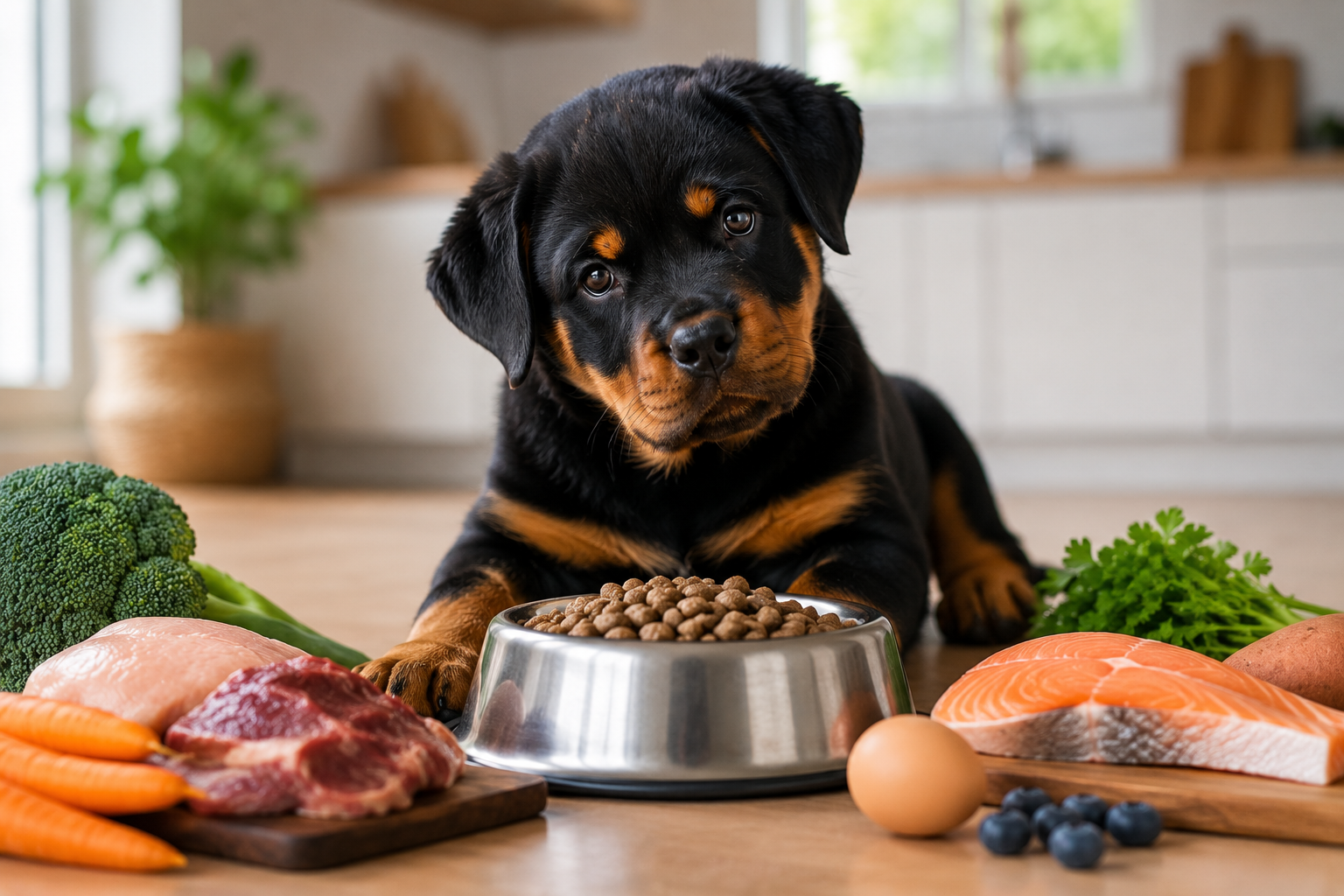
Besides complete puppy food, you can occasionally offer:
- Cooked chicken, turkey or lean beef
- Salmon and eggs
- Pumpkin, carrots and green beans
- Blueberries and apples (without seeds)
- Sweet potato
These should be treats — not meal replacements.
Foods to Avoid
Never feed:
- Chocolate, coffee and alcohol
- Grapes and raisins
- Onions and garlic
- Avocado and macadamia nuts
- Xylitol
- Cooked bones
- Excessively fatty foods
Fresh Water Is Essential
Your puppy should always have access to fresh drinking water and clean bowls, water during walks, and extra water in warm weather. Hydration supports healthy digestion and growth — and matters even more on hot days, as explained in our Rottweiler health guide.
Healthy Treats During Training
Training requires plenty of rewards. Good options include small kibble pieces, freeze-dried meat, tiny cooked chicken pieces, puppy training treats and carrot slices. Keep treats below 10% of your puppy's daily calorie intake. Pair them with the exercises in our puppy training guide.
Should You Give Supplements?
In most cases: no. If you're feeding a complete large-breed puppy food, additional calcium or vitamin supplements are usually unnecessary and may even upset the nutrient balance. Always consult your veterinarian before adding supplements.
Common Feeding Mistakes
- Overfeeding
- Free-feeding all day
- Switching foods too often
- Giving too many treats
- Feeding adult food too early
- Excessive table scraps
- Too much calcium supplementation
Signs Your Puppy Is Eating Well
- Consistent weight gain
- Shiny coat
- Firm stools
- Bright eyes
- Good appetite
- Strong muscles
- Healthy energy levels
Sample Daily Feeding Routine
| Time | Activity |
|---|---|
| 07:00 | Breakfast |
| 09:00 | Short walk |
| 12:30 | Lunch |
| 15:00 | Training treats |
| 18:00 | Dinner |
| 20:00 | Evening walk |
| 22:00 | Water and bedtime |