Which brush is best for a Rottweiler’s short coat?
A rubber curry brush or grooming mitt is a practical starting point. Flexible rubber tips help collect loose hair while keeping routine handling gentle.
Learn the brushing technique →
A short coat. A surprising amount of fur. Choose a brush for the job your Rottie actually needs: gentle everyday care, puppy practice or seasonal shedding.
For routine brushing, start with a rubber curry brush or grooming mitt. For loose undercoat during shedding season, add a deshedding tool suited to short-haired dogs. A soft bristle brush is useful for finishing the coat.
Affiliate disclosure: we may earn a commission from qualifying purchases through product links, at no extra cost to you.
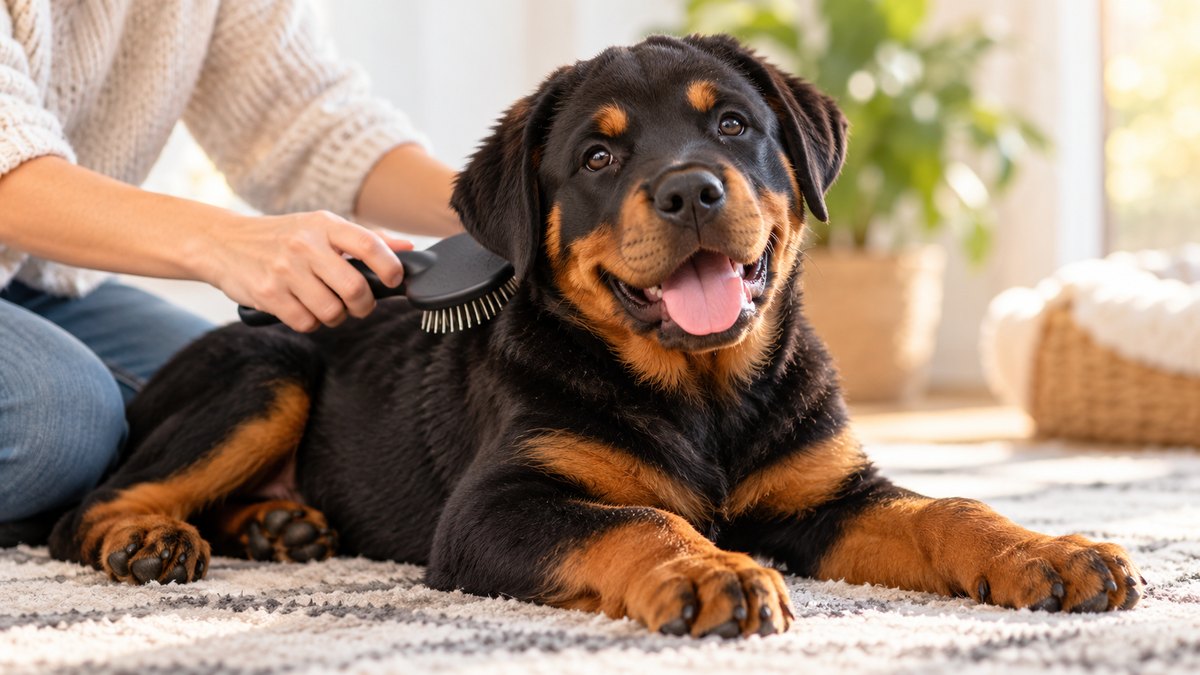
There is no single brush that does every job equally well. Think of your grooming kit in three parts: lift loose surface hair, manage shedding when needed, and finish gently. Start with the least aggressive tool that works.
A rubber curry brush or grooming mitt is a practical starting point. Flexible rubber tips help collect loose hair while keeping routine handling gentle.
Learn the brushing technique →A short-coat deshedding tool can help when loose undercoat builds up. Choose one suited to your dog’s size and coat, and follow its instructions rather than repeatedly brushing the same patch.
Explore the featured tool →Begin with a soft grooming mitt or soft bristle brush. The first goal is a puppy who feels comfortable being touched, not a large pile of removed hair.
Build a puppy grooming routine →| Brush type | Best use | What to check |
|---|---|---|
| Rubber curry brush / mitt | Routine loose-hair removal and gentle handling | Flexible tips; a size you can grip comfortably |
| Soft bristle brush | Puppy introductions and a finishing pass | Soft bristles; comfortable pressure on the skin |
| Short-hair deshedding tool | Removing loose undercoat during heavier shedding | Short-coat suitability; clear use instructions |
| Undercoat rake / dematting tool | Targeted work where coat length and tooth design are compatible | Tooth length and blade design; do not assume every rake suits a short coat |
Our selection approach: coat suitability, comfortable handling and clear limitations. This guide does not claim hands-on testing or a universal best product.
It can be useful for some shedding coats, but fit matters. Check the teeth and the manufacturer’s coat guidance before choosing a rake for a short-coated Rottie. A dematting tool is an occasional specialist tool, not the default brush for a young puppy.
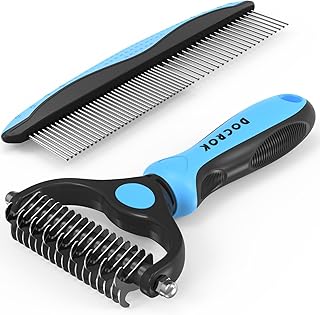
A two-sided grooming tool paired with a steel comb, already featured in the RottieBuddy grooming selection. Consider it when you need a dedicated tool for loose undercoat and have confirmed it suits your dog’s coat.
Check current price, availability and product instructions on Amazon.
Let your dog investigate the brush, reward calm behavior, then try a few light strokes on an easy-to-reach area. Pause before your dog gets restless.
Work gently in the direction the hair grows. Use controlled strokes and avoid scraping the skin, especially around thinly covered areas.
Use it when there is loose undercoat to remove and the tool is suitable for the coat. Follow its directions for frequency and duration; more passes do not automatically mean better results.
Remove collected hair from the brush, give your dog a break and reward calm handling. A soft finishing pass is enough; do not keep working until absolutely no hair comes out.
A rubber brush is the gentler starting point for routine care. A suitable deshedding tool serves a different purpose: removing loose undercoat during heavier shedding. Choose according to the coat’s current needs.
Start with regular gentle brushing and adjust to how much loose hair you find. During heavier seasonal shedding, you may need more frequent attention. Keep any deshedding-tool schedule within the manufacturer’s instructions.
A short-hair FURminator may be an option for a suitable shedding coat. Choose the right size and coat version, inspect the skin first and use light strokes as directed. Avoid irritated or broken skin.
A slicker brush is not automatically necessary for every short-coated Rottie. If you use one, check the pin design and pressure carefully. A rubber mitt is often a simpler place to start for regular handling.
No. Brushing collects hair that is already loose; it does not stop the natural shedding cycle. Regular care can make loose fur easier to manage without chasing a completely shed-free coat.
Stop using the tool. Persistent redness, sore patches, unusual hair loss or discomfort need veterinary advice rather than stronger brushing. See our Rottweiler health guides for broader care information.
Find food, bowls, crates, toys and other supplies for life with a Rottweiler puppy.