
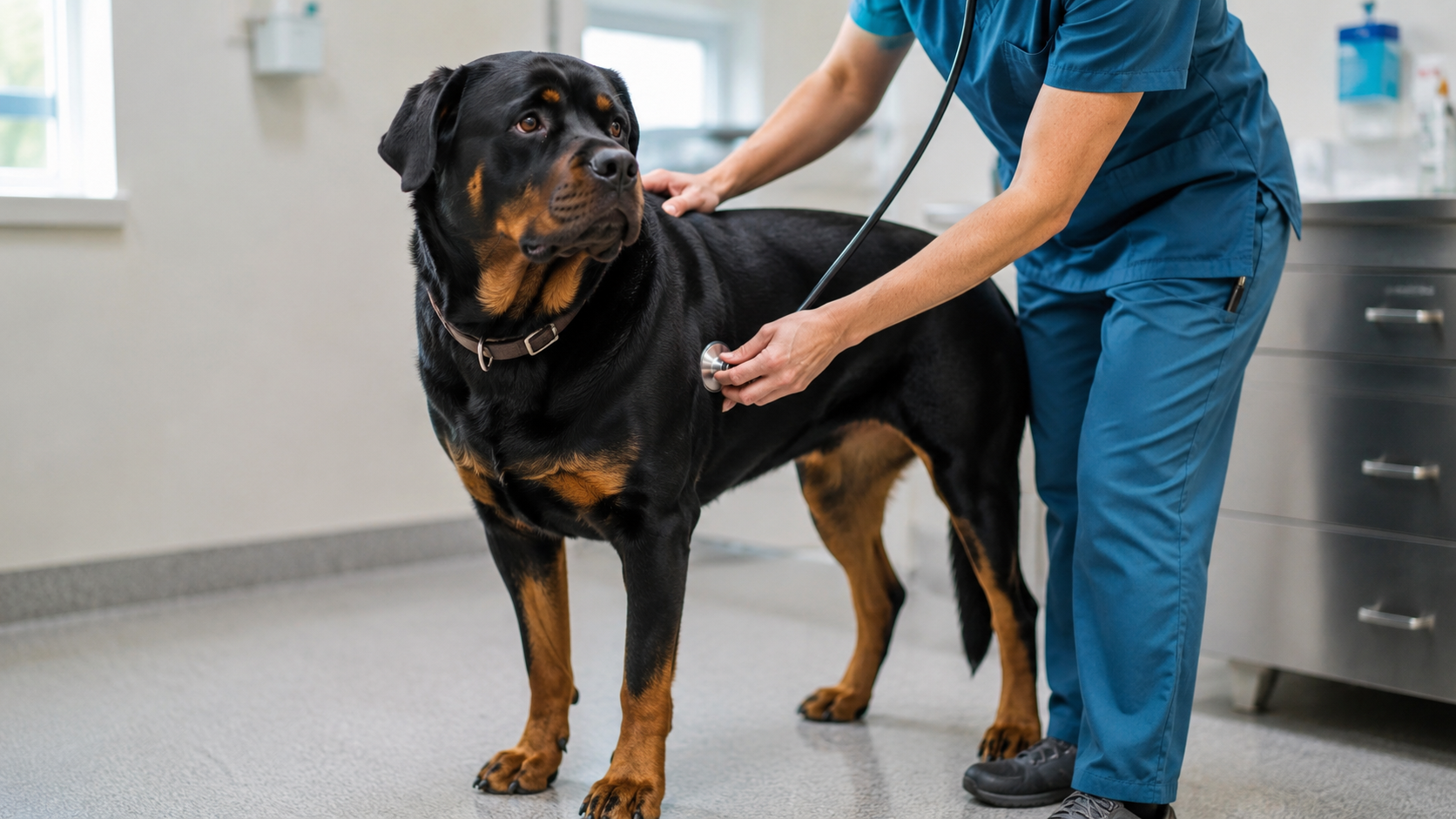
Common Rottweiler Health Problems and Warning Signs
Rottweilers are associated with several orthopedic, cardiac, cancer and inherited health concerns. That does not mean every Rottweiler will become ill, and it does not mean a familiar symptom identifies one particular disease. Limping, fatigue, itching or reduced appetite can have many causes.
Use this guide to recognize patterns worth discussing with a veterinarian, understand what responsible screening can and cannot tell you, and decide how urgently to seek help. It is not a diagnostic checklist.
Last reviewed: August 2026
When should you call a veterinarian?
The same symptom can have different urgency depending on severity, duration, age and other signs. When unsure, call a veterinary clinic and describe what is happening.
| Urgency | Examples | Action |
|---|---|---|
| Emergency now | Difficulty breathing; collapse; pale or blue gums; seizure; major trauma; severe bleeding; sudden inability to stand; suspected toxin; repeated unproductive retching with restlessness or an enlarged painful abdomen | Contact an emergency clinic and arrange immediate transport |
| Prompt or same-day advice | Non-weight-bearing lameness; obvious severe pain; repeated vomiting; blood in vomit, stool or urine; sudden marked weakness; painful eye; rapidly enlarging swelling; inability to keep water down | Call your veterinarian or urgent clinic for triage |
| Schedule an examination | Persistent or recurring limp; stiffness; change in exercise tolerance; ongoing cough; new lump; chronic itch; repeated ear trouble; unexplained weight, appetite or thirst change | Book a veterinary visit and track the pattern |
Do not wait for an abdomen to look dramatically swollen before acting on repeated unproductive retching and distress. GDV can progress rapidly.
Hip and elbow dysplasia
Hip dysplasia begins during growth and involves abnormal hip-joint laxity. Elbow dysplasia is a group of developmental abnormalities that disturb the fit and loading of the elbow. Genetics are important, while growth, body weight and other factors can influence how disease develops or how severely it affects the dog.
Signs that merit veterinary assessment
- Limping or an uneven gait
- Stiffness after rest
- Reluctance to rise, jump, use stairs or finish a walk
- Reduced range of motion
- Pain around a joint
- Loss of muscle from a limb
- A "bunny-hopping" gait in some dogs
Some dogs with abnormal joints show few obvious signs, while similar signs can also result from injury, pain elsewhere or another condition. Diagnosis may involve an orthopedic examination and appropriate imaging. Do not force exercise to "work out" persistent stiffness.
Maintaining an appropriate body condition and using suitable activity can support comfort, but neither guarantees prevention. Puppy owners should read Rottweiler puppy hip and joint care, healthy puppy growth and puppy weight guidance.
Rottie health tip — Film movement before the appointment
A short video taken at normal speed on a safe surface may show an intermittent limp that disappears in the clinic. Film without making the dog run, jump or repeat something painful.
Osteoarthritis and cruciate-ligament disease
Osteoarthritis is progressive joint disease that can follow dysplasia, injury, instability or age-related wear. Cranial cruciate-ligament disease affects the knee and can cause sudden or gradual hind-limb lameness. These are different conditions, but both can affect mobility and quality of life.
Watch for:
- Slower rising or lying down
- Reluctance to jump into a car or climb stairs
- Shorter walks or lagging behind
- Limping that improves and returns
- Difficulty turning, squatting or balancing
- Changes in play, sleep or tolerance of handling
- Licking around a painful joint
Pain is not always vocal. A dog may simply become less active or irritable. Early veterinary assessment allows the team to identify the cause and discuss weight, rehabilitation, exercise modification, pain management or surgical options when relevant.
Call your vet
Never give ibuprofen, naproxen, acetaminophen or another human pain medicine unless a veterinarian specifically directs its use. Some are dangerous to dogs.
Heart conditions
Rottweilers are among the breeds in which subaortic stenosis is recognized. Other congenital or acquired heart problems can also affect individual dogs. A murmur is a finding, not a complete diagnosis; some disease requires echocardiography or other testing to characterize, while not every murmur indicates the same prognosis.
Contact a veterinarian about:
- Fainting or collapse
- Reduced stamina or unusual weakness
- Breathing difficulty or a persistent breathing change
- A cough, especially when combined with other signs
- Restlessness at night or inability to settle comfortably
- A newly detected murmur or irregular rhythm
Breathing difficulty or collapse is an emergency. Routine examination can identify some findings, but do not claim that yearly listening alone "catches most heart disease." Breeding-dog cardiac evaluation follows a defined protocol and is different from diagnosis in a symptomatic pet.
Gastric dilatation-volvulus: know the emergency
Gastric dilatation-volvulus (GDV) occurs when the stomach distends and may rotate. It is rapidly progressive and requires immediate medical attention. Large, deep-chested dogs are among those discussed as higher risk, but appearance alone cannot predict which individual will be affected.
Possible signs of GDV
- Repeated retching or attempts to vomit with little or nothing produced
- Drooling
- Restlessness, pacing or looking at the abdomen
- A painful or enlarging abdomen
- Panting or breathing difficulty
- Weakness or collapse
Emergency — suspected GDV
Contact the nearest emergency clinic immediately and leave for care. Do not offer food, force water, give a home remedy or wait to see whether the abdomen becomes larger. There is no effective home treatment.
Feeding multiple smaller meals is commonly discussed for at-risk dogs, and owners can avoid encouraging very rapid ingestion. However, no bowl or feeding schedule can guarantee prevention. Ask your veterinarian whether risk factors and preventive gastropexy should be discussed for your individual dog.
Osteosarcoma and other cancers
Osteosarcoma is an aggressive bone cancer seen frequently in large-breed dogs, particularly Rottweilers. The most common presenting signs for a limb tumor are lameness and swelling, but those signs are far more often associated with many other orthopedic problems. Only veterinary examination and diagnostic testing can identify the cause.
Arrange an examination for:
- Persistent or worsening lameness
- Firm localized swelling on a limb
- Pain that does not resolve as expected
- A fracture without proportionate trauma
- Any new, growing, painful, bleeding or ulcerated mass
- Unexplained weight loss, appetite change or marked lethargy
Do not massage a painful swelling or repeatedly test the limb. Veterinary evaluation may include radiographs and, depending on the finding, sampling, staging or referral.
Other cancers can occur in Rottweilers just as they can in other dogs. A monthly body check helps you notice a new mass, but cannot determine whether it is benign or malignant. Record its location and size and let a veterinarian decide whether sampling is appropriate.
Cancer treatment and specialist surgery can create significant costs. Before you face that situation, our Rottweiler pet insurance guide explains how reimbursement, annual limits and pre-existing-condition exclusions may apply to a future diagnosis.
Skin, ear and eye problems
Itching, redness, odor, discharge and hair loss are symptoms—not diagnoses. Possible causes include parasites, allergy, infection, moisture, foreign material, irritation and other disease. Recurrent problems often require investigation of the underlying cause rather than repeated over-the-counter cleaning.
Skin and coat signs
- Persistent scratching, licking or chewing
- Red, moist, scaly or crusted skin
- Bald patches or coat change
- Recurrent sores
- Lumps, wounds or parasites
Ear signs
- Head shaking or repeated scratching
- Redness, swelling, unusual odor or discharge
- Pain when the ear is touched
- Head tilt, loss of balance or other neurologic signs
Eye signs
- Squinting or holding an eye closed
- Redness, cloudiness or swelling
- Discharge that is new or persistent
- Rubbing the face
- Sudden vision or navigation change
Eye pain, sudden vision change, marked swelling, head tilt or loss of balance needs prompt veterinary advice. Do not insert cotton swabs or tools into an ear canal, use leftover ear medication or put unapproved drops into an eye.
The Rottweiler grooming guide explains safe routine checks. It does not replace treatment.
Inherited disease and responsible breeder screening
Breed-health screening is designed to inform breeding decisions and reduce avoidable risk across generations. Current US program materials for Rottweilers include hip, elbow, cardiac and eye evaluations, with JLPP DNA status also important. Other countries may use different registries or protocols.
When choosing a puppy:
- Ask for the registered names or numbers of both parents.
- Verify results directly in the relevant health database.
- Check that tests were completed at the required age and remain current where renewal applies.
- Ask how the breeder uses results and family history in mating decisions.
- Understand that a CHIC number documents completed and disclosed testing; it does not guarantee all-normal results or a disease-free puppy.
JLPP is an autosomal-recessive inherited disorder associated with serious neurologic and breathing signs in affected puppies. DNA status is primarily a breeding decision: a carrier is not the same as an affected puppy, and thoughtful mating can prevent affected litters. Ask the breeder or a veterinarian/genetics professional to explain the actual parental results.
How to prepare for a veterinary visit
Useful information can shorten the path to the right next step:
- When the change began and whether it is stable, improving or worsening
- Videos of gait, coughing, breathing or an episode when safe to record
- Appetite, water intake, urination and stool changes
- Current food, treats, supplements and all medications
- Recent travel, boarding, exercise, injury or toxin exposure
- Previous diagnoses, test results and family history
- Photos and measurements of a visible lump or skin lesion
Do not delay urgent care to collect perfect documentation.
Health gear worth comparing
RottieBuddy may earn a commission from qualifying purchases, at no extra cost to you. Product links never replace veterinary advice.
Choose everyday care products with realistic expectations.
Compare health and grooming categories for routine support. A supplement cannot diagnose limping, reverse dysplasia, treat cancer or replace pain management. Ask your veterinarian before starting a joint supplement for a symptomatic dog.
Explore the Rottweiler Health Buyer's GuidePlanning for veterinary costs
Insurance may help with eligible future accidents or illnesses, but policies differ in exclusions, waiting periods, hereditary-condition wording, reimbursement and limits. Pre-existing conditions are commonly restricted. Compare policy documents rather than relying on a universal "best" claim.
Continue the Rottweiler health guide
Rottweiler health pillar
The complete overview of lifelong Rottweiler health care.
Preventive care
Vaccinations, parasite control, dental care and routine checks.
Grooming and body care
Coat, nails, ears, teeth and whole-body checks for every life stage.
Puppy hip and joint care
How growth, weight and exercise affect joints in the first year.
Frequently asked questions
What is the most common health problem in Rottweilers?
There is no single answer that applies to every population and life stage. Orthopedic disease—particularly hip and elbow dysplasia—is an important breed concern, while heart disease, GDV and osteosarcoma also deserve awareness. Individual dogs can develop many unrelated conditions.
Does limping mean a Rottweiler has hip dysplasia or bone cancer?
No. Lameness has many possible causes, including paw injury, muscle or tendon injury, cruciate disease, elbow or hip disease, arthritis, infection and tumors. Persistent, severe, recurrent or non-weight-bearing lameness needs veterinary assessment.
Can Rottweiler health problems be prevented?
Some infectious and parasite risks can be reduced substantially with appropriate preventive care. Healthy body condition and suitable exercise can support joints and general health. Genetic and acquired disease cannot all be prevented, so screening, monitoring and early veterinary attention remain important.
What are the first signs of bloat in a Rottweiler?
Possible early signs include restlessness, drooling, looking at the abdomen and repeated retching without producing vomit. The abdomen may become enlarged or painful, and weakness or collapse can follow. Treat suspected GDV as an immediate emergency.
Should a breeder's health-tested parents guarantee a healthy puppy?
No. Appropriate screening can inform better breeding decisions but cannot remove every genetic, developmental or acquired risk. Verify the actual results and ask how family history is considered.
Should I give my healthy Rottweiler a joint supplement?
Do not assume every large dog needs one. Product quality, ingredients, evidence, calories, interactions and the dog's diet and health all matter. Ask your veterinarian whether a supplement is appropriate, especially when the dog is already symptomatic or taking medication.
Sources and further reading
- ACVS: Canine Hip Dysplasia
- ACVS: Canine Elbow Dysplasia
- ACVS: Gastric Dilatation-Volvulus
- ACVS: Bone Tumors in Cats and Dogs
- Merck Veterinary Manual: Congenital and Inherited Cardiovascular Disorders in Dogs
- OFA CHIC Program
- OFA: Juvenile Laryngeal Paralysis and Polyneuropathy
- WSAVA Body Condition Score for Dogs
This guide provides general educational information and does not diagnose, prevent or treat disease. Contact your veterinarian for advice based on your dog's age, history, symptoms and local risks. Seek urgent veterinary care when emergency signs are present.